
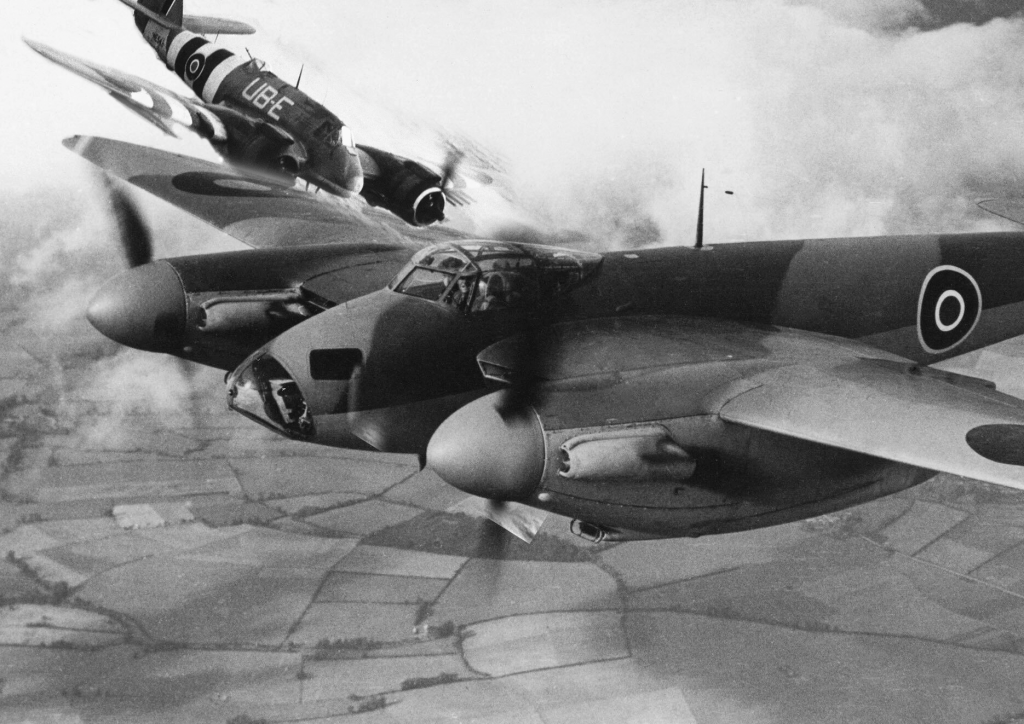
We take class warfare to 300mph as we pit the aristocratic Mosquito against the no-nonsense proletariat muscle of the Beaufighter to find out who the real war-winning twin is.
A well-born beauty with two Merlins running on blueblood, the ecstatically swift Mosquito was the most refined fighter in the war. The Mosquito was stealthy enough to choose fights as it wished and had a reputation for invulnerability. Then there was the honest, almost thuggish, functionalism of the Beaufighter, which was all firepower and brute force – a design that seemingly believed streamlining was for cowards. The Beau carried enough ammunition to invade a small nation single-handedly and outgunned everything it faced with its multiple cannons and machine guns. But when push comes to shove, which was actually the war winner, the Mosquito or the Beaufighter? To determine the answer, we’ve developed some unimpeachable criteria based on actual operational usage. We then did a fucking ton of homework. Strap in!
ROUND 1: Timing
If World War II had started two years earlier, the Bristol Blenheim would have been legendary, and the Fairey Battle would still be remembered as shite.
In the crucial aspect of timing, the Beaufighter scores extraordinarily well. Its introduction coincided with the Luftwaffe switch to night bombing in early September, and it was there for the first Airborne Interception radar in the Autumn of 1940. Crucially, it also arrived late enough to avoid being squandered on the hopeless Battle of France or mis-deployed in the Battle of Britain, like its forerunner, the Bristol Blenheim.
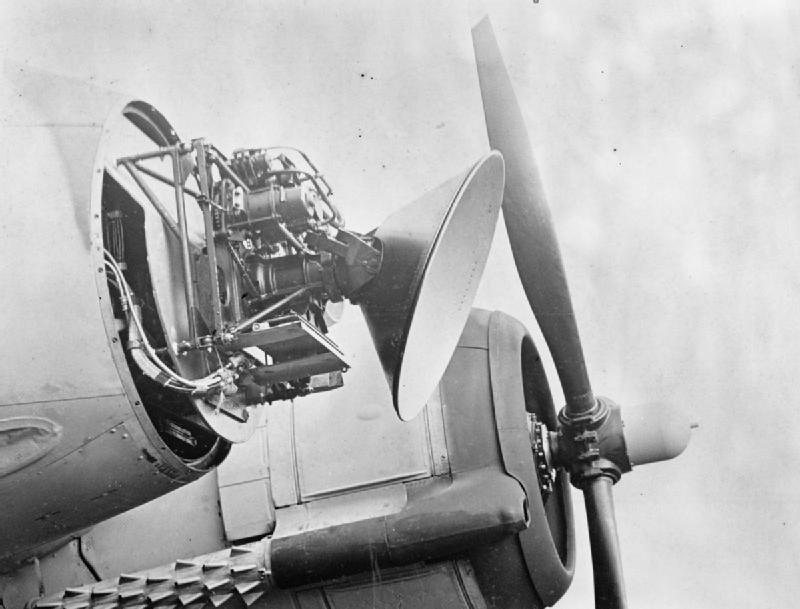
The Beaufighter’s presence meant crucial lessons about night-fighter interception were learned in time to later defeat the Blitz in the Spring of 1941. Its contemporaries, such as the Blenheim, simply didn’t have the performance to keep up with German bombers, while the Boulton Paul Defiant was obsolete the moment AI radar was made to work. The perfect timing would play out with its introduction into the Mediterranean Theatre in 1941 and 1942, in time to make a decisive difference. The Beaufighter shone a harsh light on the shortcomings of its predecessors and would revolutionise aerial anti-shipping, as we’ll soon see.
However, the Mosquito was also well-timed, though somewhat later. Reaching squadrons in early 1942, its arrival as a light bomber coincided with Bomber Command’s building of a strategic air force. There was also a desperate need for a high-performance light bomber for target-marking when losses were soaring, and it was discovered that bombers were missing their targets by miles. Like the Beaufighter, it truly underscored where the RAF was going badly wrong, and had it been available one year earlier, the RAF might have avoided the idiocy of mass-escorted Stirlings, Hampdens and Blenheims on futile and wasteful Circus and Rhubarb raids (small-scale fighter sorties against ground targets of opportunity).

By the end of the war, both the Mosquito and Beafighter remained effective in what they were tasked to do (even if the Mosquito had some time earlier superseded the Beaufighter as the RAF’s main night fighter).
The Beaufighter edges it with perfect timing of its introduction at the inception of AI and the Luftwaffe’s switch to night bombing.
Beaufighter 1, Mosquito 0
8 MORE BLOODY ROUNDS TO COME…STAY TUNED!
Eddie Rippeth/Joe Coles
Eddie Rippeth is Head of Primary Publishing, International schools
Cambridge University Press

