
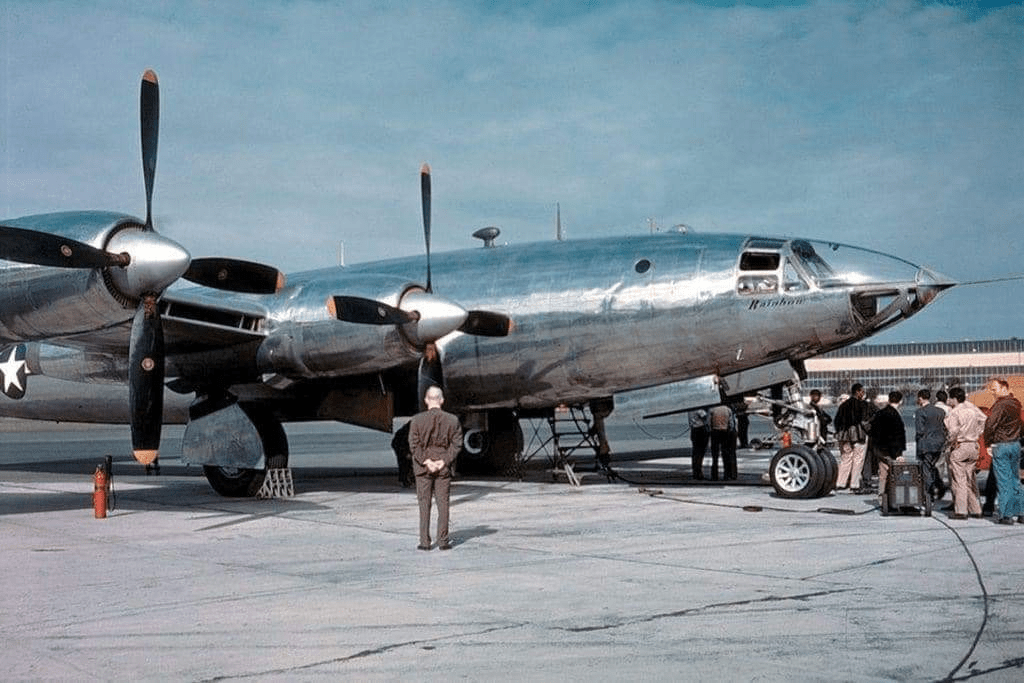
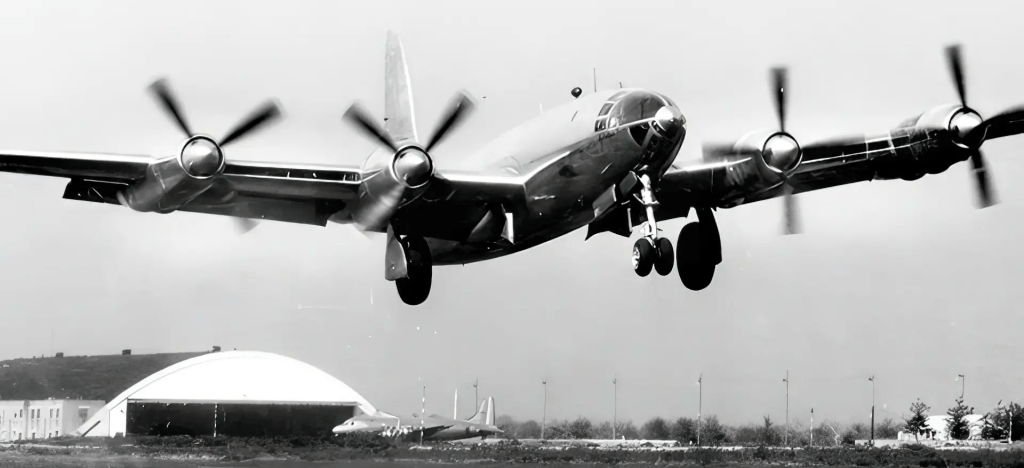
In 1943, the USAAF desperately needed an aircraft that could fly a vast distance, penetrate the Japanese Empire’s defence, outrun fighters, perform vital reconnaissance of the heartland and then fly back. This was a very tall order in 1943, even more so when the USAAF demanded a 400mph aeroplane capable of prolonged flight at 40,000 feet. This was the first time a reconnaissance aircraft was designed from scratch, not a converted fighter or bomber, but a modern dedicated camera platform incorporating all the latest technical advances. This was a new game, and manufacturers cock-blocked from the heavy aircraft market now stood a chance. Republic, creator of the incredible P-47, leapt the opportunity to compete for this potentially lucrative opportunity. The result was the superb Republic Rainbow, the most impressive piston-engine aircraft ever flown.

10. Empire of pane
Long before Concorde used its famous ‘droopsnoot’ to exchange high-speed aerodynamics for a better view for the pilot during landing, the Rainbow had a similar solution. Like the earlier the B-29, the Rainbow had a nose of curved glass panes. While B-29 crews loved the curved glazed nose for the unobstructed view in flight, and its low drag, they hated the fact it cast dangerously distracting reflections during landing. Designer Kartveli (the genius behind the P-47) was keen to avoid the B-29’s problem, and his solution was to make the curved sections of glass in the nose slide out of the way when not required, revealing a flat windscreen.
Shhh, here’s a secret link to the Hush-Kit Substack which has a load of very cool aviation articles.

9. Obscene speed
Very few piston-engined aircraft exceeded 450mph, even fewer could exceed 470mph. The only piston-engined aircraft (other than heavily modified racers) that have reached 470 mph were: the F4U-5, Ta 152H, Hornet, Do 335, P-47M, XP-82, Fury/Sea Fury, Spiteful, P-51H, XP-72 and XP-47J. The Rainbow is quite unlike the other aircraft, which are all fighters, and mostly single-engined radials. The Rainbow was the fastest four piston aircraft ever to fly.
8. Obsene Climbrate
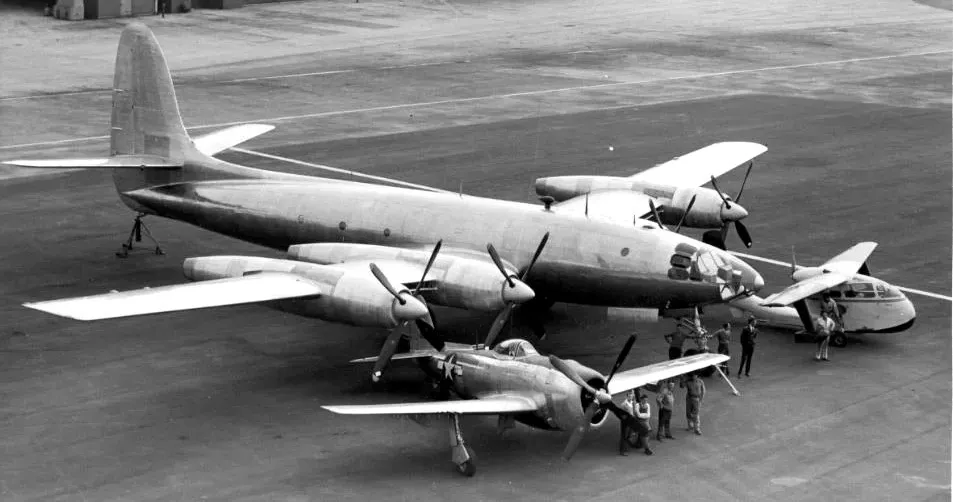
The Rainbow’s astonishing climb rate of 5,000 feet per minute made it a better climber than most of the ultimate piston-engined fighters, including the Tigercat and even the Supermarine Spiteful.
7. Obscene Power
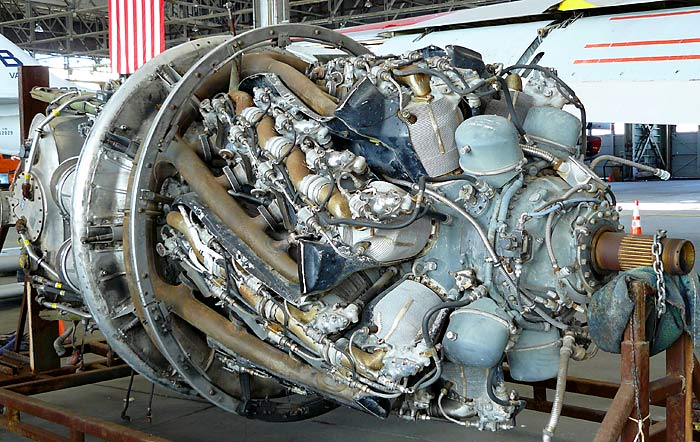
13,000 horsepower is a hell of a lot of power. To put this in perspective, the B-17 Flying Fortress had 4800 horsepower, meaning the Rainbow had 2.7 times more. The four-engined Rainbow had a superior power-to-weight ratio to the rival XF-11, boasting 0.128 to the XF-11’s 0.103. Like the rival Hughes XF-11, the XF-12 utilised the Pratt & Whitney R-4360 radial engine.
Instead of the usual two rows of nine cylinders like most large radial engines, the 4360 was unusual in having four rows of seven cylinders. Though this configuration presented cooling issues for the aft cylinders, it did bless the engine with a comparatively small frontal area for such a powerful engine.
6. Range

The second prototype flew coast-to-coast in the USA. The aircraft could fly more than 4,000 miles on internal fuel.
5. High altitude
The Rainbow could reach 40,000 feet, around 8,000 feet higher than the B-29. In tests it had exceeded 44,000 feet.
4. Extra power
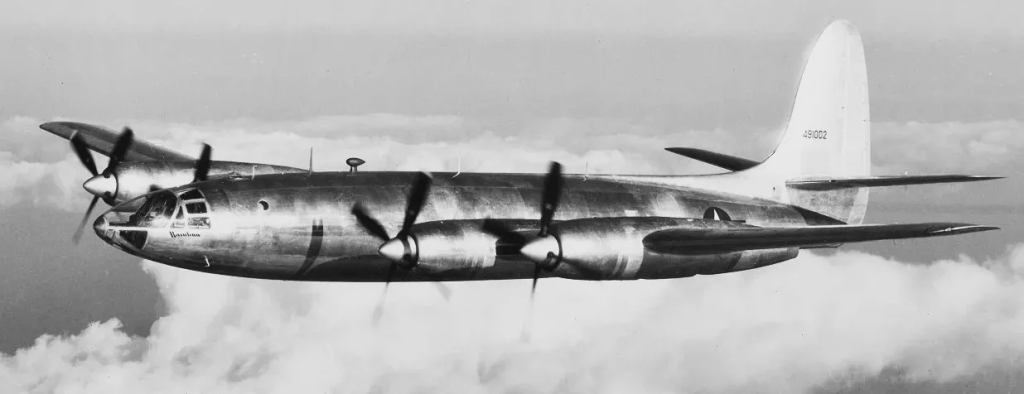
The Rainbow featured a radical turbo supercharger arrangement, where spent exhaust gases were channelled through a narrow oval jet pipe, providing an extra 300 horsepower of power.
3. The flying darkroom
Much photographic intelligence is extremely time-sensitive. The Rainbow featured an onboard darkroom and intelligence specialists, meaning on landing, the aircraft had interpreted intelligence ready to be shared, a forerunner of today’s real-time data linking of visual footage.

2. Streamlining
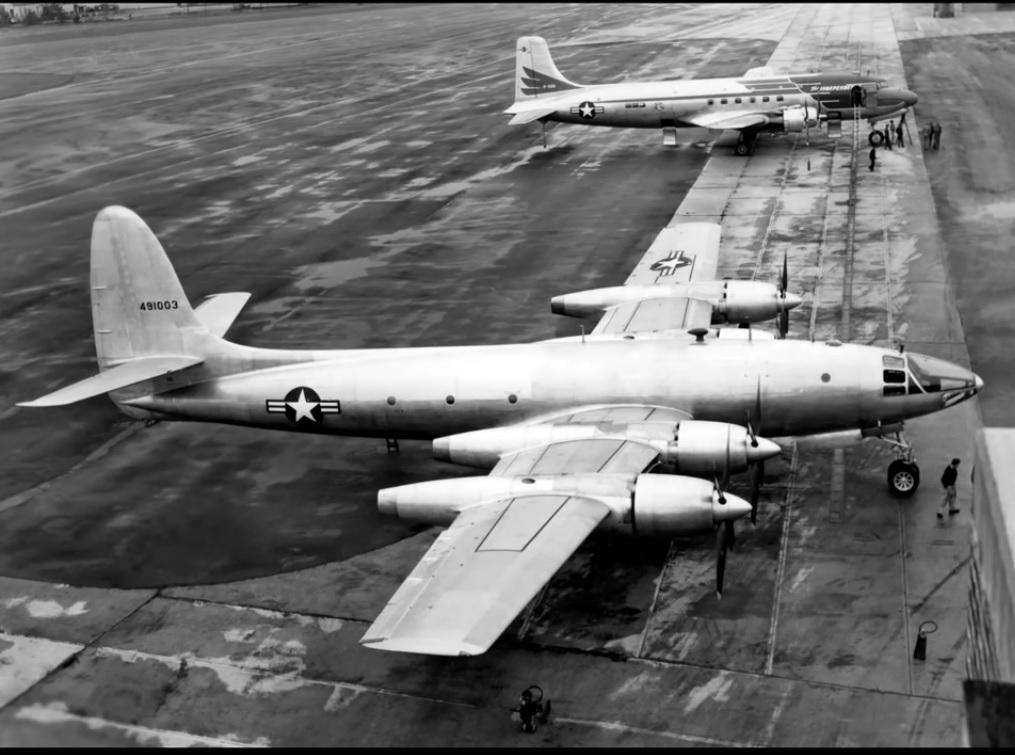
Design leadership from Republic’s Alex Kartveli, creator of the superb P-47 Thunderbolt, emphasised streamlining almost unprecedentedly for the XF-12. The B-29 had redefined the modern aeroplane; the Rainbow, flying four years later, took many of these ideas even further. The attention to detail was incredible, producing what may have been the aerodynamically cleanest four-prop aircraft ever flown. Like the Mustang before it, it was an ultra ‘hygienic’ design. Every proturbence that could be eliminated, was, in a fanatical quest for the least drag.
As an example, cooling air for the oil coolers and intercoolers came from neat inlets in the wing leading edge. These were extremely efficient, and once used, the now heated air was routed through flush exhausts, angled backwards, at the underside of the nacelle, generating some handy extra horsepower.
Sign up here.

1. Civil options
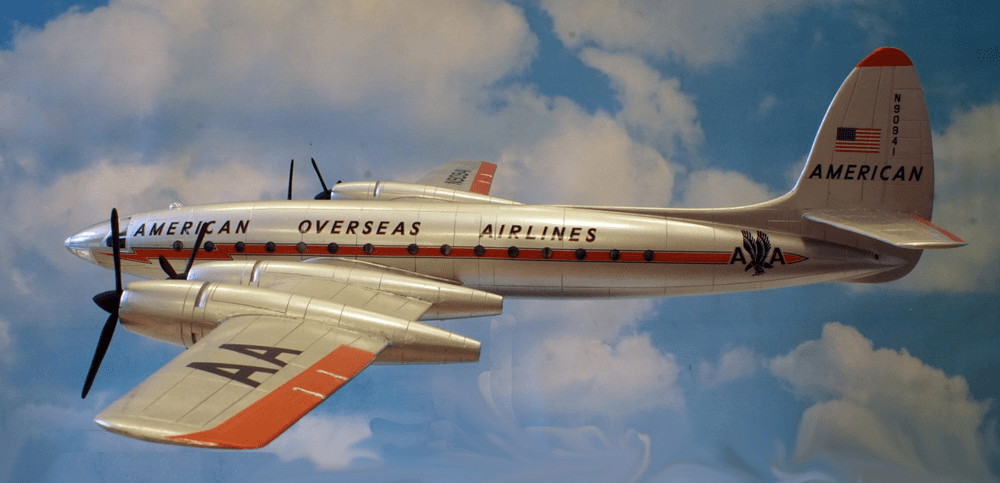
An airliner variant, the 46-seat RC-2, was planned to kick open the civil market door. The RC-2 would have been a superb airliner, the best in its class and far superior to the offerings of Lockheed and Douglas. Unlike the Rainbow, the RC-2 was to have only one turbo-supercharger per nacelle (as opposed to two), making the heavier aircraft marginally slower. Despite this, it would still have been able to fly 3,450 miles at 400mph at 40,000 feet. American Airlines was the planned launch customer, with an initial order for twenty.

