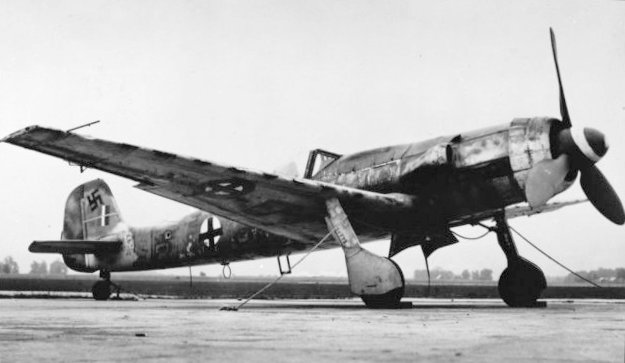
Let’s forget bullshit reasons like historical significance or being in the right place at the right time, and instead, look at what you would be best taking into combat at the end of the war if you wished to win. The answer is, of course, the absolute bastard that was the Ta 152H. Boasting superior sustained turn rates to the later Sea Fury or Bearcat, a lower wing loading than the P-47, Spitfire and Bearcat, and even a better climb rate than the Do 335 or MB5, the Ta 152H was clearly a fire-breathing monster of immense performance.
Top speed at high altitude is a double-edged sword. On the one hand, the thin air provides for low parasitic drag. On the other hand, this thin air also makes it harder to produce lift, so induced drag is higher. Finally, engine performance, and thus thrust, tends to decrease with altitude. So, the balance between these three speed-related aspects is not necessarily any better than at lower altitudes. However, with the right aircraft design, very high speeds can be achieved at high altitudes. The Focke-Wulf Ta 152H was just such an aircraft. This design, a derivative of the infamous Fw 190 fighter, was developed as an advanced bomber interceptor. It had upgrades specifically targeted at improving the high-altitude performance to counter a looming threat of Allied B-29s over Germany.
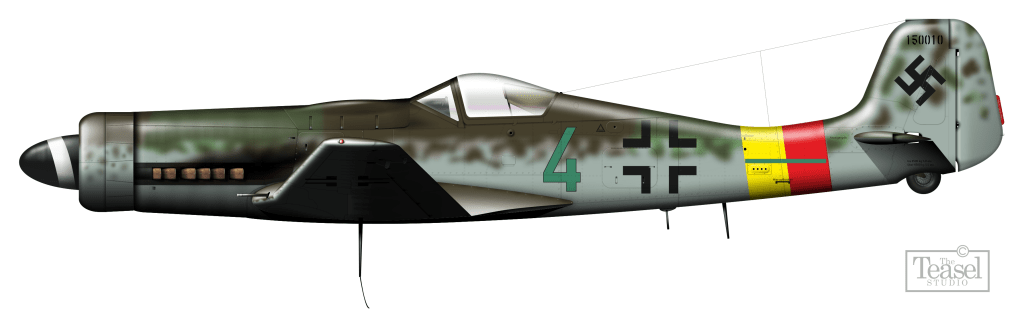
The first upgrade was a high aspect ratio wing to reduce the induced drag. It had almost 40 per cent more wingspan than an Fw 190. This decreased roll performance is not a critical factor when attacking lumbering bombers. Secondly, the aircraft had an upgraded Junkers Jumo 213E with both MW-50 water/methanol injection at low altitudes and GM-1 nitrous oxide injection at high altitudes. This allowed higher boost pressures and allowed the aircraft to accelerate to a maximum of 472 mph (760 km/h) at higher altitudes, over 30 mph (48 km/h) faster than the fastest Fw 190D. On nitro, it got higher than a teenager hoofing a party balloon, climbing above 49,000 feet! This was around 8,000 feet for most high-performance fighters. The Ta 152H had a pressurised cockpit, further adding to its high-altitude fighting capabilities. Its primary adversary, the B-29, never showed up in Europe during the war. The lower operational altitudes of the previous bombers could be countered with the existing fighters, and the Ta 152H became something of a weapon without a mission.
Because of this, and the declining production during the later stages of the war, only sixty-nine were built. The utterly distinctive Ta 152H performed phenomenally, but its dependence on performance-enhancing laughing gas to enter the club loses it the respect of its peers in the 450mph+ Club. The Ta 154C was a 450-club member too, capable of 460 mph (740 km/h) at 32,810 feet (10,000 m) with MW 50 boost (not GM-1).
If you value flying high, flying fast, and turning like the devil, as you should, then the Ta 152H was the greatest fighter of World War II.