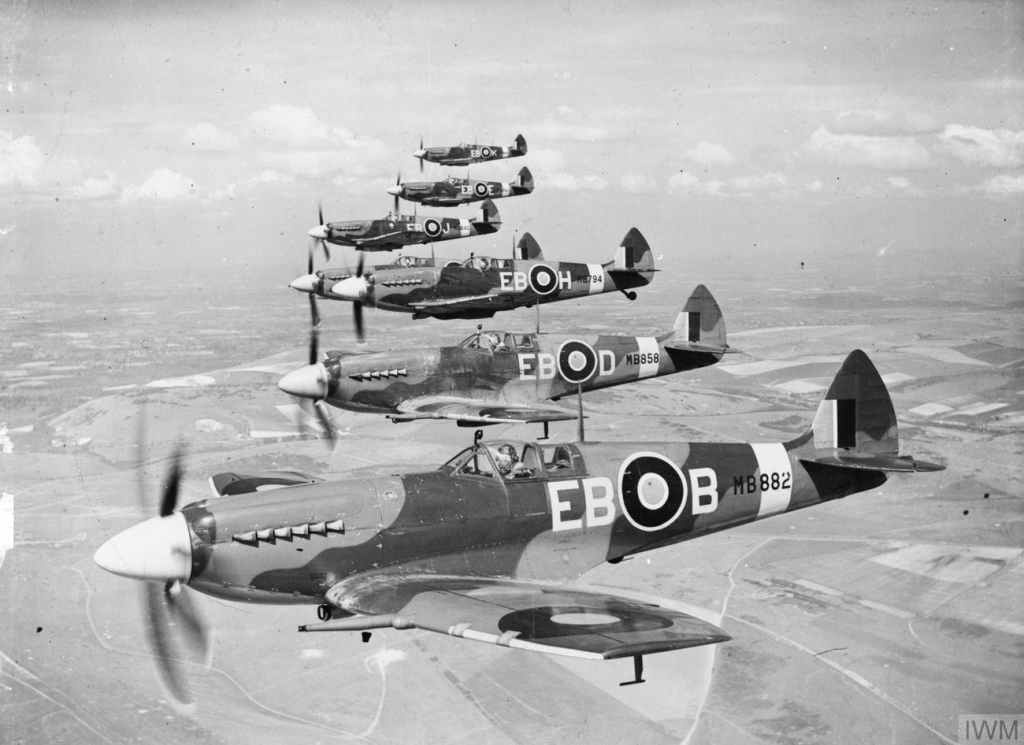
The Spitfire was the greatest fighter of the Second World War, and indeed ever.
By Edward Rippeth
The case is simple. It was born a winner back in 1936, and kept winning, even when all else was going wrong, and winning and winning. Dunkirk, Battle of Britain, Malta, North Africa, Australia, Burma, Sicily, Italy, Normandy, the crumbling Reich, even the final days over Japan, all ended up with the Spitfire triumphant.

At Dunkirk, with Britain facing absolute disaster, Spitfires were deployed in significant numbers for the first time. Despite facing the greatest air force ever seen at that time, hell-bent on destroying our army, navy (and our pleasure cruisers), Spitfires faced them down and shot them down, doing enough to enable the ‘miracle’ of evacuating 338,000 men – in the hands of legends like Al Deere, Bob Stanford Tuck and Sailor Malan.
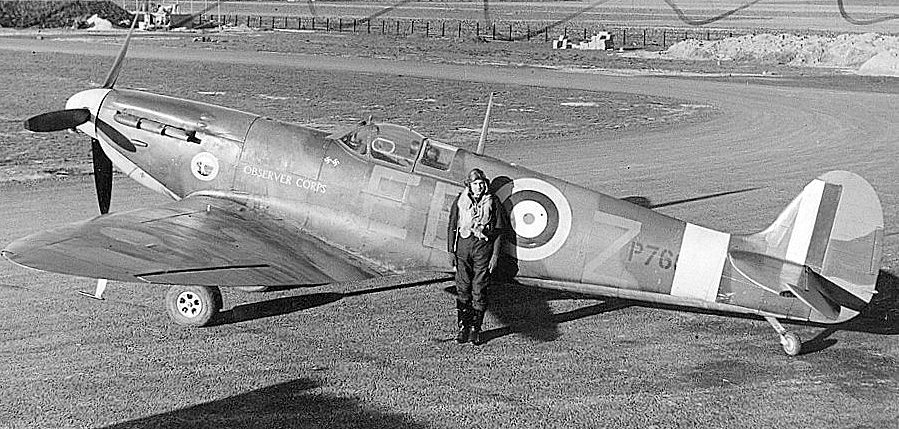
Just around the corner was the Battle of Britain. Yes, there was radar, and yes, there were Hurricanes, but when the Luftwaffe wondered what was going wrong, Spitfires were uppermost in their thoughts. Yes, Hurricanes were more numerous and shot down more planes, but it was the Spitfire they really feared – because it abused the Luftwaffe pilot’s sense of entitlement, knocked them off their perch, and showed they could be beaten. It led to Spitfire snobbery with pilots refusing to accept the lesser Hurricane had shot them down, and sparked a trend for massive overclaiming of Spitfires by Luftwaffe pilots – by a factor of four or five in the first three years of the war. In the greatest and most consequential air battle of all time, the Spitfire was the star.

The flipside, of course, was that when the Spitfire wasn’t there, Britain tended to lose. France, Greece, Crete, Malaya, Singapore, Burma, the early desert campaign – all bravely contested by Hurricanes, Gladiators, P-40s, not to mention Brewster Buffalos, Blochs, Moranes, Curtiss Hawks etc etc. One disaster after another as the Bf 109s, Zeros and Oscars reigned supreme. It needed a very special fighter to turn this around. And that fighter was the Spitfire, brilliantly in Malta, then North Africa, then even in Burma. After two years of hideous beatings at the hands of an apparently invincible Japanese foe, General Slim worked out the tactics of victory involved his troops standing fast during encirclement, and airdrops. The only problem being that the Japanese still dominated the skies, with Nakajima Oscars running circles around the RAF’s Hurricanes and Buffaloes. Two newly introduced squadrons of the new Mark VIIIs and several Mark Vs took just three days to maul and remove the IJA from the skies during the battle of the Admin Box. Victory followed as Dakotas were able to make their supply drops unhindered. The course of the war in the East was irrevocably turned.

Ah, but it didn’t get as many kills as the P-51 Mustang or the Hellcat? Actually, it did. It’s just nobody counted them – until now. But it was too short-ranged? Indeed it was, for a fighter escort. But range and big fuel capacity was of no use in times of enemy air superiority – it needed to be up to altitude, manoeuvrable and fast, which is why it was the only fighter in the world in 1942 which could have saved Malta. But the Focke-Wulf Fw1 90 was better? For several months yes it was, but along came the Spitfire IX and the Spitfire was back on top, and thereafter it was a fully competitive front-line fighter until the war’s end. The constant ability to develop the Spitfire’s airframe and upgrade with more powerful versions of the Merlin engine and ultimately the Griffon through the war meant the last aces of the war in Europe, such as Ian Ponsford (who scored six kills in the last eleven days of April 1945), were piloting the superb Mark XIV.

But it wasn’t very good at ground attack? The Spitfire did a decent and underrated job, but that’s not the main point of a fighter.
But the Seafire? Certainly, it had a lot of problems landing on heaving decks with the narrow and fragile undercarriage, but it was able to get among kamikazes like no other aircraft, and ended up grabbing seven kills in the last dogfight of the war on August 15th – and if the war had gone on, it had the performance to take on Japan’s superb new fighters for home defence, the Ki-84 and Ki-100, which had notably roughed up a squadron of Hellcats in one of its encounters. And of course the Seafire would be developed into the Seafire Mk 47, one of the fastest piston-engined fighters of all time which served off aircraft carriers until the late 1950s.
It didn’t just look the part – it looked beautiful. It captured people’s imagination. It even captured the Luftwaffe’s imaginations. It made Adolf Galland green with envy. And it won the war. That’s why the Spitfire is the greatest fighter of World War 2.
Edward Rippet
Head of Primary Publishing, International schools
Cambridge University Press