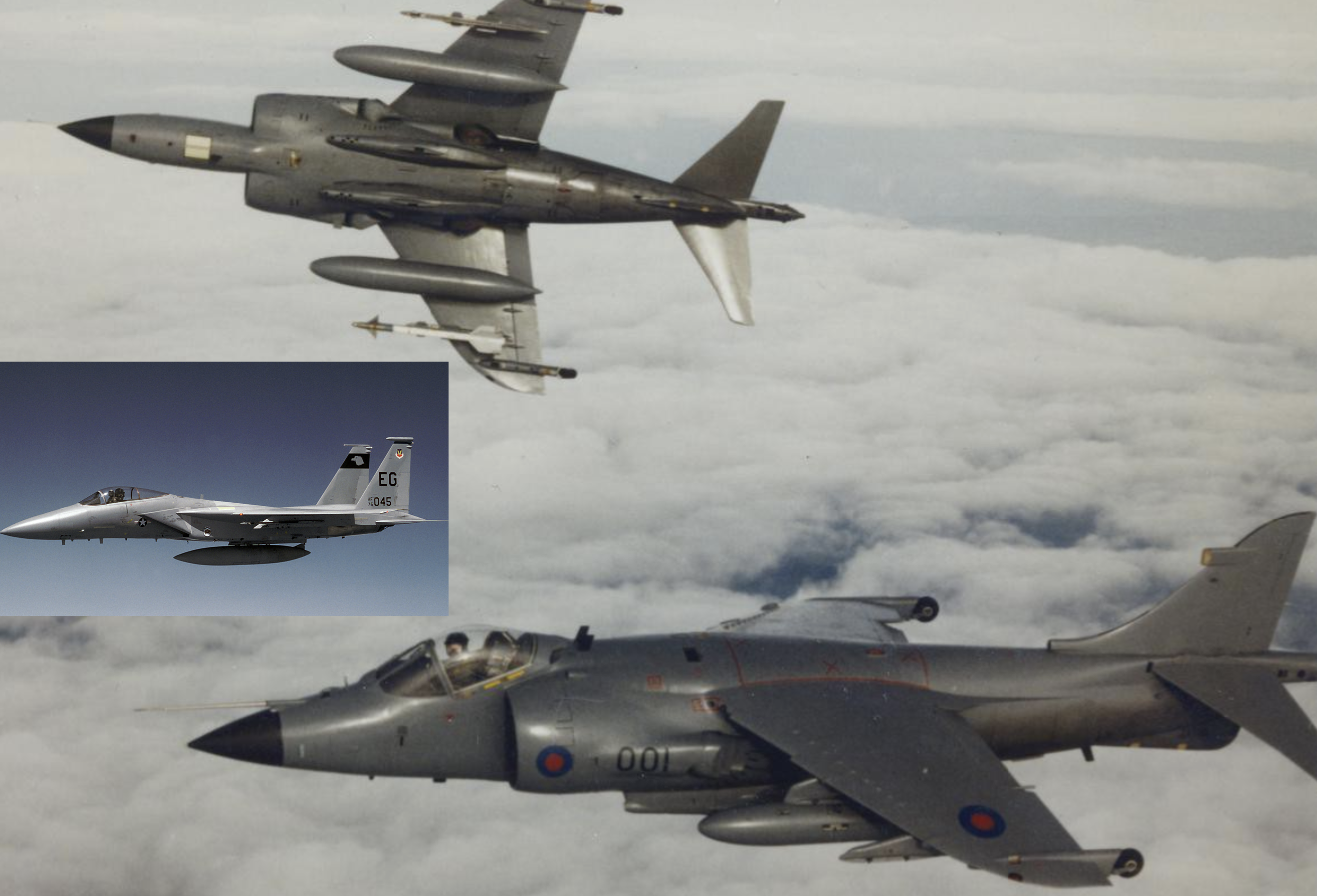
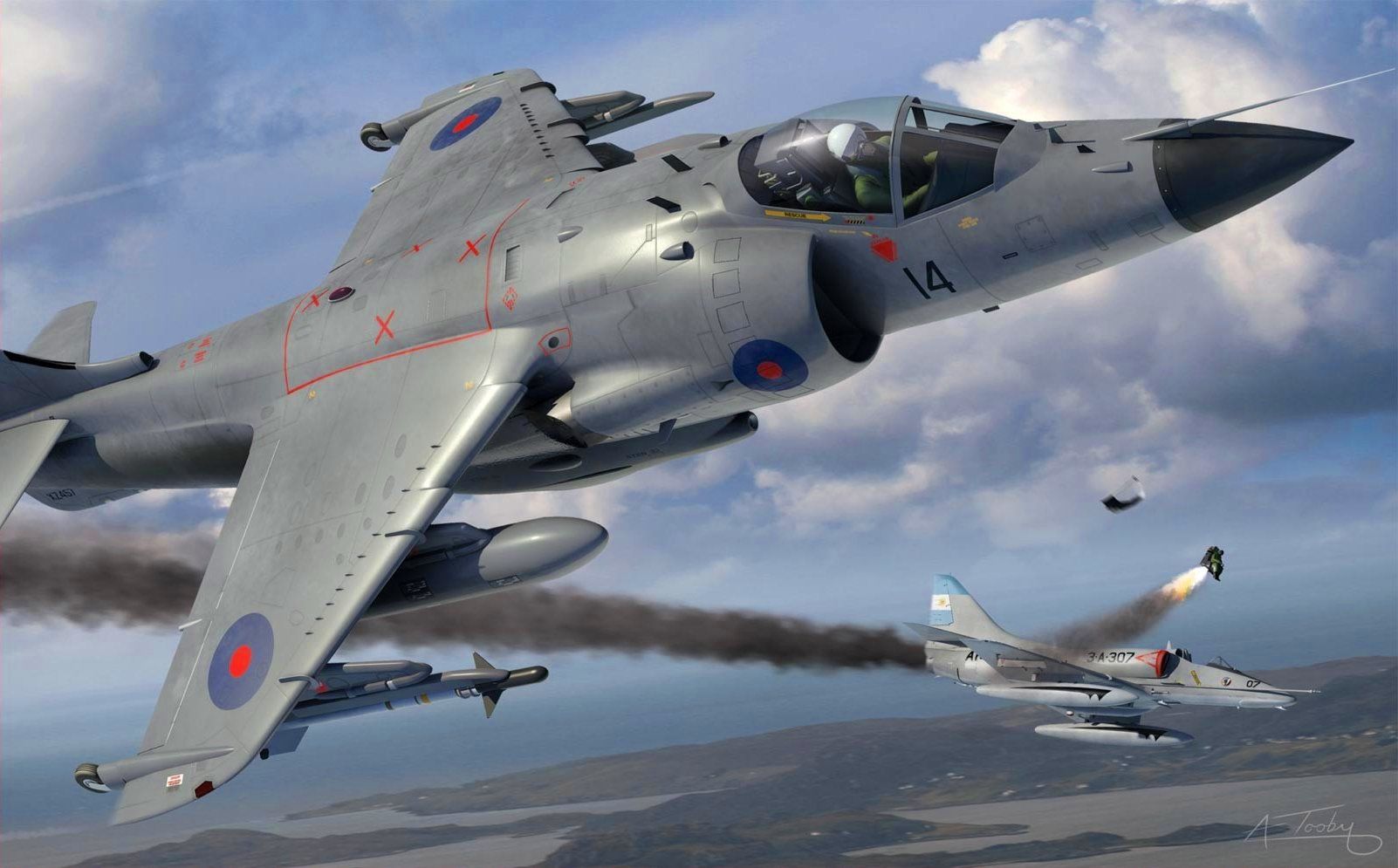
 The Sea Harrier was a tiny, slow and lightly-armed curiosity at the time it entered service in 1978. But when pitted against the mighty no-compromise F-15 Eagle, the most respected combat aircraft in the world, it delivered an expected shock. We spoke to Commander ‘Sharkey’ Ward, who successfully took the Sea Harrier to war in 1982, to find out more.
How well did the Sea Harrier perform against the F-15 in DACT?
“Dissimilar Air Combat Training must be viewed as the bread and butter of the frontline fighter world.
Support Hush-Kit with our high quality aviation themed merchandise here
The Sea Harrier was a tiny, slow and lightly-armed curiosity at the time it entered service in 1978. But when pitted against the mighty no-compromise F-15 Eagle, the most respected combat aircraft in the world, it delivered an expected shock. We spoke to Commander ‘Sharkey’ Ward, who successfully took the Sea Harrier to war in 1982, to find out more.
How well did the Sea Harrier perform against the F-15 in DACT?
“Dissimilar Air Combat Training must be viewed as the bread and butter of the frontline fighter world.
Support Hush-Kit with our high quality aviation themed merchandise here


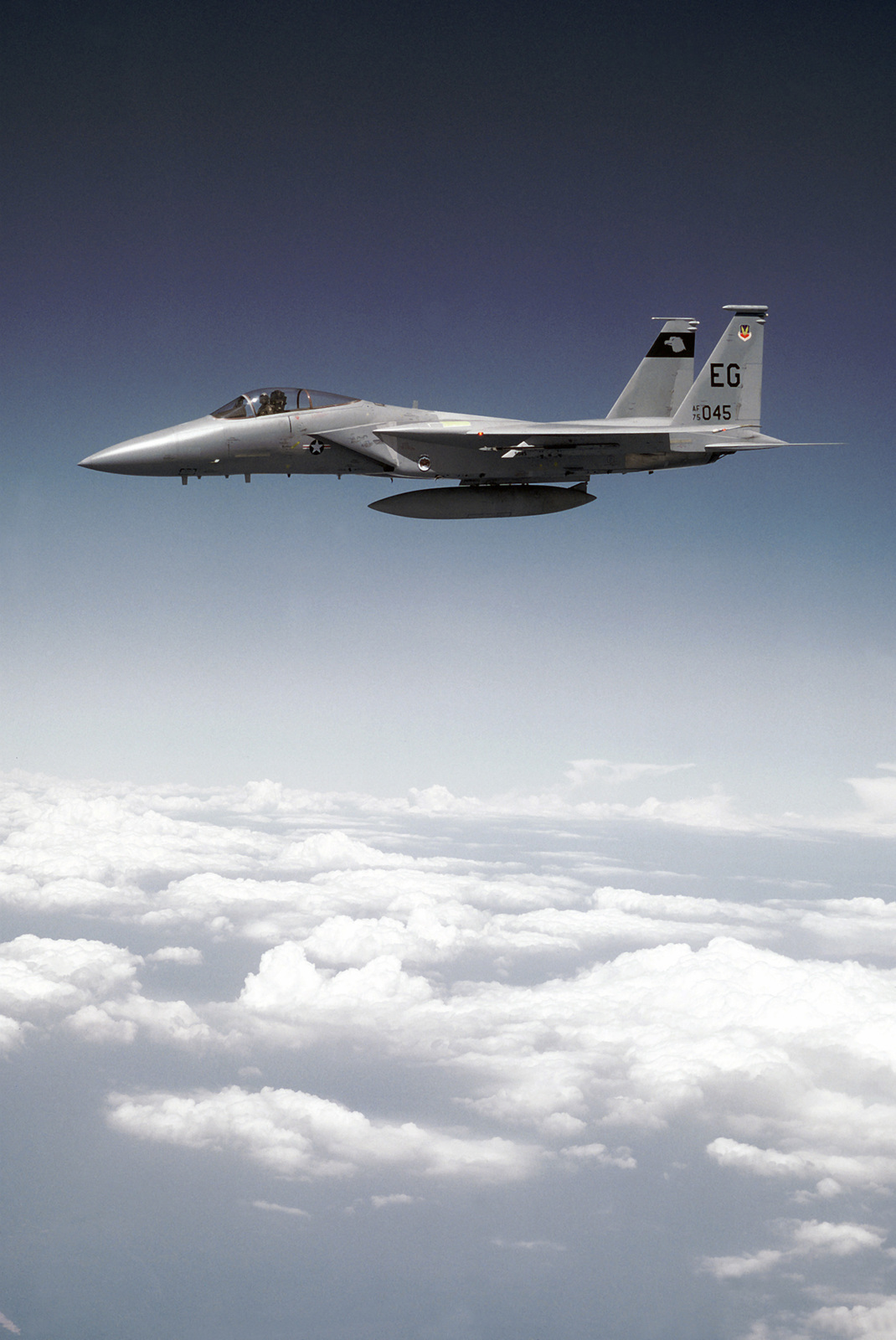 In late 1979, the Sea Harrier was the new boy on the block and fighter pilots everywhere were keen to know how capable it was going to be in combat. This led to the USAF F-5E Aggressor Squadron at Alconbury inviting my Trials Unit to visit them for an air combat program of mutual learning and evaluation. The results of the detachment spread rapidly through the fighter world. We came away having recorded 26 kills ‘for’ and just 10 ‘against’.
In very quick time, the boss of the fabled F-15 Eagle Squadron at Bitburg in Germany called me up and asked to come and visit us with two of his superb aircraft for more fighter combat evaluation. My first book provides full details of these two DACT detachments. Against the F-15, Ian Mortimer and I recorded seven kills ‘for’ and just one ‘against’.
In late 1979, the Sea Harrier was the new boy on the block and fighter pilots everywhere were keen to know how capable it was going to be in combat. This led to the USAF F-5E Aggressor Squadron at Alconbury inviting my Trials Unit to visit them for an air combat program of mutual learning and evaluation. The results of the detachment spread rapidly through the fighter world. We came away having recorded 26 kills ‘for’ and just 10 ‘against’.
In very quick time, the boss of the fabled F-15 Eagle Squadron at Bitburg in Germany called me up and asked to come and visit us with two of his superb aircraft for more fighter combat evaluation. My first book provides full details of these two DACT detachments. Against the F-15, Ian Mortimer and I recorded seven kills ‘for’ and just one ‘against’.
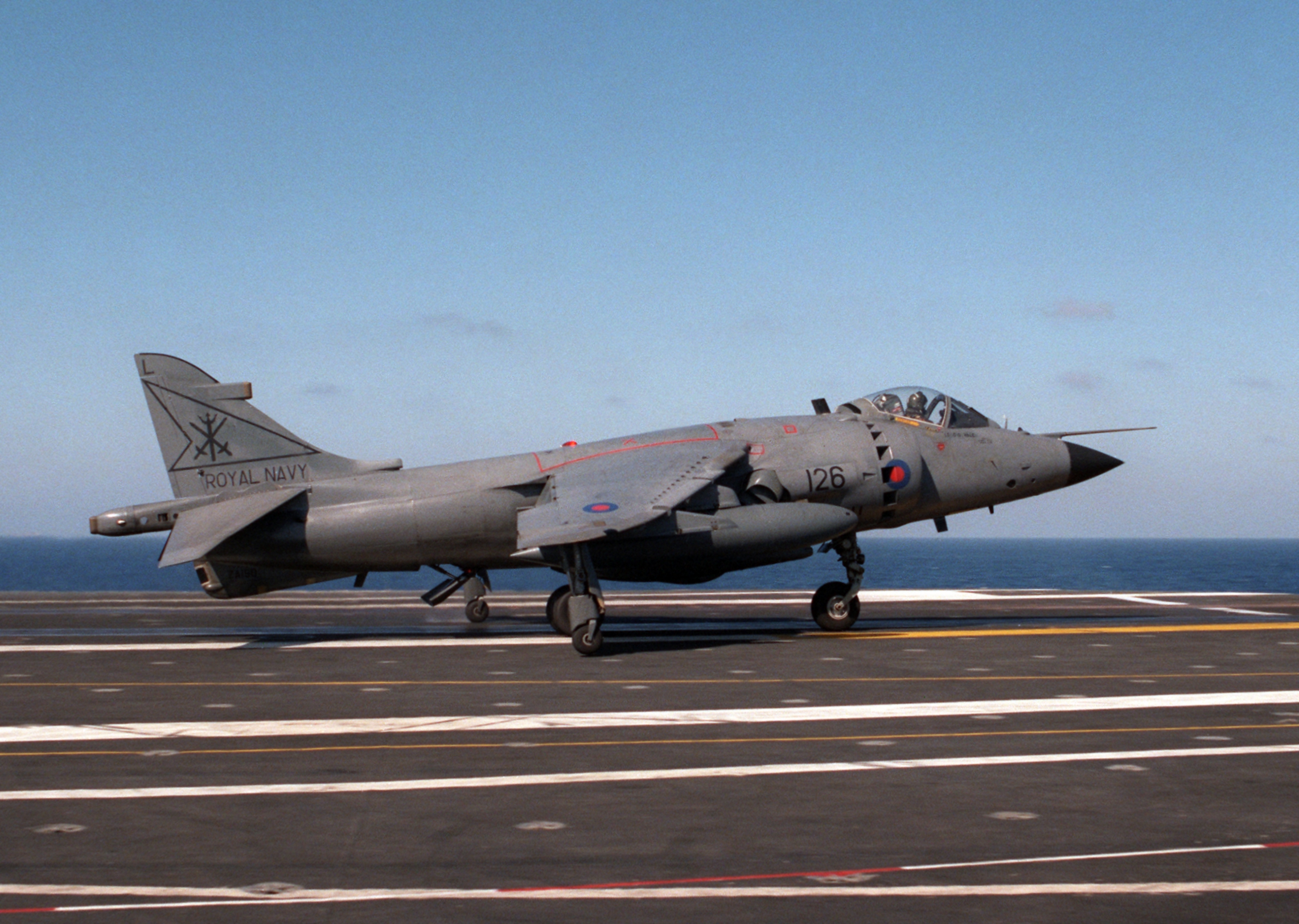 Detractors might have called this a flash in the pan. But they would be wrong. In December 1981, I took my new squadron, 801, to the Air Combat Manoeuvring Installation at Decimomannu, Cagliari on the Italian Island of Sardinia to fight once more against the Aggressors and the Bitburg Eagles. It was a privilege to share the skies with them once more and benefit from their expertise.
We had flown our Sea Harriers down across France from the UK to participate in tri-national fighter combat training against the best of the US and Italian Air Forces. It was a terrific training opportunity – even though the Italian pilots never turned up in the air to fight (but they did wear flashy flying suits).
For 801 Squadron, the unique attraction of the detachment was the state-of-the-art range in which combat was to be conducted: an Air Combat Manoeuvring Installation (ACMI). Each aircraft carried a special telemetry pod that was monitored and recorded in real time by a ring of sensor stations encircling the combat area, which was over the sea. The pod transmitted accurate information about each aircraft’s relative position, heading, speed, attitude, angle of attack, ‘g’ and height. This information was collated by powerful computers on the ground and resulted in a complete three-dimensional recording of each combat which could be displayed on a large screen in the debriefing room – with freeze and replay options instantly available – just like a videogame. The real time view from each cockpit was available on demand and very realistic. The simulated release of missiles and the firing of guns was measured precisely to establish whether a ‘kill’ had been achieved, i.e. within range, missile acquired, gun tracking on target, etc. Spurious claims of ‘kills’ would be summarily discounted and disputed claims of combat success could be fairly and accurately adjudicated. In other words, one could not cheat and ‘win the fight in the debrief rather than in the air’.
Detractors might have called this a flash in the pan. But they would be wrong. In December 1981, I took my new squadron, 801, to the Air Combat Manoeuvring Installation at Decimomannu, Cagliari on the Italian Island of Sardinia to fight once more against the Aggressors and the Bitburg Eagles. It was a privilege to share the skies with them once more and benefit from their expertise.
We had flown our Sea Harriers down across France from the UK to participate in tri-national fighter combat training against the best of the US and Italian Air Forces. It was a terrific training opportunity – even though the Italian pilots never turned up in the air to fight (but they did wear flashy flying suits).
For 801 Squadron, the unique attraction of the detachment was the state-of-the-art range in which combat was to be conducted: an Air Combat Manoeuvring Installation (ACMI). Each aircraft carried a special telemetry pod that was monitored and recorded in real time by a ring of sensor stations encircling the combat area, which was over the sea. The pod transmitted accurate information about each aircraft’s relative position, heading, speed, attitude, angle of attack, ‘g’ and height. This information was collated by powerful computers on the ground and resulted in a complete three-dimensional recording of each combat which could be displayed on a large screen in the debriefing room – with freeze and replay options instantly available – just like a videogame. The real time view from each cockpit was available on demand and very realistic. The simulated release of missiles and the firing of guns was measured precisely to establish whether a ‘kill’ had been achieved, i.e. within range, missile acquired, gun tracking on target, etc. Spurious claims of ‘kills’ would be summarily discounted and disputed claims of combat success could be fairly and accurately adjudicated. In other words, one could not cheat and ‘win the fight in the debrief rather than in the air’.
 Critically, and during each sortie debrief, a pilot could see his tactical aircraft-handling mistakes at any part of the combat and could learn from them as they were pointed out by experienced Instructors. I was fortunate to be one of those – a fully qualified Air Warfare Instructor (AWI) trained by the élite aircrew of 764 Naval Air Squadron at Naval Air Station Lossiemouth, Scotland.
After getting used to the Decimomannu range facilities with private squadron sorties, the real business began against the F-15’s and the F-5E’s. Our little Sea Harrier jump jet more than held its own against these two superb fighter aircraft which could fly faster and turn much tighter. To the uninitiated, this should have meant a one-sided contest that we would always lose. But not so.
Critically, and during each sortie debrief, a pilot could see his tactical aircraft-handling mistakes at any part of the combat and could learn from them as they were pointed out by experienced Instructors. I was fortunate to be one of those – a fully qualified Air Warfare Instructor (AWI) trained by the élite aircrew of 764 Naval Air Squadron at Naval Air Station Lossiemouth, Scotland.
After getting used to the Decimomannu range facilities with private squadron sorties, the real business began against the F-15’s and the F-5E’s. Our little Sea Harrier jump jet more than held its own against these two superb fighter aircraft which could fly faster and turn much tighter. To the uninitiated, this should have meant a one-sided contest that we would always lose. But not so.
 All my squadron pilots approached the air combat detachment with a high level of confidence. Our earlier successes against the F-5E’s and the F-15’s had not been forgotten by our opponents. They treated us with a great deal of respect on the ground and, importantly, in the air. This proved to be to our considerable advantage. The real time recording of every engagement ensured that what had happened in the air was properly and correctly recognised afterwards in the debrief.
Sadly, this site will pause operations in mid June if it does not hit its funding targets. If you’ve enjoyed an article you can donate here.
Our pilots acquitted themselves very well indeed, winning some and losing some. The icing on the cake for me came when I was programmed to fly alone against two F-15’s and two F-5E’s in a 1v2v2 combat mission. I had the major advantage of having Desmond Hughes on the ground radar, my observer from Phantom days, providing me with a running commentary on the positions of the other four aircraft. It was a totally exhilarating fight which included a horrendous, near-head-on collision with one of the F-15’s. Nearly time for brown trousers and far better than any video game!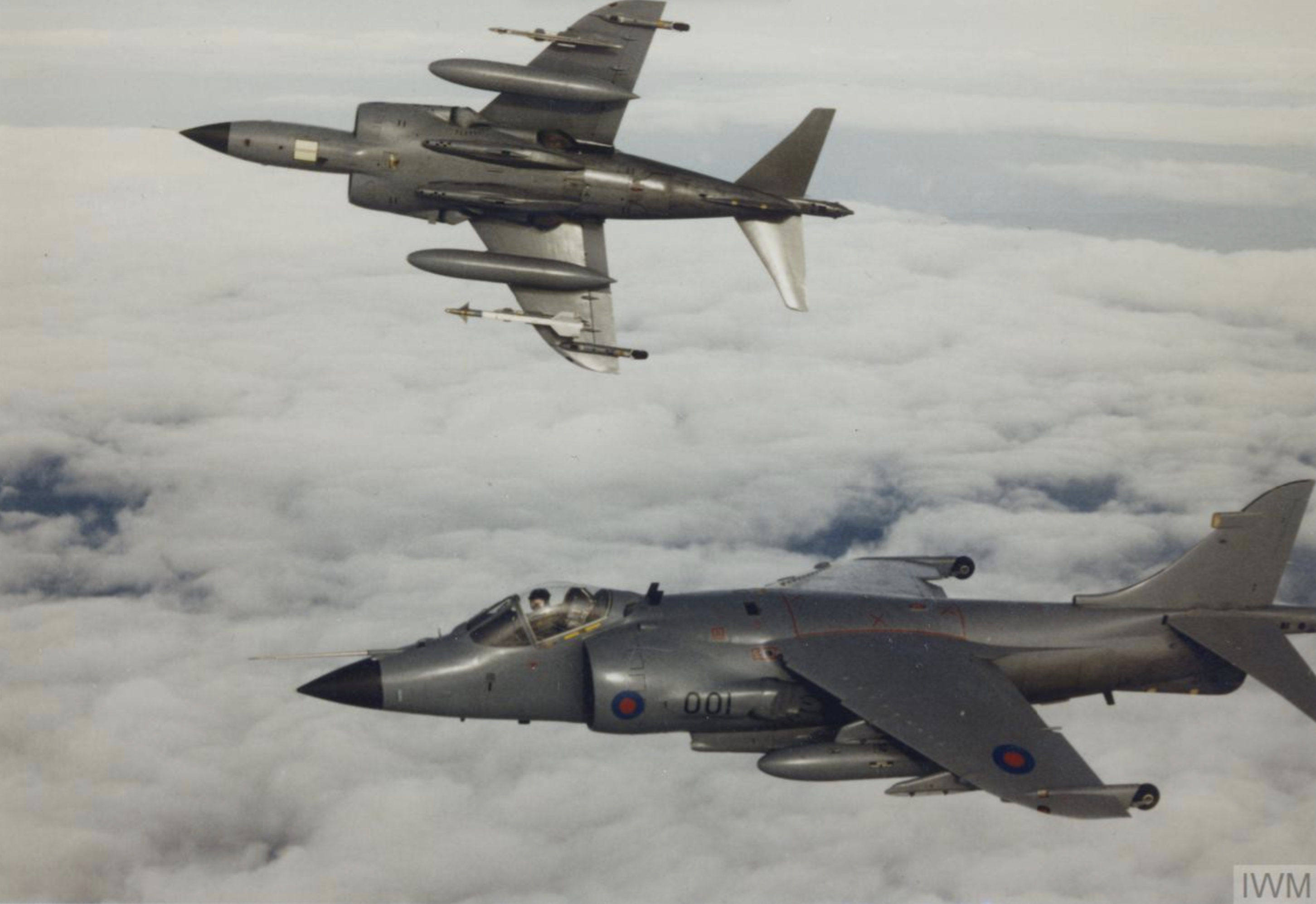 In one brief skirmish with the pair of F-15’s, Desmond had guided me in to intercept them from their left-hand side. They were in relatively close attack formation and didn’t see me until I was racing in on their beam at 600 knots. They were less than a mile away crossing right to left at about 450 knots when they saw me and decided to take evasive action. Because of the need to conserve fuel they could only use reheat/afterburner and their supersonic capability when engaged in actual combat manoeuvring. But instead of breaking hard towards me and splitting up to give me two targets to cope with, which is what I expected, they decided to try to outrun me and deny me a missile shot. Applying full reheat, they both tried to run but it was too late. As I turned hard-left close behind them, I simulated the release of two Sidewinders at very short range. “Fox Two. Fox Two! Splash two F-15’sâ€. Why they chose to run rather than fight is still beyond me. Probably it was a result of our earlier close-in engagements.
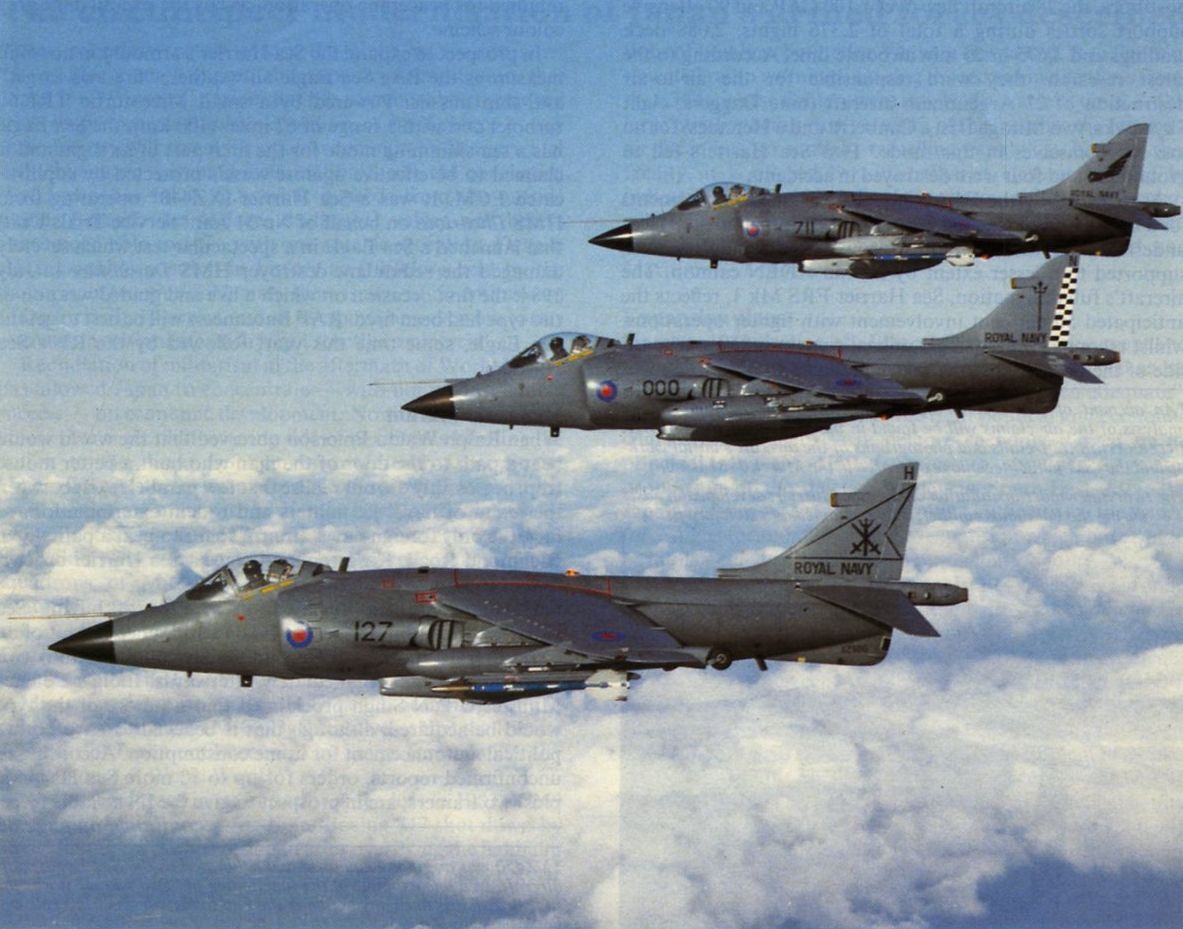 During that electrifying combat sortie I claimed a total of seven kills – a mixture of Eagles and Freedom Fighters – with no kills against me. Back on the ground and when we reviewed each combat on the screen in the debrief, my claims were fully justified. This was too much for one of the F-15 pilots who tried to say it was all wrong. But the Aggressor pilots, bless their honesty, told him he had been well beaten and should take it like a professional – as they did themselves.
 My two young first-tour pilots Charlie Cantan and Steve Thomas made remarkable progress during the detachment, understanding at last the tactical lessons that we had been trying to teach them verbally but without access to such digital technology. In fully developed fighter combat, a fraction of a second delay in decision-making is all it takes to make the difference between winning and losing your life. There are many nuances to this process of tactical thought. Anticipation, experience and knowing your adversary’s capabilities, intent and future position can only be properly acquired in the air. This learning process usually takes a lot of time. As a result during training at our home base, I had been able to ‘shoot down’ Charlie and/or Steve within a minute of commencing combat. Following the ‘Deci’ detachment those days were now over – the penny had dropped and it took rather longer for me to achieve the same result.
Our successes had rocked the fighter world. We had built a reputation that was to have a major impact on the conduct of the Air War in the Falklands just a few months later.”
My two young first-tour pilots Charlie Cantan and Steve Thomas made remarkable progress during the detachment, understanding at last the tactical lessons that we had been trying to teach them verbally but without access to such digital technology. In fully developed fighter combat, a fraction of a second delay in decision-making is all it takes to make the difference between winning and losing your life. There are many nuances to this process of tactical thought. Anticipation, experience and knowing your adversary’s capabilities, intent and future position can only be properly acquired in the air. This learning process usually takes a lot of time. As a result during training at our home base, I had been able to ‘shoot down’ Charlie and/or Steve within a minute of commencing combat. Following the ‘Deci’ detachment those days were now over – the penny had dropped and it took rather longer for me to achieve the same result.
Our successes had rocked the fighter world. We had built a reputation that was to have a major impact on the conduct of the Air War in the Falklands just a few months later.”

This book can only happen with your support. Preorder your copy today here.Â
 From the cocaine, blood and flying scarves of World War One dogfighting to the dark arts of modern air combat, here is an enthralling ode to these brutally exciting killing machines.
The Hush-Kit Book of Warplanes is a beautifully designed, highly visual, collection of the best articles from the fascinating world of military aviation –hand-picked from the highly acclaimed Hush-kit online magazine (and mixed with a heavy punch of new exclusive material). It is packed with a feast of material, ranging from interviews with fighter pilots (including the English Electric Lightning, stealthy F-35B and Mach 3 MiG-25 ‘Foxbat’), to wicked satire, expert historical analysis, top 10s and all manner of things aeronautical, from the site described as:
“the thinking-man’s Top Gear… but for planesâ€.
The solid well-researched information about aeroplanes is brilliantly combined with an irreverent attitude and real insight into the dangerous romantic world of combat aircraft.
FEATURING
From the cocaine, blood and flying scarves of World War One dogfighting to the dark arts of modern air combat, here is an enthralling ode to these brutally exciting killing machines.
The Hush-Kit Book of Warplanes is a beautifully designed, highly visual, collection of the best articles from the fascinating world of military aviation –hand-picked from the highly acclaimed Hush-kit online magazine (and mixed with a heavy punch of new exclusive material). It is packed with a feast of material, ranging from interviews with fighter pilots (including the English Electric Lightning, stealthy F-35B and Mach 3 MiG-25 ‘Foxbat’), to wicked satire, expert historical analysis, top 10s and all manner of things aeronautical, from the site described as:
“the thinking-man’s Top Gear… but for planesâ€.
The solid well-researched information about aeroplanes is brilliantly combined with an irreverent attitude and real insight into the dangerous romantic world of combat aircraft.
FEATURING
- Interviews with pilots of the F-14 Tomcat, Mirage, Typhoon, MiG-25, MiG-27, English Electric Lighting, Harrier, F-15, B-52 and many more.
- Engaging Top (and bottom) 10s including: Greatest fighter aircraft of World War II, Worst British aircraft, Worst Soviet aircraft and many more insanely specific ones.
- Expert analysis of weapons, tactics and technology.
- A look into art and culture’s love affair with the aeroplane.
- Bizarre moments in aviation history.
- Fascinating insights into exceptionally obscure warplanes.
 The book will be a stunning object: an essential addition to the library of anyone with even a passing interest in the high-flying world of warplanes, and featuring first-rate photography and a wealth of new world-class illustrations.
 Fairchild AU-23A Armed Pilatus Turbo-Porter 72-3 Janes – Sufficient put into service to not be relevant.
*Pave Coin Beech A36 Bonanza Janes 72-3. Other aircraft included the Piper PE1 Enforcer (turbine Mustang) – Janes 81-2, AU-23 and 24 (above), Cessna O-1, U-17 and O-2 and Cessna A-37.
SAAB-MFI-17 (only 300kg external load capability) 72-3 Janes
Fairchild AU-23A Armed Pilatus Turbo-Porter 72-3 Janes – Sufficient put into service to not be relevant.
*Pave Coin Beech A36 Bonanza Janes 72-3. Other aircraft included the Piper PE1 Enforcer (turbine Mustang) – Janes 81-2, AU-23 and 24 (above), Cessna O-1, U-17 and O-2 and Cessna A-37.
SAAB-MFI-17 (only 300kg external load capability) 72-3 Janes

This book can only happen with your support. Preorder your copy today here.Â