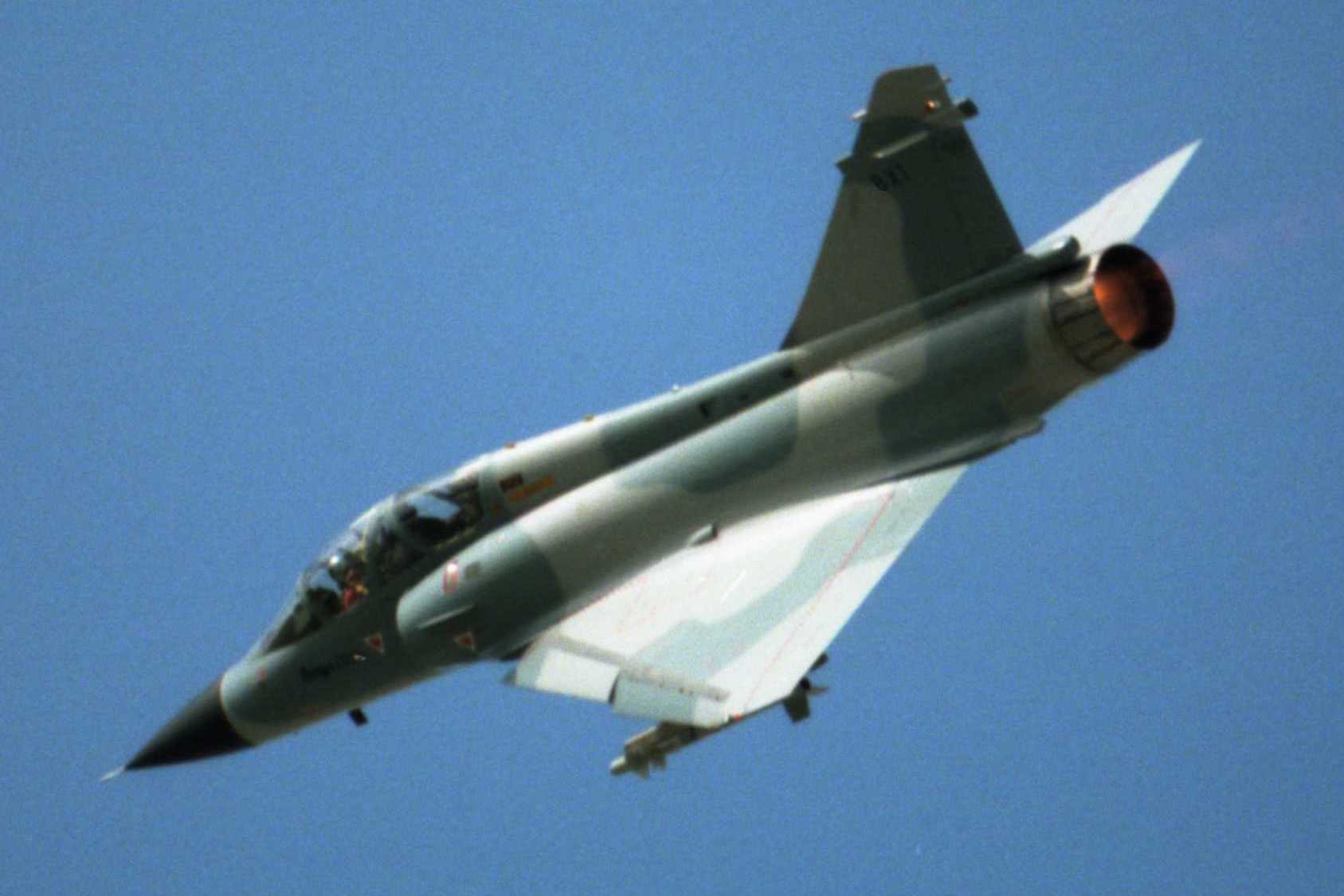
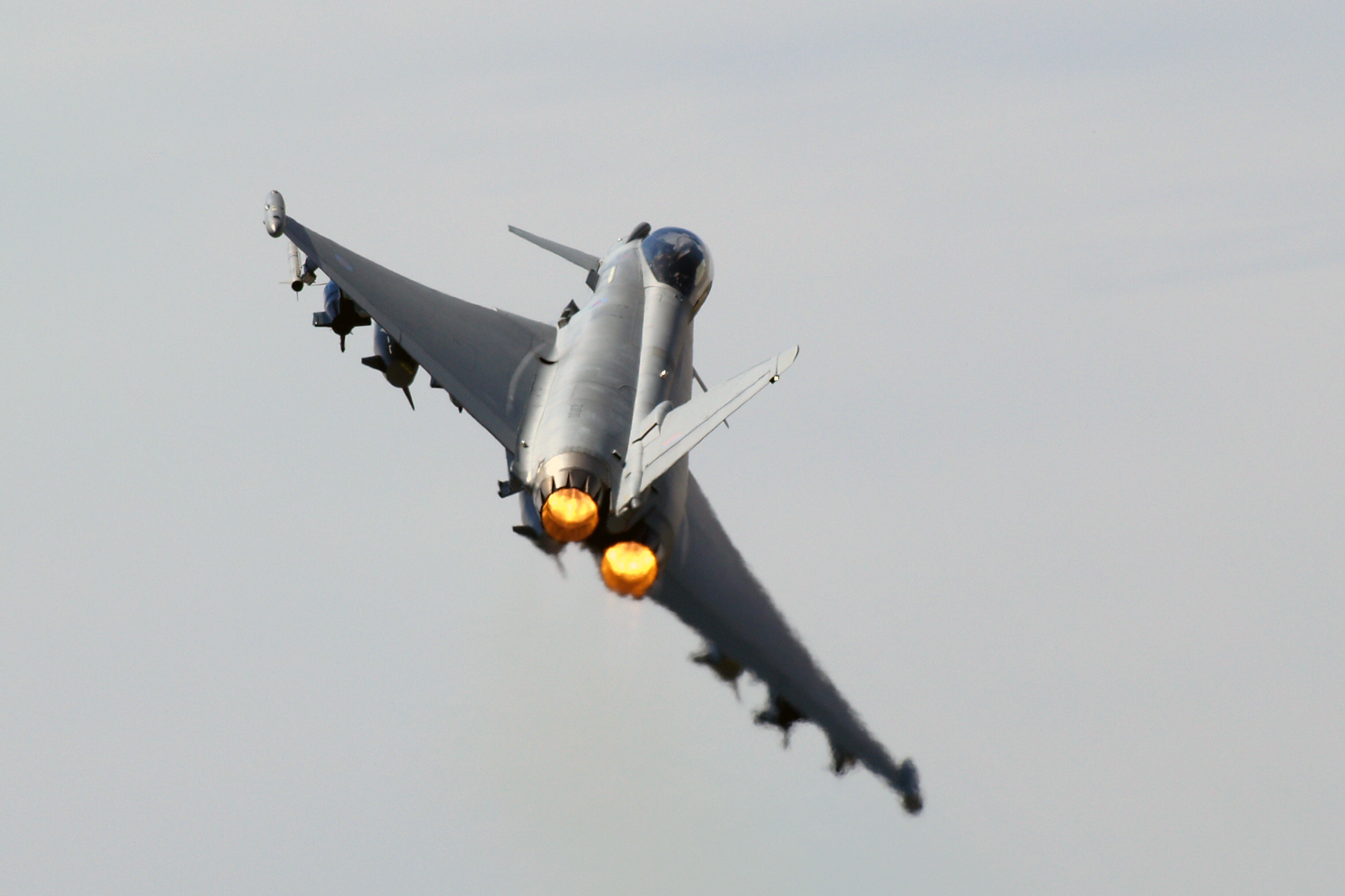
Historically, there’s been lots of accusations of underhand play by European aircraft manufacturers. There’s the oft-cited (and certainly false) claim that Dassault was inspired to create the delta-winged Mirage after seeing the Fairey Delta 2 in the early 1950s, an arrogant British theory that does not seem to make sense chronologically. Going the other way across La Manche is the French assertion that the Harrier was a French concept (which is half-true but generous to Michel Wilbault). There’s also the possibly true claim that Dassault was secretly working on a indigenous swing-wing design while negotiating a part in the AFVG, the failed precursor to the Tornado (which led to the fastest European aircraft ever flown). The accusations go both way however. I was talking to a French aerospace engineer, who has asked to remain nameless, and we got onto the subject of the Typhoon. He grudgingly admired the weapons carriage arrangement, thought the intake design odd, but was most animated when talking about the wing which he claimed was a rip-off of the Mirage 2000s. Intrigued by this possibility I asked Jim Smith to look into this allegation. Here are his thoughts:
“Superficially, there is a resemblance between the wing design of the two aircraft, which is not surprising given the advantages in wave-drag and the ability to have a low thickness to chord, and yet reasonable internal volume for fuel and structure.
In detail, however, there are some significant differences arising from the differing approach taken to stability and control between the Mirage 2000 and the Typhoon.
The table below compares some parameters which define the wing shape – note that the fact that the Typhoon has a bigger wing is not really relevant to the debate. It is a bigger, heavier aircraft and has a bigger wing.
Parameter        Eurofighter Typhoon  Mirage 2000
Leading edge sweep   53 deg                58 deg
Taper ratio            0.166                 0.085
Trailing edge sweep    ~4 deg                  3.5 deg (both negative sweep)
Leading edge flap/slat  Part-span         Near full span
Aspect Ratio             2.4                   2.0
Twist/camber/profile
 Stability               35% unstable                   ‘Relaxed stability’
Configuration           Canard-Delta                    Pure Delta
Structure Spars  Aligned with local sweep       Spars at right angles to fuselage
While the wings appear similar, the use of the canard configuration for Typhoon, and its highly unstable design, have led to subtle differences in sweep, aspect ratio, taper ratio, section, camber and twist, as well as different leading edge manoeuvre devices.
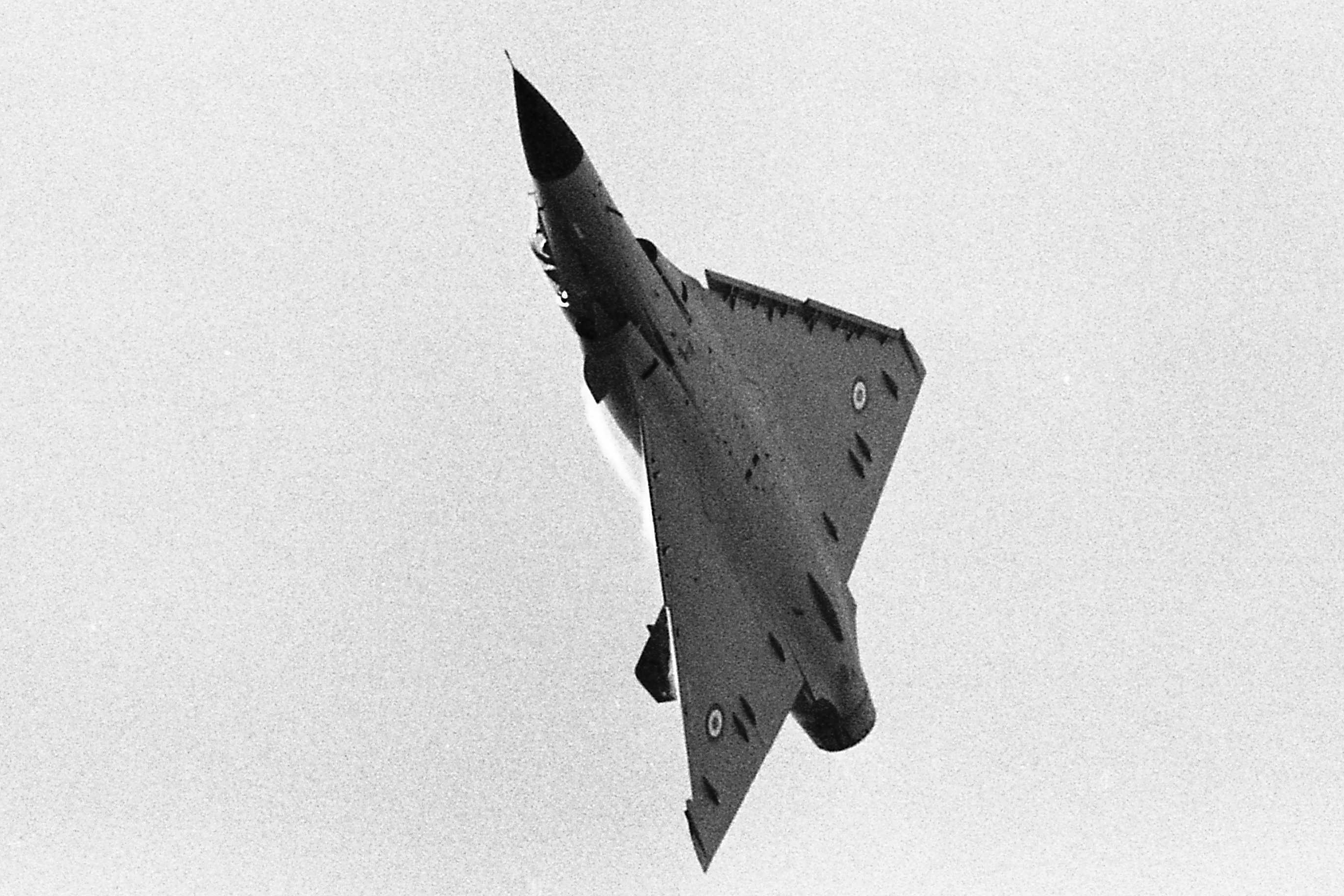 Knowing, from my past position advising the project on aerodynamics and performance, the intimate connection between wing aerodynamics, aircraft control laws and (in)stability, performance and structural load management, there is, in my view, no probability that the Typhoon wing owes any of its design features to the Mirage 2000.”