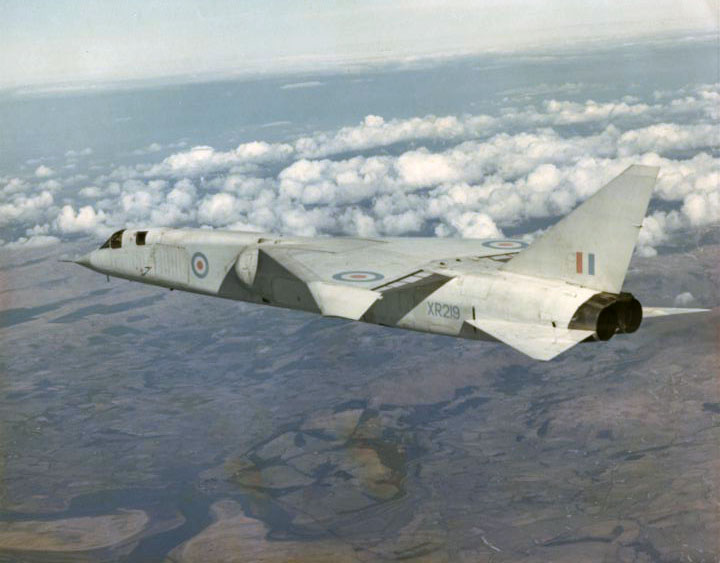
For many in Britain, a nation saved by air power in World War II, military aircraft are colossally symbolic. The wartime Spitfire and Lancaster were figureheads for British pride, and throughout the 1950s, the nation’s futuristic jets were much trumpeted. Here, in thundering rivetted aluminium, was a tangible reminder that this was a technologically advanced superpower. The future was fast and high-flying and we were making it, forging it in the deafening afterburners of the Lightning and the devastating invulnerability of the Vulcan. In 1965, Britain had a supersonic bomber superior to anything else in the world — the TSR-2 — but before entering service with the RAF, the project was axed. For some, this left a wound that over half a century later has not healed. The subject remains an emotive one and even today can provoke angry impassioned debate. However, the popular myth of TSR-2 may not be all it seems. We asked Jim Smith, who had significant technical roles in many of the UK’s leading military aviation programmes from ASRAAM to the Eurofighter Typhoon, to consider both the effectiveness of the aircraft and the real impact of its cancellation.
“Recently, in conversation with Hush-Kit’s Joe Coles I provided a comment on the TSR-2 along the following lines:
1) An over-ambitious low-level supersonic range requirement drove up cost
2) Some development issues with undercarriage and cockpit vibration
3) Many system elements needing development – engine, avionics, sensors, all adding cost
4) Industry needed rationalising, but..
5) Airframe had great potential
Hush-Kit has asked me to expand on these views, knowing that the history of the TSR-2 always inspires lively debate.

I should add that I do not intend to duplicate the work of others, but rather to follow my normal practice of considering the requirement for the aircraft; the technical implications of that requirement; some analysis of the political, economic, technical and Industrial issues that may have led the incoming Labour Government to cancel the project in 1965; and some reflection on the Industry that emerged following the cancellation of the Project. So much has been written on this subject, by so many people, better-placed than I to tell the story, that I feel somewhat diffident in offering these views. Also, in order to keep this piece digestible, I will inevitably have to summarise some of the issues somewhat. Nevertheless, I can but hope that some interesting and stimulating debate will be provoked.
Requirements
The requirements for TSR.2 evolved during the course of the development programme, starting from a desire to replace the Canberra aircraft in its Tactical, Strike and Reconnaissance roles. Due mainly to the development of advanced ground-based anti-air missile systems, it had become increasingly clear that subsonic, medium-to-high altitude aircraft like the Canberra would not be able to survive against well-integrated air-defence systems. Consequently, the requirement for the replacement aircraft was focussed on high-speed and low-altitude performance.
A few performance highlights include a requirement for nearly 3000 km range at Mach 0.9, low level; and, separately, the ability to cruise at Mach 2.0 for 1600 km. In both cases the distances were to be on internal fuel, with normal reserves and a 2000-lb weapon, carried throughout. Maximum speed at low level was intended to be Mach 1.2; at altitude the maximum speed was anticipated to be Mach 2.35.
In terms of mission roles, it is clear that the nuclear strike role, using either the 15 kiloton Red Beard, or the later WE177 weapon, was intended as a key role for the aircraft, although traditional tactical strike missions with 1000 lb bombs, and reconnaissance using the aircraft’s sideways looking radar were also envisaged.
To further increase the degree of difficulty beyond meeting extreme range and speed requirements at very low level, a requirement to operate from unimproved runways of only about 3000 ft length was also imposed.
While some of these requirements were subsequently relaxed, these initial requirements shaped the configuration that emerged from the design process.
Technical implications of the requirement

Although not yet covered in my Combat Aircraft Design series for Hush-Kit, the first place to start is payload-range. Payload-range sizes the aircraft, and carrying a 2000-lb weapon out and back 1000 or so miles at near-supersonic speeds and low level is going to require a lot of fuel. Couple this with a maximum speed requirement at altitude of greater than Mach 2, and a short take-off requirement, and it is clear that very powerful engines will be required. These factors alone are enough to ensure a large aircraft, and as Bill Gunston remarks in his Beyond the Frontiers article, the TSR.2 came out at 20 ft longer than a Lancaster and more than twice the weight.
Despite this, perhaps the most challenging requirement was to manage sustained high speed at low level, while getting this heavy aircraft airborne in 3000 ft or less. The high-speed, low-level requirement drives to the highest possible wing loading, to ensure good handling in low-level turbulence at high speed. This is also likely to be helpful in achieving the maximum Mach number requirement, which drives towards a slender configuration with a thin wing and low aspect ratio. How then to meet the take-off requirement, which demands a large wing area, and preferably low sweep and good high lift devices?
Well, one obvious possibility would be to use a variable sweep wing. This was, in fact the solution to somewhat similar requirements adopted by the General Dynamics F-111, of which more later. It’s not a bad idea, but does come with a significant penalty in terms of weight and complexity. The solution adopted for the TSR.2 was the bold and innovative step of using full span blown flaps to attain the maximum possible lift from a small, highly-loaded, near-delta wing. Coupled with very powerful engines (which were needed anyway to meet the speed requirements), a soft-field undercarriage with low-pressure tyres, and powerful all moving tail surfaces to control and trim the aircraft, there was at least a prospect of meeting all these conflicting requirements.
You love aeroplanes and we love aeroplanes. Hush-Kit is a team effort and we need you. If all our readers donated £3 we would have all the funding we need for this year. Please consider giving a donation here
What else? Well to get to the required maximum Mach number, both the intakes and the nozzles have to be variable geometry, and, of course, a new engine will be required – an afterburning version of the excellent Olympus, the powerplant of the mighty Vulcan, and of course, subsequently developed into the Olympus 593 for Concorde. Then reinforced cockpit enclosures to withstand possible bird-strikes at low level, and a host of newly-developed mission equipment.
Remarkably, given the challenging requirements, the selected airframe, engine and equipment solutions appear to have had the potential to rise at least towards the challenge, and possibly to meet it.
Industrial, Political, Economic, Technical and Other Considerations

So, what went wrong? Well, there are quite a number of strands to look at here, and much has already been written on the subject. All the various factors I’m going to discuss interplayed with each other. Past political decisions had resulted in an Industry badly placed to take on a complex project of this sort; technical glitches in development resulted in delays, increases in weight and cost, as such difficulties always do; delays and cost increases fed into the aspirations of those who favoured another solution, or no solution at all to the requirement. In the end, not only was the project cancelled, but the then-proposed replacement was also cancelled, resulting in a long interlude of interim part-solutions until a successful successor emerged, which has itself recently been retired after 40-years of service with the RAF.
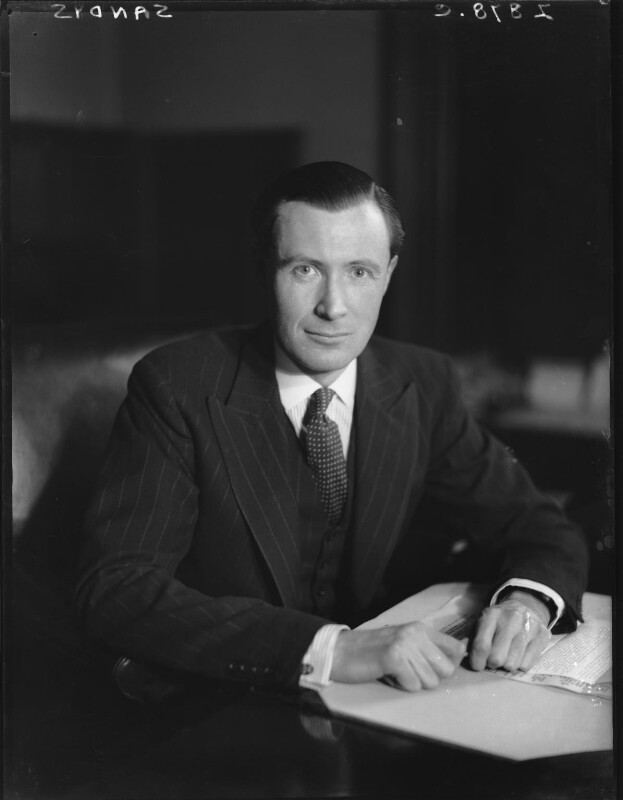
The Industrial and Political landscape is so intimately inter-twined around TSR.2 that the two topics cannot be considered separately. On the Political front, there was a seminal moment when, in April 1957, Mr Duncan Sandys announced in his statement on Defence policy that (in view of developments in guided weapons technologies) it was unlikely that the RAF would in future require new fighters or bombers. Although the Lightning was too far advanced to stop, and the Buccaneer was already in development for the Royal Navy, this announcement appeared to pretty much spell the end of the British combat aircraft Industry.
Given this, it is somewhat surprising that a successful case was made leading to the announcement by the Government of the development of a new strike and reconnaissance aircraft to replace the Canberra, in December 1958, only 20 months after the Duncan Sandys announcement. It is perhaps less surprising, given the existential threat posed by the Sandys’ announcement, that no less than 11 Companies submitted proposals against this lifeline project: Armstrong Whitworth, Avro, Blackburn, Bristol, de Havilland, English Electric, Fairey, Handley-Page, Hawker, Short Brothers and Vickers-Armstrong.
It is also less than surprising, given the limited market for combat aircraft, and the stiff competition for both civil and military designs emerging from the US and France, that the Government perceived very clearly the need to reduce the number of aircraft manufacturers, and announced that future projects would only be available to partnering companies, in order to rationalise the Industry.
Accordingly, the initial development contract went to Vickers-Armstrong, co-operating with English Electric, while the engine development went to Bristol-Siddeley. Within about 2 years, English-Electric, Vickers-Armstrong, and Bristol Aircraft had bowed to the inevitable and merged into the British Aircraft Corporation (BAC). By 1963, the remaining companies, Folland, de Havilland, and Blackburn had joined the Hawker Siddeley Group (Armsrong-Whitworth, A. V. Roe, Gloster and Hawker). For details of these changes see British Built Aircraft by Ron Smith.
From a project perspective, this left the Buccaneer and the TSR.2 as the only game in town for the military aerospace Industry. The demanding specification of the TSR.2 aircraft, and the supporting elements to that capability, meant that just about every technical advance or innovation – in weapons, avionics, flight and utilities control systems, instrumentation and displays, was considered part of the TSR.2 development program. In the end, more than 1000 companies were contributing to the program.
Not unnaturally, this massive scale of activity all cost money – lots of it. Given the Procurement climate of the time the relevant Contracts were neither let as Prime Contracts, nor Fixed-Price. The total program cost appears to be lost in a mire of conflicting figures, but seems unlikely to be less than 500 million pounds. Gunston states that 14 different official figures have been given, varying from 100 to 1000 million pounds.
Technically, many aspects of the aircraft appear to have worked extraordinarily well, with the limited flight tests demonstrating solid handling performance, and the ability to fly supersonically in dry thrust. However, there were a number of technical issues, some of which were very public, which delayed the flight test program, and to some extent played into the hands of those who were sceptical about the programme.
A key concern was the engine – two of the development Olympus 320X engines exploded during the engine test program, the first of those incidents also destroying the dedicated Vulcan testbed aircraft, fortunately while ground running. The cause of the failure was diagnosed, and a fix developed, but the result was an 8-month delay, with the additional complication that the first flight of the aircraft was made with unmodified, and hence dangerous, engines. Fortunately, all went well, with a successful first flight on 27 Sept 1964.
Another very public issue concerned the undercarriage. Remarkably, it was not until the 10th flight that the undercarriage was retracted and lowered successfully. Previous flights had experienced the port leg, and on a separate flight, the starboard leg failing to retract, and one landing with the main undercarriage bogies in a near-vertical, rather than a near-horizontal position. In addition, severe vibration after landing continued to be a problem for much of the flight test program, although a solution to this had been identified and implemented for the last couple of flights.
A number of other issues were encountered, including vibration on the second and third flights – cause identified and cured, a heavy landing on flight 12, and significant fuel leaks on flights 18 and 19. However, in general, the airframe delivered both impressive performance and handling. Much of course remained to be done to develop the weapons system capability, but this of course was not to be, with the cancellation of the program after just 24 flights.
In the end, the aircraft became a target of the incoming Labour Government, with the project not helped by some remarkably vague and unconvincing commentary from Government ministers, which included being unable, or unwilling, to detail the program costs, and considerable mixed-messaging on the aircraft’s intended role as a conventional or nuclear strike aircraft.
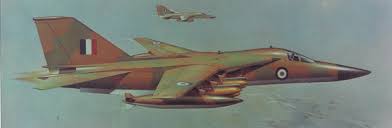
In the end, the Government cancelled the program, announcing that it would procure the General Dynamics F-111K instead. As the likely cost of this acquisition grew, there was a further change in plan, with the announcement that the UK would no longer participate in operations ‘East of Suez’. This was the death knell not only for the F-111K, but ultimately for the Fleet Air Arm’s big carriers as well. Consequently, the RAF ended up with the F-4M Phantom, and latterly the Buccaneer S2 and the Navy’s F-4K Phantoms instead.
Ultimately, of course, the replacement for the TSR.2 proved to be the Panavia Tornado GR variant, which has just been retired from the RAF, after 40 years of peerless service.
Impact on the Industry
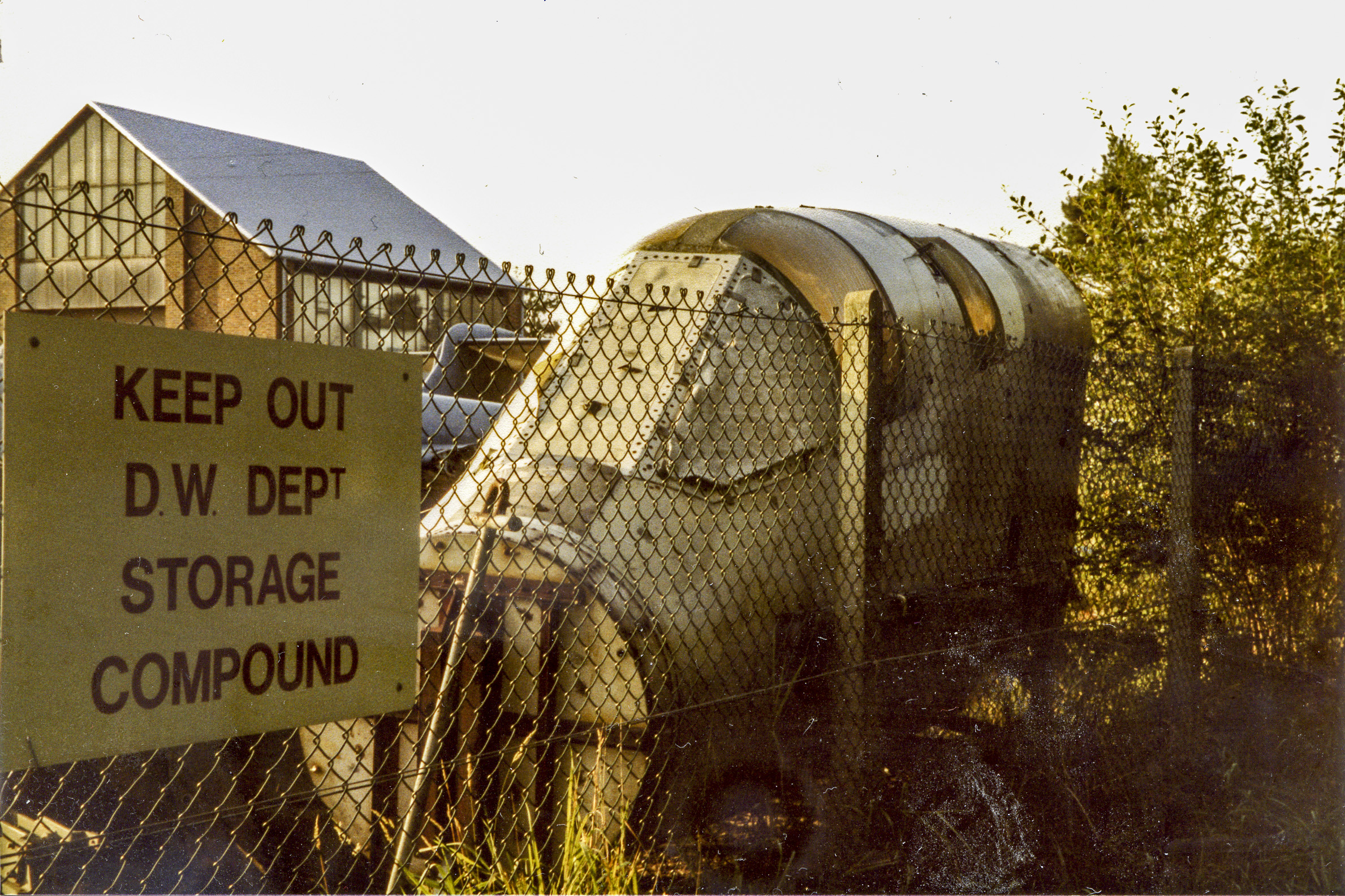
When TSR.2 was cancelled, the Government also cancelled the P.1154 supersonic STOVL fighter and HS.681 STOL transport, with the result that both BAC and Hawker Siddeley needed to restructure and re-focus their businesses.
In practice, this meant a considerable focus on collaboration. BAC worked on the Jaguar as part of the SEPECAT Group, and on the Tornado fighter and strike aircraft as part of the Panavia consortium. BAC, of course, also had a substantial civil aircraft business, ultimately partnering with Aerospatiale to build the unmatched Concorde.
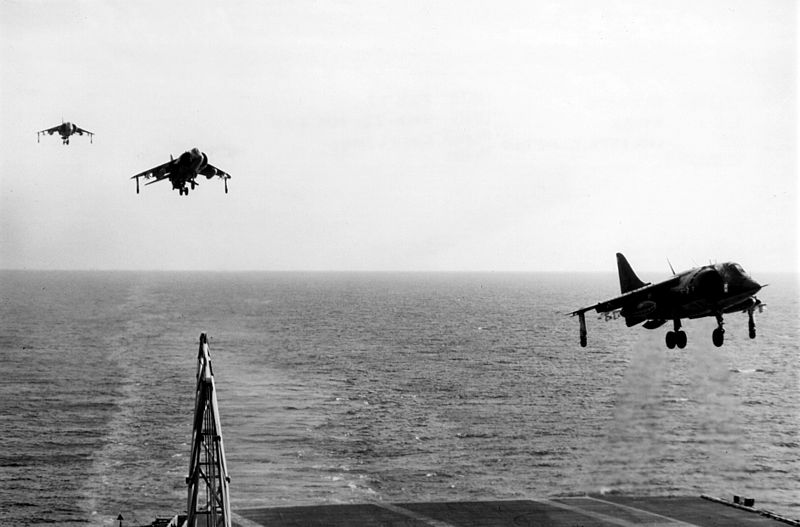
Hawker Siddeley military aircraft projects developed from the Harrier and the Hawk, ultimately leading to cooperation with McDonnell Douglas on the AV-8B and T-45 Goshawk. On the civil side, a variety of the aircraft inherited through the merger process ultimately reached the end of their development cycle. The HS146 evolved into the Avro RJ; the HS748 into the ATP; the Jetstream into the Jetstream 41; and the HS125 into the Hawker 1000. All of these products essentially reached the end of their development path or, in the case of the HS125, were sold off to others. However, a resounding success was the decision of the company to enter the Airbus consortium, and, in particular, to build on very fruitful partnered research effort with Government to provide unmatched wing design capability for a very lucrative line of medium to heavy commercial transport aircraft.

Eventually, with the formation of British Aerospace, collaboration in military aircraft has moved on to the Eurofighter Typhoon, and the contribution made, with Rolls-Royce, to the Lockheed Martin F-35 Lightning II.
The Future
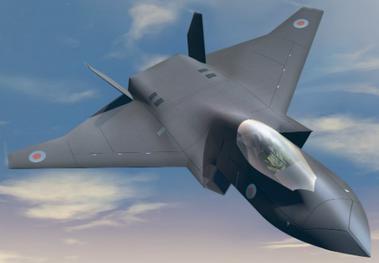
Where next? BAE Systems is seeking to develop the Tempest, with a number of European partners (notably Sweden), but without, as yet, a clearly stated requirement. It has continuing workshare in the Eurofighter Typhoon and Lightning II, and interests through the broader Tempest in a number of possible future unmanned systems. But some have questioned whether the company is now in a position to deliver design leadership on complex future combat aircraft. On the civil side, the one remaining major programme is the Airbus enterprise – but Brexit remains an area of uncertainty, on which, from Australia, I will observe rather than attempt to comment.

Did TSR.2 kill the Industry? – No, but it thrust it into a world of partnership and collaboration.
Does Industry still have the design capability to lead, and to deliver the next generation of UK and European combat aircraft? – It’s an open question. In my view, I don’t think Europe can manage two competing 6th generation combat aircraft projects.
Will the UK remain the principle wing-design and manufacture source for Airbus? – A big question, to which I suspect the answer may well be No for manufacture, and possibly No for design. As noted above, however, much depends on the outcome of the current Brexit brouhaha in the UK.”
I would like to add a comment by historian in David Edgerton from his 2017 Hush-kit interview —
“It is a very strange view for without the support of British governments there would essentially have been no aircraft industry at all. The argument amounts to saying that if the government had given even more support that it actually did then we would have a stronger aircraft industry today. To which the response might be, more Concordes or TSR2s would have done even more damage to the industry rather than strengthened it. Indeed that argument was made – the problem was indeed too many aircraft projects, all supported by government, stretching the technical resources of the industry. Too much innovation was supported, rather than not enough. I must admit I have not heard a convincing argument that supporting the V1000 or developing the P.1154 would have materially affected aeronautical history, though there is plenty of assertion to this effect. In short, it is a very complex issue which is discussed in simplistic ways. One common assumption was that governments were pig-headedly stupid and short-sighted. But the policies of governments were not stupid. There was a strong case for concentrating on fewer companies in the 1950s, and of pushing for European collaboration in the 1960s, and for reducing investment in a sector which for very good reasons would find it difficult to compete with the USA. Nor should we downplay success – the aero-engine industry has been successful, a very rare example of large British manufacturing firm having a serious place in world markets. Without decades of government support there would be no Rolls-Royce today.â€
You love aeroplanes and we love aeroplanes. Hush-Kit is a team effort and we need you. If all our readers donated £3 we would have all the funding we need for this year. Please consider giving a donation here
Principal Sources:
Testing Years, Roland Beamont: Ian Allen, 1980
Beyond the Frontiers BAC TSR.2, Bill Gunston: Wings of Fame, Volume 4, Aerospace Publishing Ltd., 1996
British Built Aircraft, Ron Smith;
Some Turning Point British Aircraft, Ron Smith: In Royal Aeronautical Society publication: British Aviation 1908-2008: Towards the Second Century of British Powered Flight. RAeS April 2008
From Spitfire to Eurofighter – 45 years of Combat Aircraft Design, Roy Boot; Airlife
Wikipedia
Observers Book of Aircraft 1964
Jim Smith’s comments that represent his personal views and observations, but, because he was neither involved in the project itself, nor part of the decision-making in Government circles (he was, in fact, still at school), these views are, of course, shaped by the comments of others. His principal sources are listed above, and I would recommend the reader to seek these out where possible.