
 “Why bother with endurance, when air-to-air refuelling can make this effectively unlimited? Well, because it gives me an excuse to feature two of my favourite aircraft, and to discuss the difference between endurance and range as aerodynamic drivers.
Looking at the endurance equation, endurance is increased by maximising aspect ratio (a large aspect ratio means long skinny wings), maximising fuel fraction (making sure the a high percentage of the aircraft’s loaded weight is from fuel), maximising propulsive efficiency and minimising profile drag (Ed: I’ll ask Jim to kindly explain what profile drag is in the comments section).
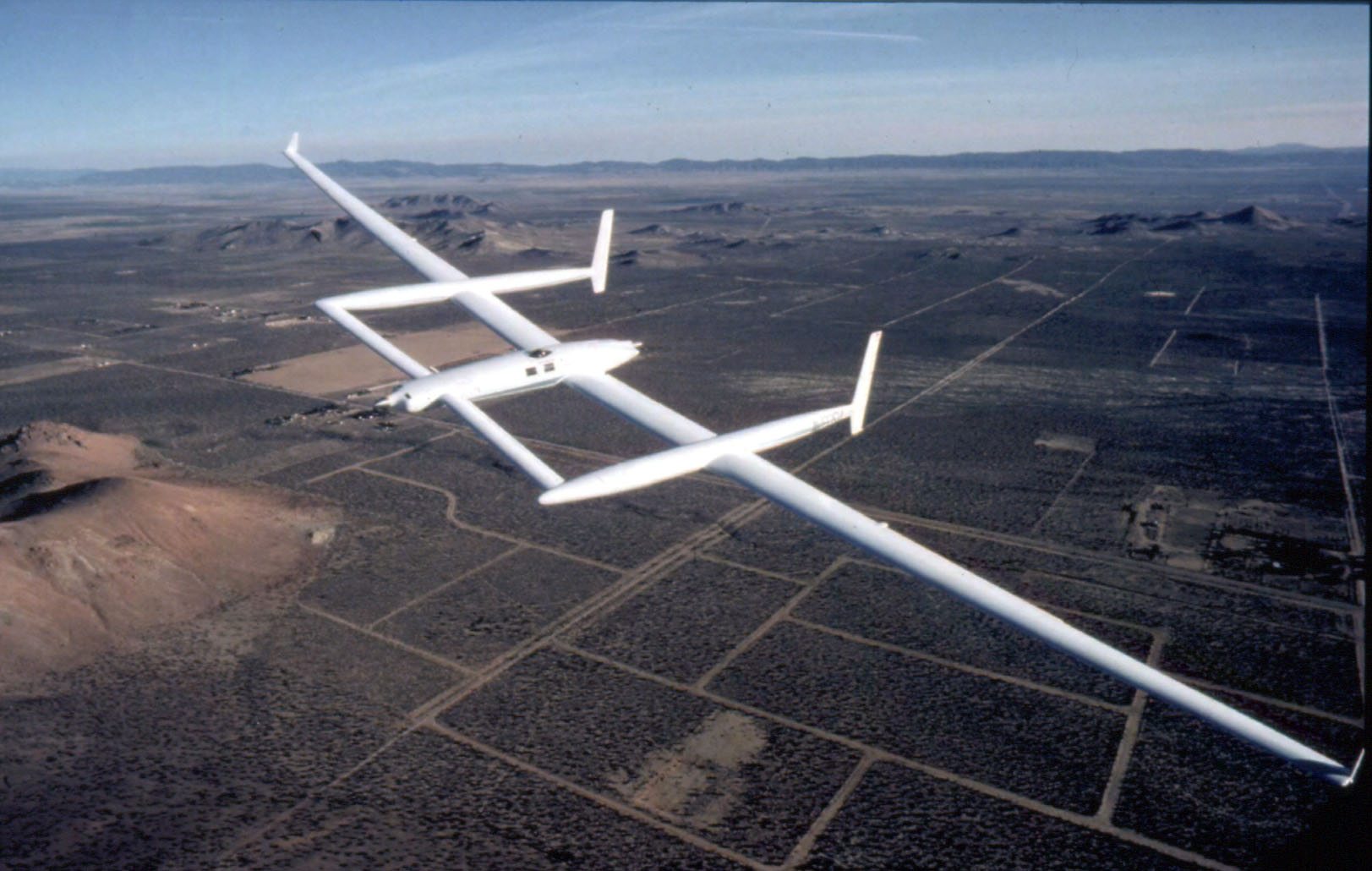
The Rutan Voyager holds the current record for unrefuelled manned flight, and has a wing aspect ratio of 33.8, and features a twin-boom + fuselage layout, which uses the distributed loading principle to enable the high aspect ratio by reducing bending loads in the wing. The fuel fraction for the aircraft (ratio of max fuel mass to max take off mass) is an extraordinary 0.79 (compare that with the 0.31 of a Eurofighter Typhoon), with the fuel carried in the twin tail-booms. Flight for endurance is undertaken at the minimum power speed*, which for the Voyager varied between 70 and 130 kt, decreasing as fuel was consumed. Profile drag is reduced to the minimum consistent with the volume necessary to contain the engines, fuel and two crew.


The second aircraft is the Airbus Zephyr S, current holder of the world endurance record for unmanned aircraft, at 25 days, 23 hr and 57 min. This is the latest development in the Zephyr series of solar-powered unmanned aircraft, conceived and initially developed by my late close friend, Chris Kelleher. The Zephyr again has an extreme aspect ratio, and, although looking relatively conventional in layout, again features distributed loading as the solar panels are distributed across the entire upper surface of the wing. Profile drag is minimised by the minimal fuselage, and by flying at very high altitude.
Other aircraft having military long-endurance application, the Lockheed U-2 and the Northrop-Grumman Global Hawk, are perhaps the most prominent operational systems. But I would nominate the Zephyr here, as its endurance, although nominally set at three months, is essentially indefinite.”
Jim Smith had significant technical roles in the development of the UK’s leading military aviation programmes. From ASRAAM and Nimrod, to the JSF and Eurofighter Typhoon.
CLICK HERE FOR PART THREE
Take thirty seconds to click and donate here to keep this site going.
Thank you.Â
Want to see more stories like this:Â Follow my vapour trail on Twitter:Â @Hush_kit
Have a look at  Interview with a Viggen pilot, interview with a MiG-25 pilot, interview with a Gripen pilot, Top 10 BVR fighters of 2018. How to kill a Raptor, An Idiot’s Guide to Chinese Flankers, the 10 worst British military aircraft, The 10 worst French aircraft,  Su-35 versus Typhoon, 10 Best fighters of World War II , top WVR and BVR fighters of today, an interview with a Super Hornet pilot and a Pacifist’s Guide to Warplanes. Was the Spitfire overrated? Want something more bizarre? The Top Ten fictional aircraft is a fascinating read, as is The Strange Story and The Planet Satellite. The Fashion Versus Aircraft Camo is also a real cracker. Those interested in the Cold Way should read A pilot’s guide to flying and fighting in the Lightning. Those feeling less belligerent may enjoy A pilot’s farewell to the Airbus A340. Looking for something more humorous? Have a look at this F-35 satire and ‘Werner Herzog’s Guide to pusher bi-planes or the Ten most boring aircraft. In the mood for something more offensive? Try the NSFW 10 best looking American airplanes, or the same but for Canadians.Â

Sadly, we are way behind our funding targets. This site is entirely funded by donations from people like you. We have no pay wall, adverts (any adverts you see on this page are not from us) or subscription and want to keep it that way– please donate here to keep this site going.
We have shared more content than ever this month (have a look) and want to maintain this pace.
Thank you.Â
*There are two types of drag: Parasitical, which increases as you go faster (stick your hand out the car window and feel the resistance increase as the car goes faster, that is parasitical drag) and Induced. Induced Drag results from the production of lift. This drag increases as you slow down as the wings have to work harder on the air to provide the same amount of lift. There is a sweet point where these two drags will be the lowest. This is where the engine can keep the aircraft airborne with the minimum amount of power (and so the minimum fuel consumption) which is why it is called Maximum Endurance.

