
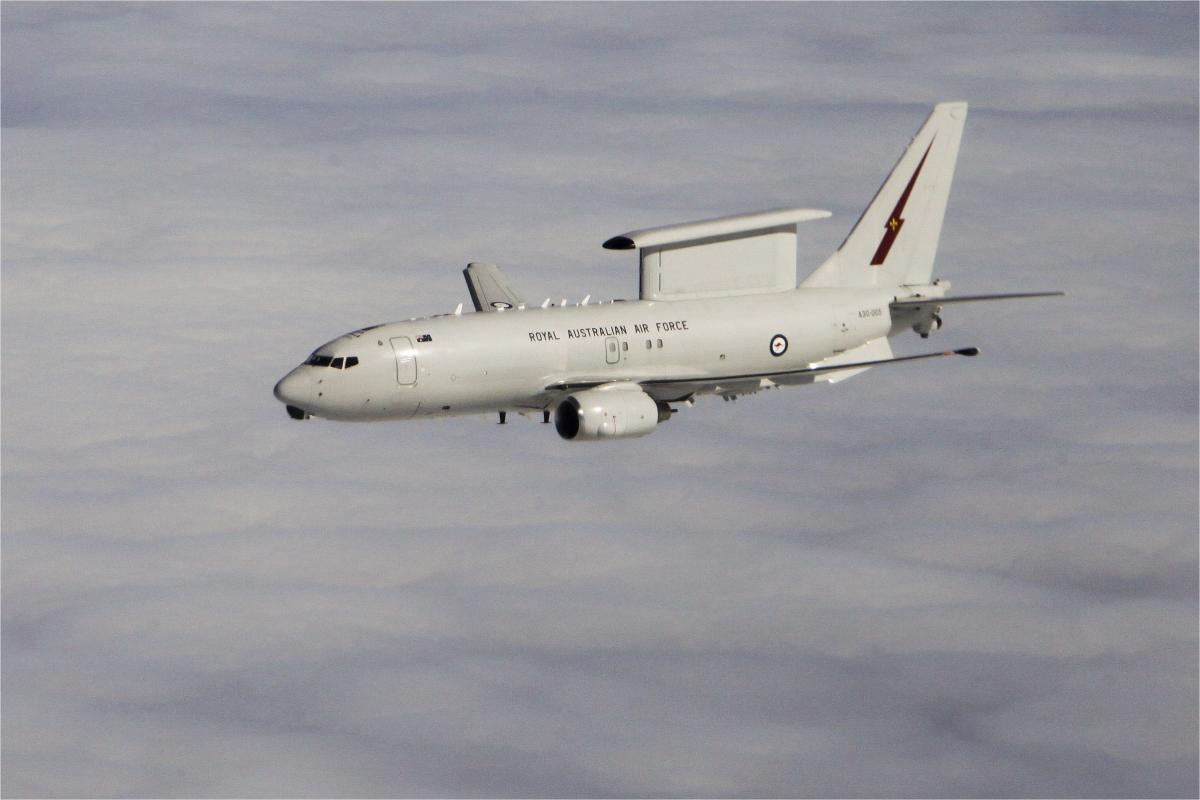
 In the midst of a chaotic possible withdraw from Europe, the UK has inked a deal worth almost $2 billion for five US-built E-7Â airborne early warning aircraft. According to one former RAF Commander we spoke to it is the wrong deal at the wrong time.Â
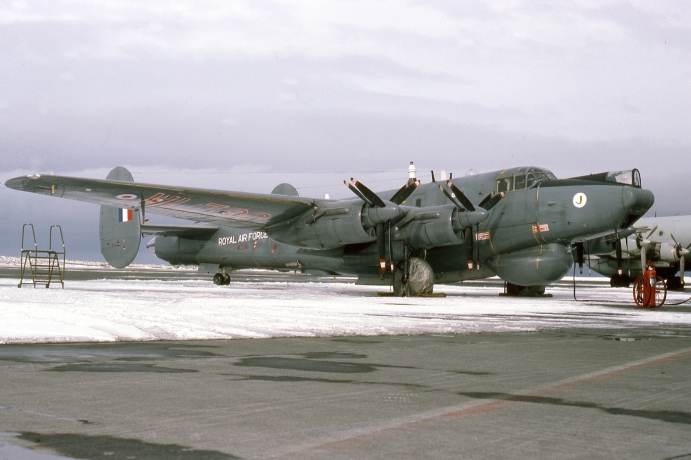
Rumours had persisted since July 2018 that the UK was going to acquire E-7s, and this week it was confirmed. Five E-7s have been ordered and are expected to replace the RAF’s vintage E-3Ds from the early 2020s. The Royal Air Force ordered seven E-3D airborne early warning and control back aircraft in 1987 which replaced the woefully archaic Shackleton AEW.2s (essentially World War II bombers fitted with a radar that entered service on Avenger torpedo bombers in 1946).
In the midst of a chaotic possible withdraw from Europe, the UK has inked a deal worth almost $2 billion for five US-built E-7Â airborne early warning aircraft. According to one former RAF Commander we spoke to it is the wrong deal at the wrong time.Â
Rumours had persisted since July 2018 that the UK was going to acquire E-7s, and this week it was confirmed. Five E-7s have been ordered and are expected to replace the RAF’s vintage E-3Ds from the early 2020s. The Royal Air Force ordered seven E-3D airborne early warning and control back aircraft in 1987 which replaced the woefully archaic Shackleton AEW.2s (essentially World War II bombers fitted with a radar that entered service on Avenger torpedo bombers in 1946).
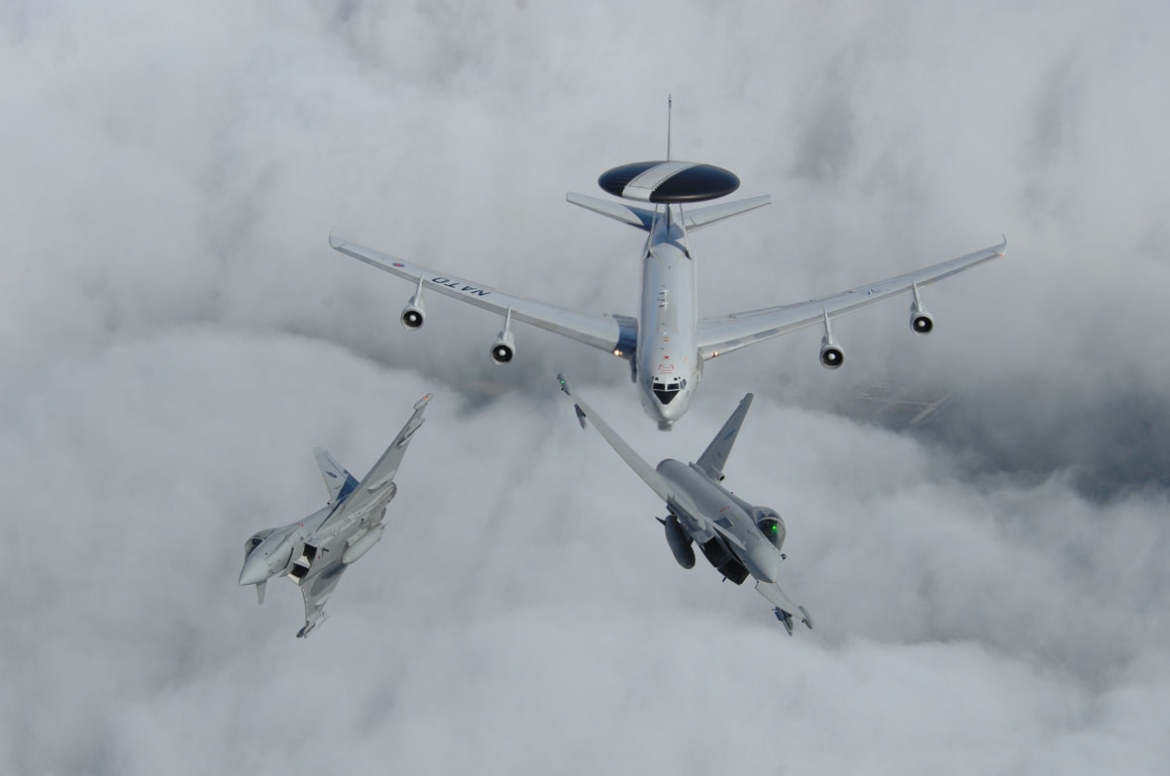 The E-3Ds are obsolete;  Justin Bronk, Royal United Services Institute (RUSI)’s Research Fellow for Airpower and Technology, noted in 2018, “… the E-3, even in modernised form, is no longer a cutting-edge ABM(anti ballistic missile) &S system in a world where proliferating long-range missile systems and emerging non-Western low-observable fighters can force it to stay hundreds of kilometres from contested airspace, placing a higher premium on BLOS (Beyond Line-Of-Sigh) communications capacity rather than onboard sensors…Even when it is able to operate closer to the battlespace, the AN/APY-1/2 mechanically scanned radar array common to all E-3s has significant inherent limitations in terms of its ability to detect low-observable, very slow moving and hypersonic threats, unlike more modern AESA-equipped AWACS types already in service with the US Navy and various air forces around the world. “


To ensure the funding replacement, the E-3D fleet is being allowed to wither on the vine – with insufficient funding to keep the aircraft at the top of its game. Greg Bagwell is a retired senior Royal Air Force (RAF) commander who served as Deputy Commander (Operations) at RAF Air Command (and was Chief of Staff Joint Warfare Development at Permanent Joint Headquarters and then Director Joint Warfare at Joint Forces Command) – he noted to Hush-Kit that the current desperate situation should not have happened, “My major point is that we should have seen this coming. As we have chronically underinvested in the E3 over the years we were left with little choice but to buy off the shelf. But even doing that has failed to secure either significant UK content or offsets on other programmes. Quite simply, our IP and our money is being sent offshore for the promise of a few assembly jobs. It’s short term thinking at both ends and we will reap what we (don’t) sow.” when asked what should have happened Bagwell suggested the following:
” 1. Recognise the problem earlier 2. Either invest in E3 or have a plan for transition 3. If you have to buy off the shelf, make sure you secure enough workshare or offset.”Â
We also spoke to Thomas Newdick, Editor of Air Forces Monthly – “While choice of the E-7 may seem an obvious one, there are compelling reasons to suggest the RAF should have looked elsewhere. The E-7 is based on what’s now old technology. Aside from Australia, there’s little in the way of commonality with UK’s closest allies. There are even question marks about inserting the existing technology into a new basic airframe (production of the 700 series has ended) and will it be possible to plumb it for a probe (like the E-3D has)? Essentially, the UK is once again probably last in line to choose a specific AEW solution, as it was with the E-3, which then became a very expensive ‘upgrade vacuum’. The E-7 would seem to offer very little to the UK industrial sector in terms of workshare, despite the MOD’s claims to the contrary. Finally, it can be argued – as former RAF commander AVM Bagwell has – that the era of the manned conventional AEW platform is itself numbered and the UK would have been better off examining more radical (unmanned) solutions for the future….MESA was first rolled out in 2002 and the RAAF has since upgraded them -they faced obsolescence issues in radar processing hardware and IFF. It’s not the cutting edge any more, e.g. doesn’t have Gallium-nitride technology.”  Indeed AEW&C aircraft are considered high value assets by potential enemies- and preventing barrages of long-range missile shots from conventional aircraft, ships and the ground against AEW&C is hard enough, defending them from mass attacks from reduced RCS (radar cross section) aircraft like the J-20, may be close to impossible. Greg Bagwell also questioned whether it was a far-sighted decision — “A large, air-breathing, vulnerable, onboard processed, labour intensive platform. Was this an opportunity missed to seek a more radical solution?” More radical solutions include the use of large or small unmanned platforms and air balloons.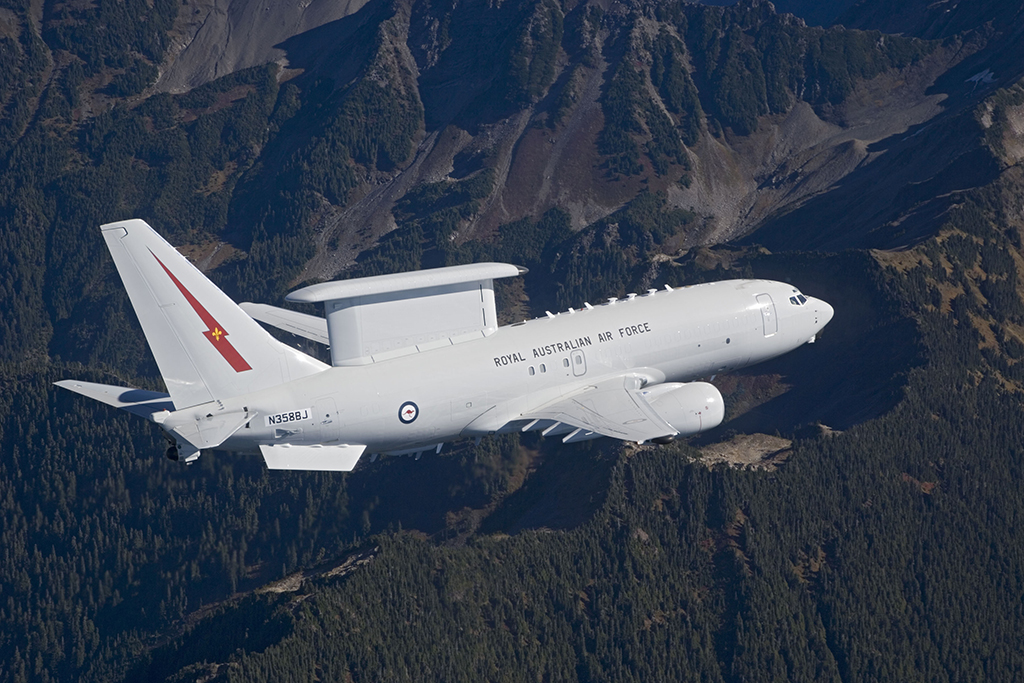 So it may not be cutting edge or survivable in high-end war, but won’t it offer commonality — and resultant parts and maintenance savings – with the UK’s forthcoming P-8 maritime patrol aircraft? Both are based on the Boeing 737 airframe, but this may ideas of commonality may be illusory, Newdick notes that “Almost no commonality exists between E-7 and P-8. P-8 uses a different airframe and wings” . Indeed, the E-7 is based closely on the 737-700ER airframe, while the P-8 is based on the 737-800ERX with the wings of the 737-900ER fitted with raked wingtips —and the systems inside are very different.
Big questions
There are other big questions too – how likely is the UK to conduct combat operations without the US or NATO – both of which have their own AEW&C assets? And at time when US leadership’s relationship with its NATO partners is at its lowest ebb – is now the time to buy big ticket items from the US? The timing is bizarre in other ways – as the UK is facing massive economic uncertainties as its farcical attempt to leave the European Union continues to unravel. Additionally, Boeing, manufacturer of the E-7 airframe, is currently under great scrutiny for the recent crash of a 737 MAX.
In summary, the deal is poor for UK industry, the aircraft is far from future-proof, the timing is poor and bad planning will leave the RAF poorly equipped in the short term. It smacks of a decision made behind closed doors without due thought.
So it may not be cutting edge or survivable in high-end war, but won’t it offer commonality — and resultant parts and maintenance savings – with the UK’s forthcoming P-8 maritime patrol aircraft? Both are based on the Boeing 737 airframe, but this may ideas of commonality may be illusory, Newdick notes that “Almost no commonality exists between E-7 and P-8. P-8 uses a different airframe and wings” . Indeed, the E-7 is based closely on the 737-700ER airframe, while the P-8 is based on the 737-800ERX with the wings of the 737-900ER fitted with raked wingtips —and the systems inside are very different.
Big questions
There are other big questions too – how likely is the UK to conduct combat operations without the US or NATO – both of which have their own AEW&C assets? And at time when US leadership’s relationship with its NATO partners is at its lowest ebb – is now the time to buy big ticket items from the US? The timing is bizarre in other ways – as the UK is facing massive economic uncertainties as its farcical attempt to leave the European Union continues to unravel. Additionally, Boeing, manufacturer of the E-7 airframe, is currently under great scrutiny for the recent crash of a 737 MAX.
In summary, the deal is poor for UK industry, the aircraft is far from future-proof, the timing is poor and bad planning will leave the RAF poorly equipped in the short term. It smacks of a decision made behind closed doors without due thought.
Sadly, we are way behind our funding targets. This site is entirely funded by donations from people like you. We have no pay wall, adverts (any adverts you see on this page are not from us) or subscription and want to keep it that way– please donate here to keep this site going.
We have shared more content than ever this month and want to maintain this pace.Â
Thank you.Â

