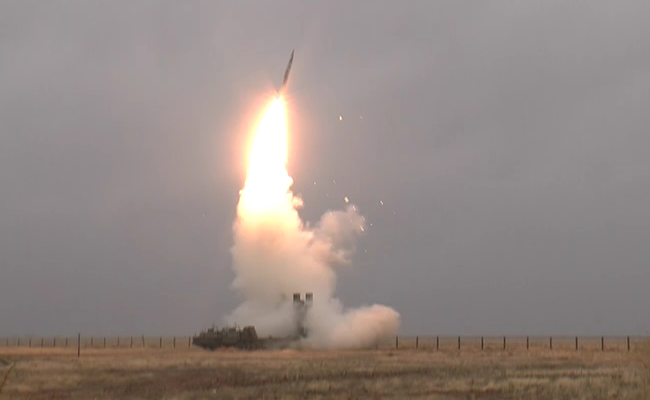
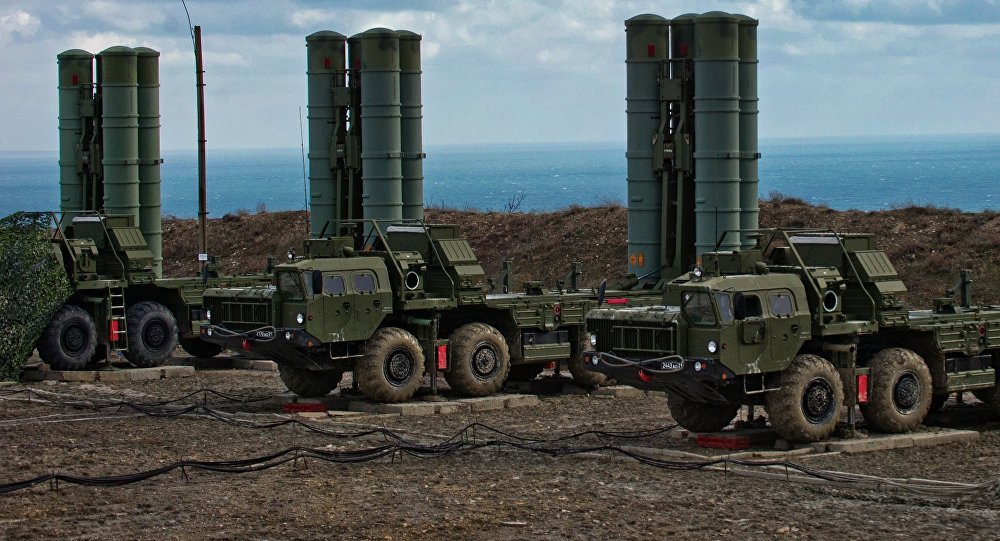
 Turkey is buying an air defence system, the formidable S-400, from Russia. The deal has sparked fury from the US government, which is threatening economic sanctions and the withholding of F-35 stealth fighters.
The situation is complicated and heated, there being several reasons for the US’ ire that include: the belief of some in the US that the international community should be united to punish Russia for annexing Crimea; the US wish to sell their own weapon systems; the complication of a NATO nation using high-tech Russian equipment; the risk of Russia accessing information on how well the S-400 system can detect and potentially counter the F-35, the mainstay of NATO’s future warplane force. To further complicate this, three NATO nations already operate Russian air defence systems (Greece, Slovakia & Bulgaria), something Turkish officials are keen to point out. Today the situation grew even more tense, as the two famously hot-headed national leaders, Presidents Trump and ErdoÄŸan fail to resolve the crisis. We spoke to Arda Mevlutoglu to find out more about why Turkey has chosen to buy the S-400 and whether it’s a good idea.Â
Turkey is buying an air defence system, the formidable S-400, from Russia. The deal has sparked fury from the US government, which is threatening economic sanctions and the withholding of F-35 stealth fighters.
The situation is complicated and heated, there being several reasons for the US’ ire that include: the belief of some in the US that the international community should be united to punish Russia for annexing Crimea; the US wish to sell their own weapon systems; the complication of a NATO nation using high-tech Russian equipment; the risk of Russia accessing information on how well the S-400 system can detect and potentially counter the F-35, the mainstay of NATO’s future warplane force. To further complicate this, three NATO nations already operate Russian air defence systems (Greece, Slovakia & Bulgaria), something Turkish officials are keen to point out. Today the situation grew even more tense, as the two famously hot-headed national leaders, Presidents Trump and ErdoÄŸan fail to resolve the crisis. We spoke to Arda Mevlutoglu to find out more about why Turkey has chosen to buy the S-400 and whether it’s a good idea.Â
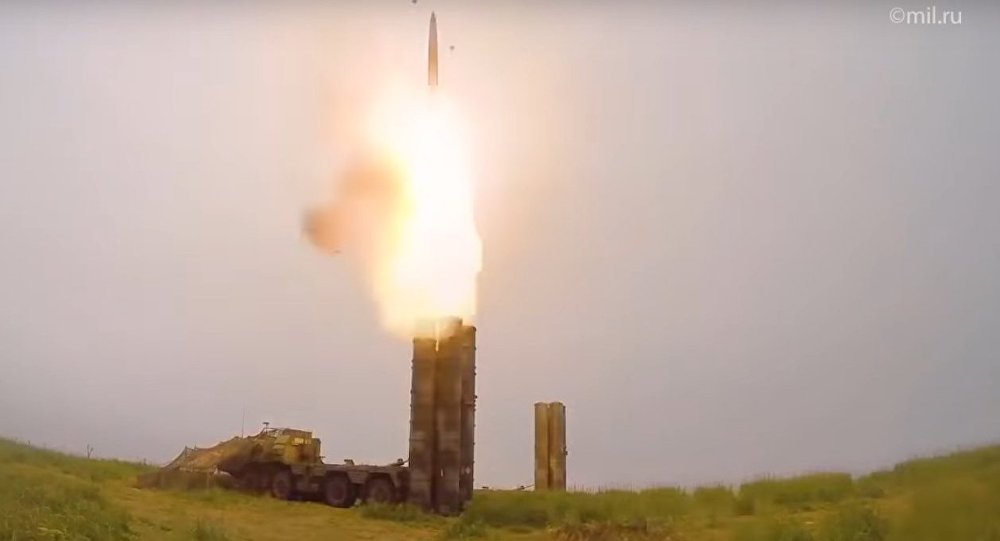 Why has Turkey chosen the Russian S-400 air defence system?
The official reply to this question is based upon two main factors:
1. The reluctance and even denial of NATO partners to provide similar systems and technologies, and consequently-
2. (an) Attractive Russian offer. The Russian offer is stated as involving much better terms in pricing, delivery time and joint production.
Last, but not least, S-400 is favoured because of its unrivalled performance, being able to eliminate targets as far as 400km.
However, a close examination of these reasons leads to a different conclusion: the Russian side repeatedly state that the deal involves no transfer of technology or joint production, i.e the systems will be delivered ‘off-the-shelf’. Furthermore, Turkey officially stated that the S-400 system will not be integrated into Turkey’s air defence network, which in turn is a part of NATO air defence early warning system. In other words, S-400 battery will be used ‘standalone’, which will significantly decrease its effectiveness against especially low flying targets. How the interoperability or Identification Friend or Foe (IFF) issues will be resolved is a complete mystery. These inconsistencies suggest that the decision to purchase S-400 was mostly, if not completely a political decision, rather than a technical one.
Why has Turkey chosen the Russian S-400 air defence system?
The official reply to this question is based upon two main factors:
1. The reluctance and even denial of NATO partners to provide similar systems and technologies, and consequently-
2. (an) Attractive Russian offer. The Russian offer is stated as involving much better terms in pricing, delivery time and joint production.
Last, but not least, S-400 is favoured because of its unrivalled performance, being able to eliminate targets as far as 400km.
However, a close examination of these reasons leads to a different conclusion: the Russian side repeatedly state that the deal involves no transfer of technology or joint production, i.e the systems will be delivered ‘off-the-shelf’. Furthermore, Turkey officially stated that the S-400 system will not be integrated into Turkey’s air defence network, which in turn is a part of NATO air defence early warning system. In other words, S-400 battery will be used ‘standalone’, which will significantly decrease its effectiveness against especially low flying targets. How the interoperability or Identification Friend or Foe (IFF) issues will be resolved is a complete mystery. These inconsistencies suggest that the decision to purchase S-400 was mostly, if not completely a political decision, rather than a technical one.
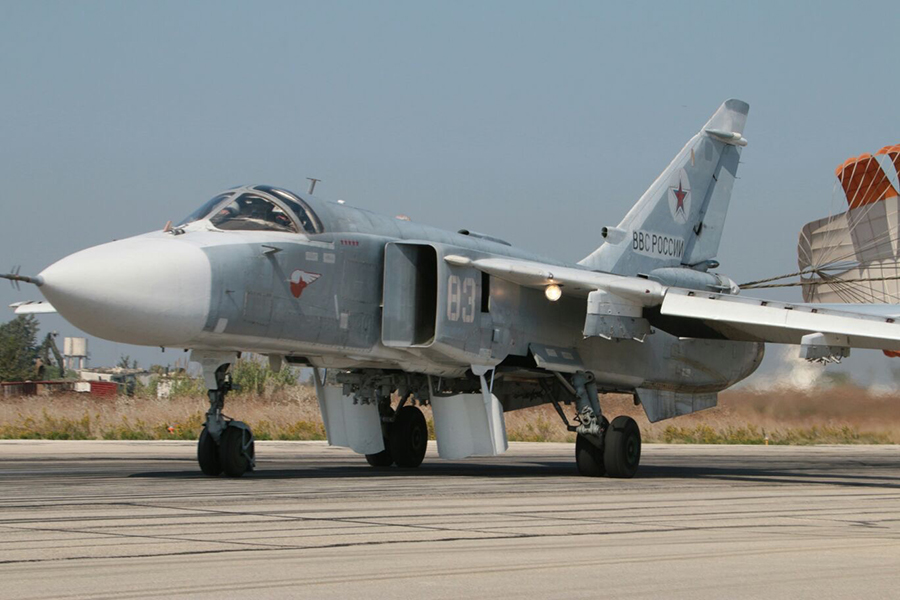 Therefore, the S-400 deal should not be examined without taking into consideration the other factors such as Syria, Turkish – Russian rapprochement after the Su-24 incident, and Turkey’s strained relations with the West after the July 15th 2016 coup attempt.”


“Does Turkey need an S-400 in a standalone mode with so many military, industrial and political consequences? Probably not.” — Arda Mevlutoglu
There is also another issue in terms of industrial and human espionage. Strategic weapon systems such as S-400 are operated in an ‘out of the box and then plug & play’ fashion. The training of their crew, deployment and operation planning, Concept of Operation (CONOPS), maintenance and sustainment of these systems require constant communication and coordination between Turkey and Russia through military, industrial and bureaucratic channels. This fact alone is expressed as a risk, as Russia is officially the number 1 threat to NATO.” Are the US concerns valid?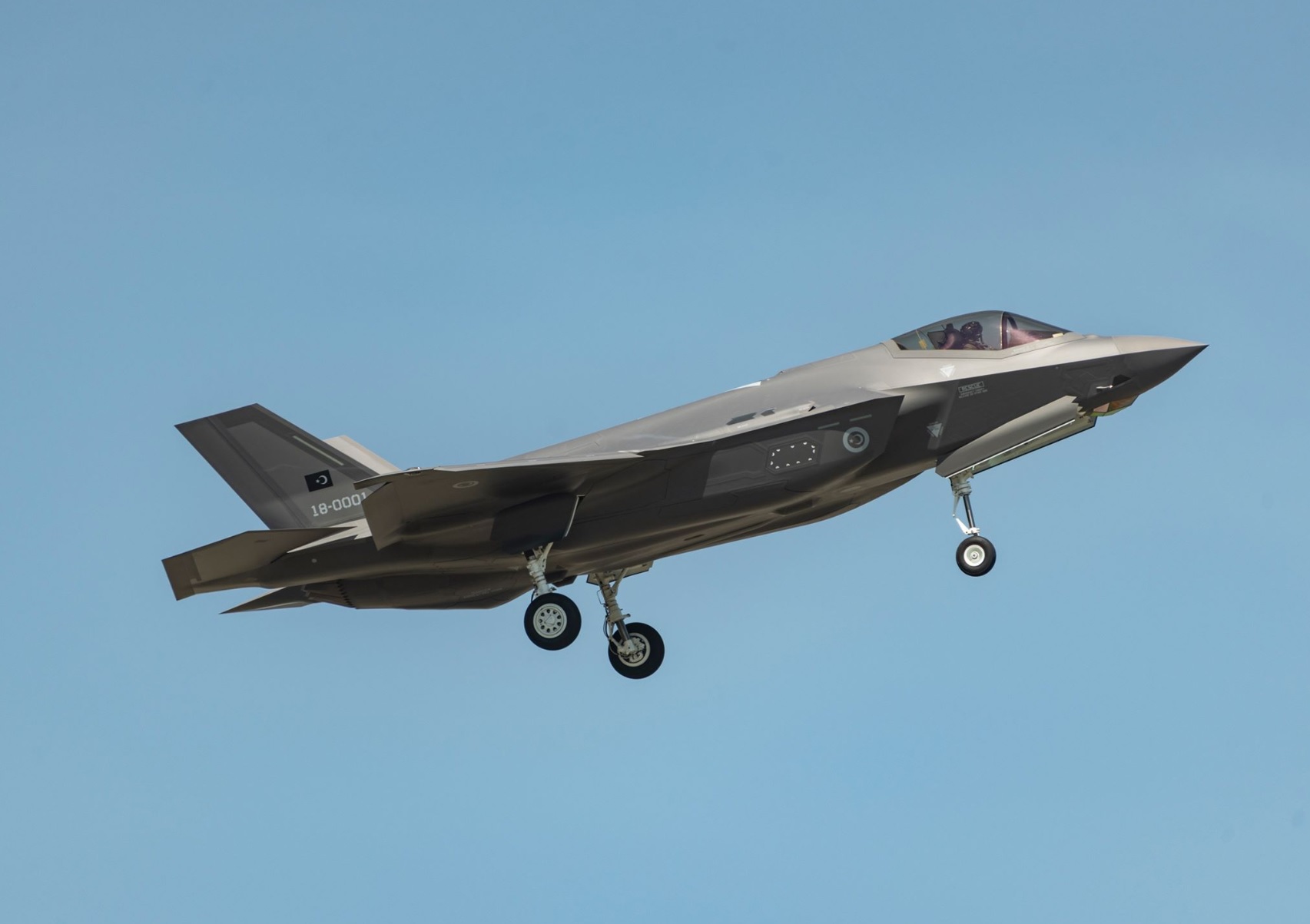 The US concerns are not totally unfounded. It is indeed a risk for NATO assets, one reason being the potential proximity of F-35s to the radars of S-400, especially its engagement radar. There also is a significant risk of HUMINT (human intelligence, traditional spying) operations by Russia, an intelligence gathering approach Russia favours.
What is the the nature of the HUMINT threat?
The US concerns are not totally unfounded. It is indeed a risk for NATO assets, one reason being the potential proximity of F-35s to the radars of S-400, especially its engagement radar. There also is a significant risk of HUMINT (human intelligence, traditional spying) operations by Russia, an intelligence gathering approach Russia favours.
What is the the nature of the HUMINT threat?
The main threat here is that Russian spies posing as engineers or advisors coming to Turkey might attempt to infiltrate Turkish / NATO network. Another risk is Russian attempts to engage Turkish personnel. In other words, Russian intelligence might use S-400 delivery / training / support as a disguise for increased espionage activities.
And what exactly is the nature of the fears of the F-35s being near the S-400?
“US / NATO circles voiced concerns about S-400’s sensors collecting sensitive information about F-35 such as detailed radar cross section profile, communications and electronic warfare performance. On the other hand, it should not be overlooked that Turkey is one of the oldest members of NATO, participating in many operations and making huge contribution to the collective security of the alliance. Turkey has all the means and capability to assess the possible security and intelligence risks of this programme and is taking measures accordingly. Furthermore, the S-400 is being procured as a national asset, it will not be integrated into the NATO network, meaning that it will be a separate, independent entity.”

 “Currently the air defence of Turkey mostly relies on a fleet of around 240 F-16C/D fighter aircraft. Ground based air defence systems consist of Atilgan and Zipkin self-propelled low-altitude air defence systems using FIM-92 Stinger missiles, short-range Rapiers and medium-ranged Hawk XXI missiles Early warning is done through a fleet of four Boeing 737 Peace Eagle AEW&C aircraft, 14 TRS-22XX mobile long-range early warning radars and some NATO radar assets as well as NATO air defence early warning assets. Additionally, the 3rd Main Jet Base in Konya in central Anatolia is a Forward Operating Base for the NATO E-3 AWACS aircraft.
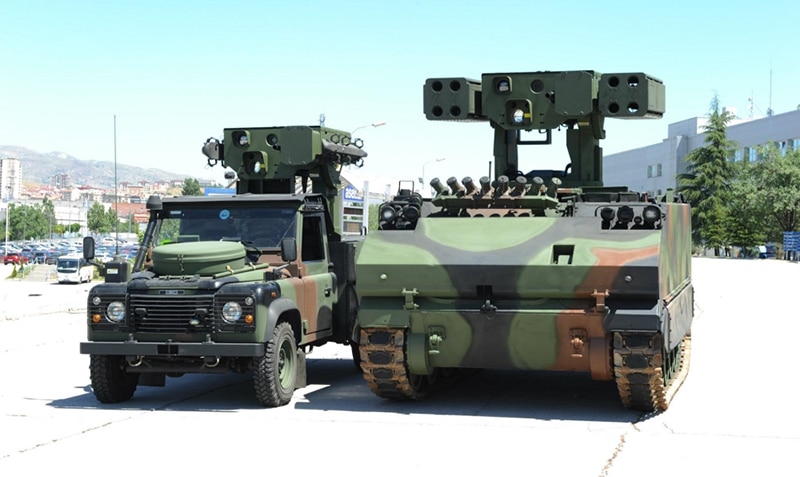 The requirement for a long-range high-altitude air defence system has been on the agenda since late 1980’s, when Iraq, Iran and Syria were conducting ambitious missile and WMD development programmes. The Gulf War in 1991 underlined this requirement and immediately afterwards, Turkey started studies of ground-based air defence systems. However, budget constraints prevented Turkey from moving forward. It was not until the early 2000’s that it resumed these studies. In 2006, separate projects were started to reinforce the air defence capability: off-the-shelf procurement of long-range air defence systems (LORAMIDS; Long Range Air and Missile Defence System) and low- and medium altitude air defence system development programmess (Hisar A and Hisar O respectively).”
Keep this site independent. Take one minute to support us by donating here. People like you keep this going. 
“The LORAMIDS tender saw three companies being shortlisted in late 2013: Chinese CPMIEC, French-Italian EUROSAM and the American Patriot. Turkey started contract negotiation with CPMIEC for the FD-2000 system. But increasing pressure from NATO and disagreements over transfer of technology resulted in the cancellation of the project in late 2015.
Therefore, the answer to the question is —Turkey needs a long-range high-altitude air defence system, but does Turkey need an S-400 in a standalone mode with so many military, industrial and political consequences? Probably not.”
Update on this story here.Â
About the authorÂ
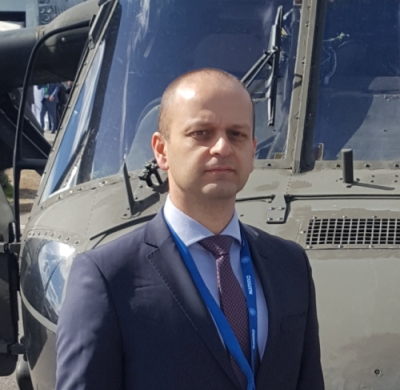 Arda Mevlutoglu is an astronautical engineer. He is currently working as the VP of an international trading and consultancy company, focusing on defense and aerospace sector. He is currently working as the Vice President of Defense Programs at an international trading and consultancy company. His research focuses on defense industry technology, policies and geopolitical assessments, with a focus to the Eastern Mediterranean and the Black Sea region. His works have been published in various local and international journals such as Air Forces Monthly, Air International, Combat Aircraft, EurasiaCritic, ORSAM Middle East Analysis. He has been quoted by Financial Times, Reuters, BBC, Al Monitor, CNN Turk and TRT on issues covering Turkish defense industry and military developments.
Save the Hush-Kit blog! This site is entirely funded by donations - Donate here.Â