

The Fairey Battle endured a disastrous wartime career. However, in this counter factual article aviation historian Greg Baughen argues that things could have been very different.Â
In September 1939 ten Fairey Battle squadrons head for France. Nobody expects them to achieve much. Ludlow-Hewitt, in charge of Bomber Command, has given up all hope of using them to bomb the Ruhr. Instead they will be used for short-range low-level ground attack missions against advancing German forces. Early reconnaissance missions over France demonstrate just how vulnerable the bomber is. Battle formations prove totally incapable of defending themselves against Bf 109s. Planes burst into flames as soon as their unprotected fuel tanks are hit. The French Air Force comes to the rescue and provides fighter escorts and for a while the Battles are able to operate reasonably successfully. However, General Vuillemin, the French Air Force chief, is short of fighters and asks the RAF to provide their own escorts. Air Vice-Marshal Evill indignantly explains to Vuillemin that RAF bombers have no need of escorts, their defensive fire power can fight off any attacker. A puzzled Vuillemin cancels further French escorts. Two days later an unescorted formation of five Battle is butchered by Bf 109s. Only one badly damaged plane limps back to its base. The future prospects for the Battle squadrons look bleak.
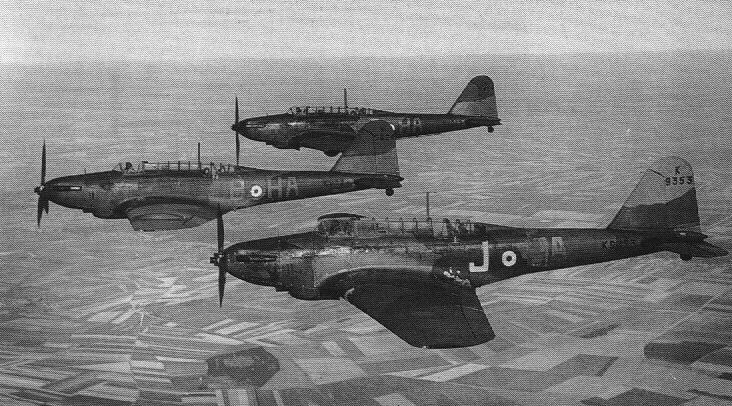
Then Air Marshal Sir Brooke-Popham comes to the rescue. Brought out of retirement to help the war effort, Brooke-Popham is given the task of inspecting RAF squadrons in France. Some claim his intervention changed the course of the war. After speaking to the crews, he decides that if the Battles are going to operate at low-level, they need more guns and armour. A meeting in October 1939 at the Stockport Fairey plant with Brooke-Popham, Battle pilots and Fairey engineers decides that if the fuselage fuel tank is removed 300 lbs of armour and self-sealing material for the fuel tanks can be added. The armour already exists in stocks, and is hastily sent to France and fitted to the Battles. Self-sealing tank have already been developed and tested for the Battle and the disastrous 18 December Wellington mission against Heligoland Bight underlines their importance. Following this disaster, key Ministry figures are dragged away from their Christmas holidays to discuss what to do. They decide all bombers will be fitted with self-sealing tanks and because the Battle will be especially vulnerable during its low-level missions, Battle squadrons will have priority. Dowding enthusiastically agrees to send more fighters to France so that the Battles can be escorted. Plans are drawn up for Battle squadrons to launch hit and run raids to block the lead elements of any German attempt to push through the Ardennes.
On 10 May, however, these plans are forgotten. Battle squadrons are ordered to fly over the advancing German forces and attack targets deep in the German rear, exposing them to ground fire and interception for far longer. The armour, self-sealing tanks and fighter escorts help, but even so losses are heavy. Six of the thirty-two planes fail to return.  Plans the next day for a daring low-level strike on targets near Prum, inside Germany, are dropped. (The mission would have involved flying forty miles diagonally across the advancing panzers.)  Instead, Battles follow the original plan and fly continuous sorties against the first enemy column they meet. The German advance is slowed and they reach the Meuse behind schedule. Nevertheless, a fierce Stuka bombardment enables German infantry to cross the Meuse and for a while French defences are in disarray. However, crucially, continuous Battle attacks on the crossing points delay the arrival of the panzers on the west bank and French counter attacks successfully push the German infantry back over the Meuse.
Some claim that if Brooke-Popham’s recommendations had not been followed, the result would have been very different.
And for what really happened
SAVE HUSH-KIT. Hush-Kit needs donations to continue, sadly we’re well behind our targets, please donate using the buttons above or below. Many thanks.
Follow my vapour trail on Twitter:Â @Hush_kit
Guide to surviving aviation forums here
You may also enjoy A B-52 pilot’s guide to modern fighters, Flying and fighting in the Lightning: a pilot’s guide, Interview with a Super Hornet pilot, Trump’s Air Force Plan, 11 Worst Soviet Aircraft, 10 worst US aircraft, and 10 worst British aircraft

“If you have any interest in aviation, you’ll be surprised, entertained and fascinated by Hush-Kit – the world’s best aviation blogâ€. Rowland White, author of the best-selling ‘Vulcan 607’
I’ve selected the richest juiciest cuts of Hush-Kit, added a huge slab of new unpublished material, and with Unbound, I want to create a beautiful coffee-table book. Pre-order your copy now right here Â
TO AVOID DISAPPOINTMENT PRE-ORDER YOUR COPY NOW

From the cocaine, blood and flying scarves of World War One dogfighting to the dark arts of modern air combat, here is an enthralling ode to these brutally exciting killing machines.
The Hush-Kit Book of Warplanes is a beautifully designed, highly visual, collection of the best articles from the fascinating world of military aviation –hand-picked from the highly acclaimed Hush-kit online magazine (and mixed with a heavy punch of new exclusive material). It is packed with a feast of material, ranging from interviews with fighter pilots (including the English Electric Lightning, stealthy F-35B and Mach 3 MiG-25 ‘Foxbat’), to wicked satire, expert historical analysis, top 10s and all manner of things aeronautical, from the site described as:
“the thinking-man’s Top Gear… but for planesâ€.
The solid well-researched information about aeroplanes is brilliantly combined with an irreverent attitude and real insight into the dangerous romantic world of combat aircraft.
FEATURING
-
-
-
- Interviews with pilots of the F-14 Tomcat, Mirage, Typhoon, MiG-25, MiG-27, English Electric Lighting, Harrier, F-15, B-52 and many more.
- Engaging Top (and bottom) 10s including: Greatest fighter aircraft of World War II, Worst British aircraft, Worst Soviet aircraft and many more insanely specific ones.
- Expert analysis of weapons, tactics and technology.
- A look into art and culture’s love affair with the aeroplane.
- Bizarre moments in aviation history.
- Fascinating insights into exceptionally obscure warplanes.
-
-

The book will be a stunning object: an essential addition to the library of anyone with even a passing interest in the high-flying world of warplanes, and featuring first-rate photography and a wealth of new world-class illustrations.

Rewards levels include these packs of specially produced trump cards.


Pre-order your copy now right here Â

