

When music is terrible the artist will often describe it as ‘experimental’ to avoid criticism, the same is often true of prototypes and experimental aircraft. Given the parade of ludicrous machinery that test pilots were required to fly, the long career of Captain Eric ‘Winkle’ Brown is all the more remarkable. Test pilots deserve everyone’s respect.
To keep this blog going- allowing us to create new articles- we need donations. We’re trying to do something different with Hush-Kit: give aviation fans something that is both entertaining, surprising and well-informed. Please do help us and click on the donate button above – you can really make a difference (suggested donation £10). You will keep us impartial and without advertisers – and allow us to carry on being naughty.  A big thank you to all of our readers.
11. SNECMA C.450 Coléoptère
‘Roll out le barrel’
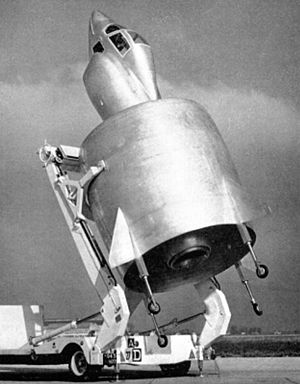
The ‘Beetle’ was based on an idea that would be politely referred to as unorthodox, and never looked like actually working. It barely had any features that weren’t radical – a VTOL (vertical take-off and landing) jet designed to sit on its tail and transition to level flight courtesy of an annular wing, making Thunderbird 1 look conventional. It resembled an eel sticking its head out of a sunken galleon’s cannon.
A few vertical flights were made but on the first tentative attempt to transition to level flight, the Coléoptère became uncontrollable and the pilot, Auguste Morel, was forced to eject, sustaining serious injuries in so doing. The Coléoptère really put the mental into experimental.
(Top 10 jumpjet fighters here)
10. Supermarine 508/525
‘Unwheelistic’
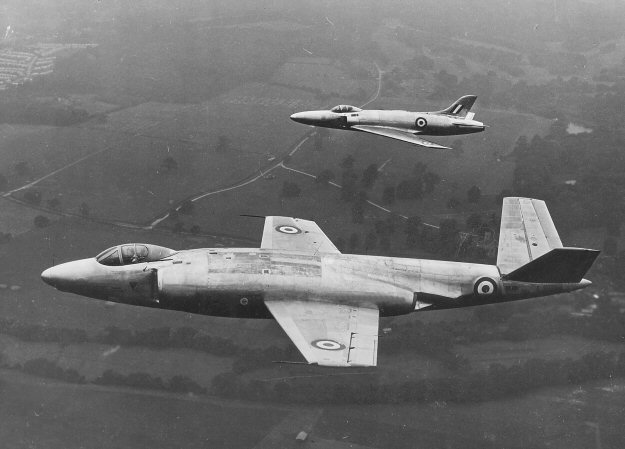
After the Beetle, the Supermarine 508 appears almost conventional. In fact, in some respects, like its straight wing, it was old hat. Like its near contemporary it was the product of several evolutionary dead-ends, so much so that it is remarkable that it eventually spawned an operational aircraft. The 508 was designed as a response to the questionable idea that the undercarriage of naval aircraft should be dispensed with, and that they should instead be catapulted into the air and land on a giant mattress. The aircraft was also intended to be armed an enormous recoilless gun that fired massive shells – and threw out a weight of equal mass behind it to compensate for the kickback. It also required the aircraft containing it to be huge, and have a butterfly tail to avoid losing the tail the when the gun was fired. This straight-winged behemoth was expected to be supersonic, thanks to thin aerofoils. Even the Admiralty quickly realised that wheel-less aircraft firing artillery shells at Soviet bombers was not the way forward. Rather than doing the sensible thing and scrapping the 508, the design was pursued with retractable undercarriage- the extra bulk of which meant it was now definitely subsonic. Straight wings being so ‘40s, it was redesigned with swept surfaces and a cruciform tail, and redesignated the Type 525. The latter flew for less than a year before it crashed, killing test pilot Lieutenant Commander TA Rickell. It was developed into the Supermarine Scimitar, and probably shouldn’t have been.
Ten worst British aircraft here
9. Convair F2Y Sea Dart
‘Special porpoise fighter’

The Convair F2Y Sea Dart was one of a string of attempts to create a fighter aircraft that could operate directly from water. The Sea Dart was probably the most ambitious, attempting to create a supersonic fighter that could also land and take-off from water. Unlike conventional floatplanes and flying boats, however, the F2Y was intended to take off and land using ‘hydro-skis’ which extended from the underside of the aircraft to form a planing bottom. Various layouts were tried as the effects of ‘tramping’ (fierce bouncing on waves or water surfaces) almost broke the back of a test pilot. These problems solved, various aerodynamic problems were coming to light, but a demonstration flight was planned for dignitaries over San Diego Bay anyway. As the pilot, Charles E. Richbourg, lined up for a high-speed pass, he lit the afterburners, which triggered violent pitching, causing the airframe to break up in mid air. And that was the end of the aircraft, the concept and, sadly, the pilot.
8. Qaher F-313Â
‘The Plastic Persian’
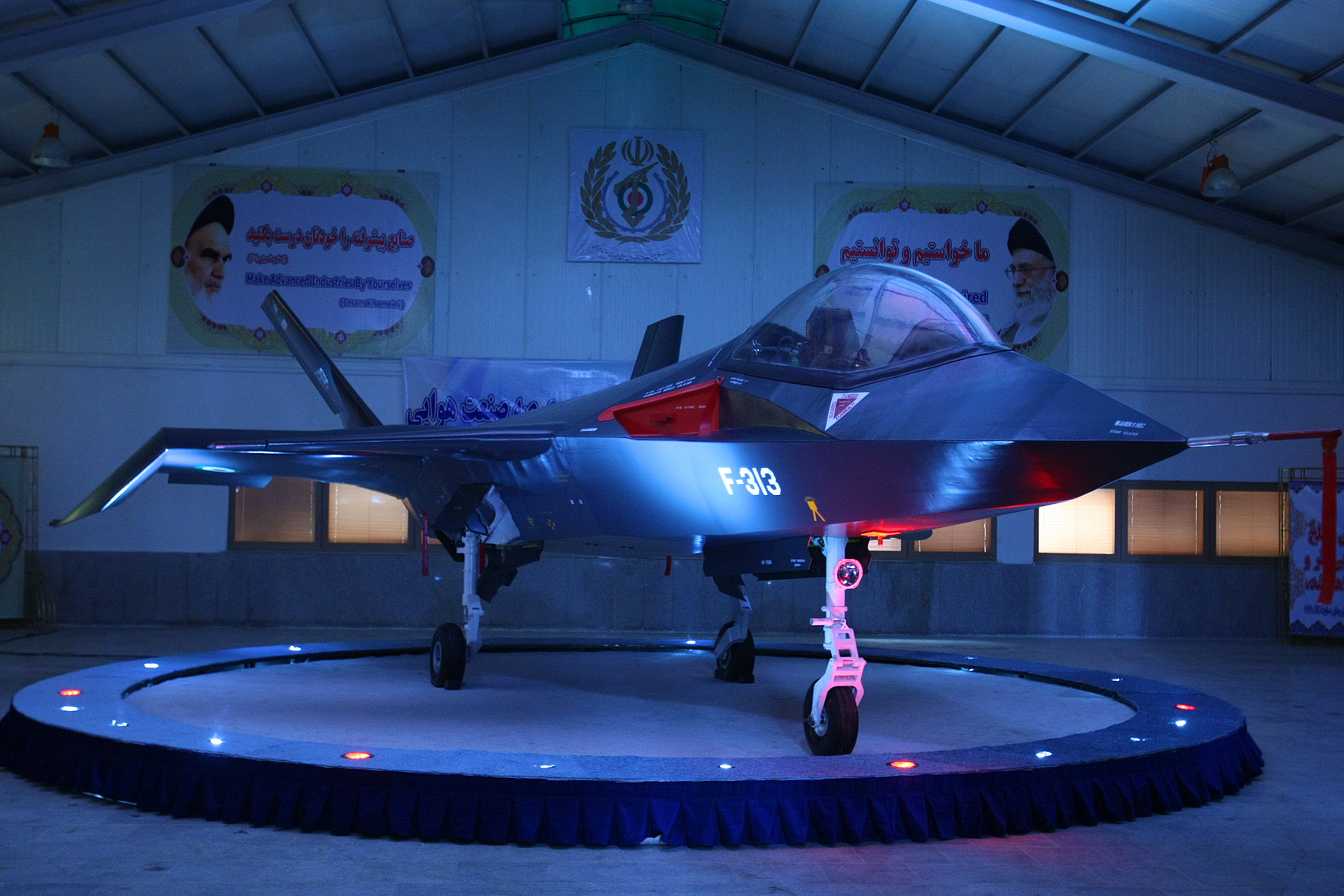
Everything about the Qaher F-313 is spectacularly incompetent, not least the very obviousness of the fact that it is not a real aeroplane. It is supposedly a stealthy fighter aircraft prototype developed by the Iranian state aviation organisation. It is in reality a mock-up of something that looks vaguely like a stealth fighter, presumably for ‘domestic propaganda’. “The advanced aircraft with an advanced appearance has a very small radar cross section and is capable of operating and flying in low-altitude,†said Iranian defence minister Brigadier-General Ahmad Vahidi. Which is presumably true, on the basis that radars would have difficulty picking up a chipboard model aircraft sitting on the ground, and it is pretty much only capable of operating a low altitude, on the basis that it doesn’t fly. If it could fly, according to a long queue of industry experts, its thick wing and odd fixed canards would light up radar scopes like Christmas trees, just before the nozzle-less jet engine melted the rear half of the aircraft – as long as it had not attempted any high-alpha manoeuvres, in which case the engine would already have flamed out. In any case, enemies would have plenty of time to prepare given the 260 knot maximum speed suggested by the ‘prototype’ aircraft’s airspeed indicator. The comic ineptitude continued with the Minister of Defence insisting a video released to the world’s press featured a flying demonstration of the prototype, while the designer admitted that the footage actually featured a small-scale model. Which was the only honest thing about the whole bizarre episode. At least no-one died (assuming the designer hasn’t suffered an ‘accident’).
7. Stipa-Caproni
‘Tigermoth in the the belly of a whale’

File under W, T and F. There are bad ideas that seem good at the time. The Stipa-Caproni ‘(Barely) Flying Barrel’ was one of the other kind. In the early 1930s, Luigi Stipa developed the idea that blowing an aircraft’s propeller through a duct running the length of the fuselage would increase the propeller’s efficiency. Caproni was compelled by the fascist government to build an aircraft to Stipa’s principles. The result was a bizarre fat tube with tiny wings that looked from the side like the ugliest cartoon aircraft ever, and from the front, like an accident involving a Miles Magister and a length of water main. To Stipa’s credit, it did fly, but very slowly, as any increase in propeller efficiency from the duct was more than offset by the drag of the huge fuselage. It was also found to be very stable – so much so that it could more or less only fly in a straight line. Stipa later complained that the jet engine was ripped off from his ideas. On the plus side, it wasn’t fatal – indeed, it would be pretty hard to injure yourself at the speeds the Stipa-Caproni flew.
6. Bristol 188
‘Filton Failure’
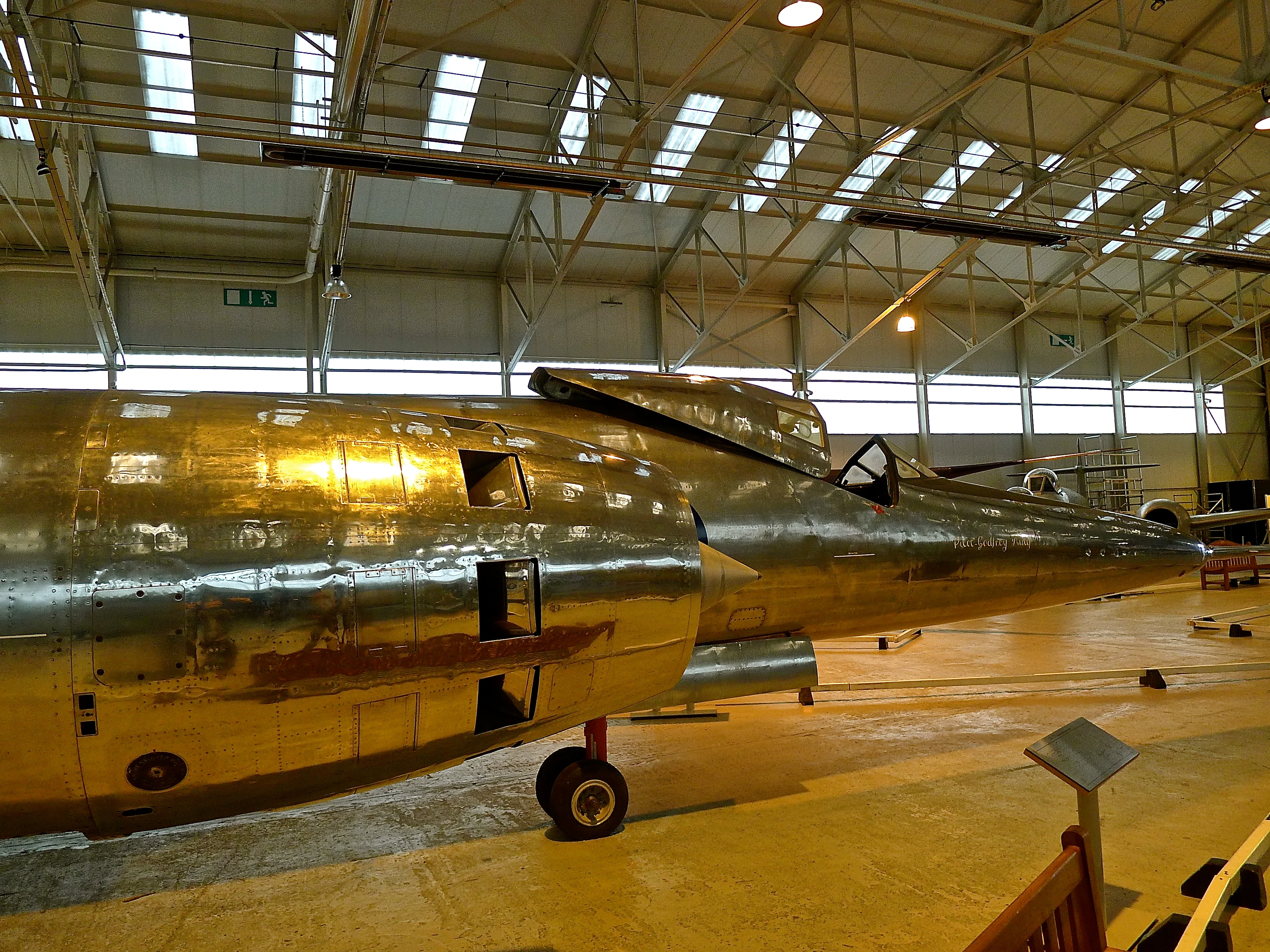
The 1962 Bristol 188 is undoubtedly an attractive aircraft and was rather fast, briefly hitting an oddly appropriate top speed of Mach 1.88. A shame then that it fell completely and utterly short of what it had been designed to do, which was fly at speeds above Mach 2.6 for sustained periods. The Type 188 was conceived to research heat build-up in airframes at high supersonic speeds, as this was feared to be a limiting factor for some of the very fast military aircraft then on the drawing board. Three were built, at fabulous expense, from (very heavy) stainless steel, assembled with specially developed welding techniques, with an exotic cockpit refrigeration system and fused quartz canopy, all intended to resist the high skin temperatures the aircraft was expected to meet and never did. Unfortunately, Bristol forgot about fuel tankage. Even with de Havilland Gyron Junior engines that were less thirsty than the originally planned RR Avons, the 188 could barely stay in the air for 25 minutes, and could not get near its intended speed. Despite this, it was the most expensive British research project to date. An embarrassing dud, not redeemed by muttered excuses about providing data for Concorde’s development. At least everyone who flew it survived.

5. Douglas X-3 Stiletto
‘Jetship dominatrix’

Like the Bristol 188, the Stiletto was designed for fantastic speeds and was completely incapable of reaching them. Douglas had a proud history of high-speed research aircraft in the late 1940s, with the Mach 1 (just) D-558-1 and the superb Mach 2 D-558-2. The X-3, intended for an airframe-scorching 2,000mph, looked as if it was going that fast sitting on the ground. In fact, it could only just exceed Mach 1, and only then in a dive. Much of the blame can be laid at the door of the engines – Douglas realised during the design phase that the J46s they intended to fit had grown too large and too heavy during the powerplant’s development, and had little choice but to fit smaller J34s of lower power. By the time the X-3 flew, in 1953, it was obvious that it was useless for high speed research. A few flights by Air Force pilots were made, and a few more to test the stability of the aircraft’s layout, during which it was discovered that the aircraft suffered from ‘inertia coupling’ at supersonic speeds, a phenomenon that led to control inputs in one axis leading to violent, unintended movements in other axes. The X-3 would have been useful investigating this phenomenon, as the Air Force was starting to lose F-100 Super Sabres to the condition. Unfortunately, NACA pilot Joseph Walker was making a test flight when a particularly harsh pitching movement overstressed the airframe. Much is made these days of X-3 data helping the F-104 programme, but it’s hard to see how much could have been provided as only 51 flights were made, and those of necessarily short duration.
4. DFS 346
‘DFS Sale now on!’
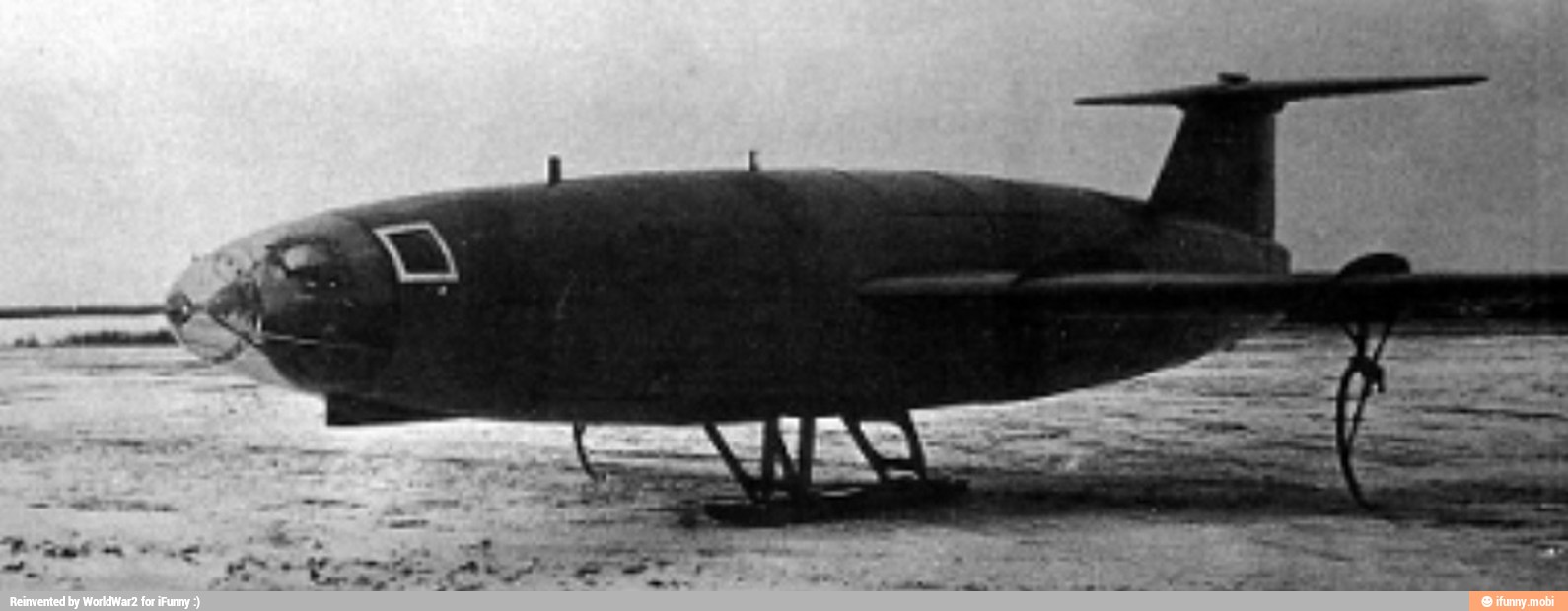
As the Second World War lumbered to a close, Germany’s aircraft designers realised that the main frontline fighters were based on 1930s designs and erupted into a frenzy of creativity, churning out new concepts and forms like there was no nazi tomorrow. One of these was the DFS 346, dreamed up before the company sensibly realised its limits and went into furniture sales. The 346 was intended to go supersonic before anyone was really sure what supersonic flight was all about. As such it had a highly swept wing and carried the pilot in a glass nose in a prone position, which it was thought would help him remain conscious at high speeds, or possibly pretend to be Superman. A partially complete example was taken back to the Soviet Union after the war, and wind-tunnel tests revealed dangerous aerodynamic flaws. The Soviets – with their characteristic lack of prissiness – decided to test it anyway. On the first, gliding, flight, test pilot Wolfgang Ziese barely retained control of the wayward 346, descended too fast and smashed his face on the canopy on landing. Unpowered research continued until 1951, some three years after a Russian-designed aircraft had gone supersonic. Finally, powered tests were carried out, whereupon all control was lost and Ziese bailed out. The 346 may at least have contributed to Soviet supersonic research, though probably not much, and its chief benefit was likely to have been in persuading the Soviets that flying face-first at high speeds was not a good idea (though Winkle Brown noted this position had some advantages). Its pilot survived, which is a point very much in its favour, though not unscathed.
Read ‘Dismantling the Spitfire myth‘ here
3. Bell X-5
‘Nazi swinger’

Taking an aircraft designed during the super-advanced ‘Luft ‘46’ phase of WW2 and adding ‘50s US high technology? What could possibly go wrong? In the late 1940s, Bell, builders of the first supersonic aircraft, came by a German prototype with some unusual features. The jet-powered research aircraft Messerschmitt P.1101 recovered from Oberammergau by advancing US troops had wings that could have their sweep angle adjusted on the ground. Bell decided to go one better and develop the P.1101 with wings that could vary their sweep in the air. The result was a machine with a stall so vicious that one false move would lead to a spin that could not be recovered from, perhaps unsurprising given the tiny tail surfaces. Nevertheless, it took two years and 200 flights before the apparently inevitable crash happened, tragically with the loss of pilot Captain Ray Popson. The US government quietly dropped plans to tart up the design and sell it as a low cost fighter to NATO countries, but was able to claim that research into variable geometry had been useful.
2. Christmas Bullet
‘Christmas whoppers’
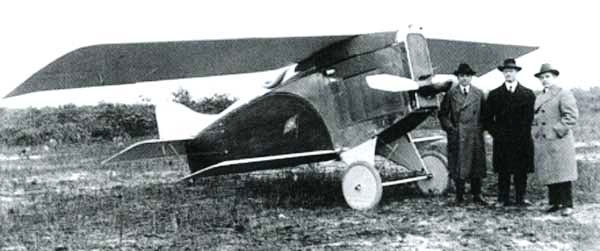
The designer of the 1919 Christmas Bullet, Dr William Whitney Christmas, was such a liar and fantasist that in some respects it’s a wonder that he actually went to the trouble of building an aeroplane at all, rather than just telling people he had. In fact, Christmas seemed to have persuaded his backers to finance him on the basis of two previous aircraft that there is no evidence ever existed. The Bullet, most definitely did, though most of the claims its owner made for it – that it was the world’s first cantilever-wing aeroplane, that it was the first with a plywood monococque construction, that it was in any way airworthy – proved false. ‘Bullet’ was, though, an apt name for a projectile that invariably harmed anyone it came into contact with. Christmas managed to find funding to build two ‘proof of concept’ aircraft to demonstrate his ‘ideas’ of a deliberately flexible wing inspired by those of birds, and tepid support from the US Army, which leant an engine for ground-testing and the services of a test-pilot, Cuthbert Mills. A flight was attempted in the first aircraft, whereupon the wings peeled off during take-off and the aircraft crashed, killing Mills. Christmas claimed that the aircraft had reached a speed of 197mph. A second aircraft was built, and a propeller issued by the Army, despite the loaned engine having been destroyed during the unauthorised flight as Christmas had kept this secret. The second aircraft also crashed, also fatally. Christmas was still trying to sue people for claiming the aircraft had killed its pilots as late as 1930, and insisted the aircraft had reached a speed of 222mph. Fraudulent and lethal, the Christmas Bullet only avoids the top spot on the basis that few people (still too many) took it particularly seriously at the time.
1. Republic XF-84H
‘Noisecorvette’
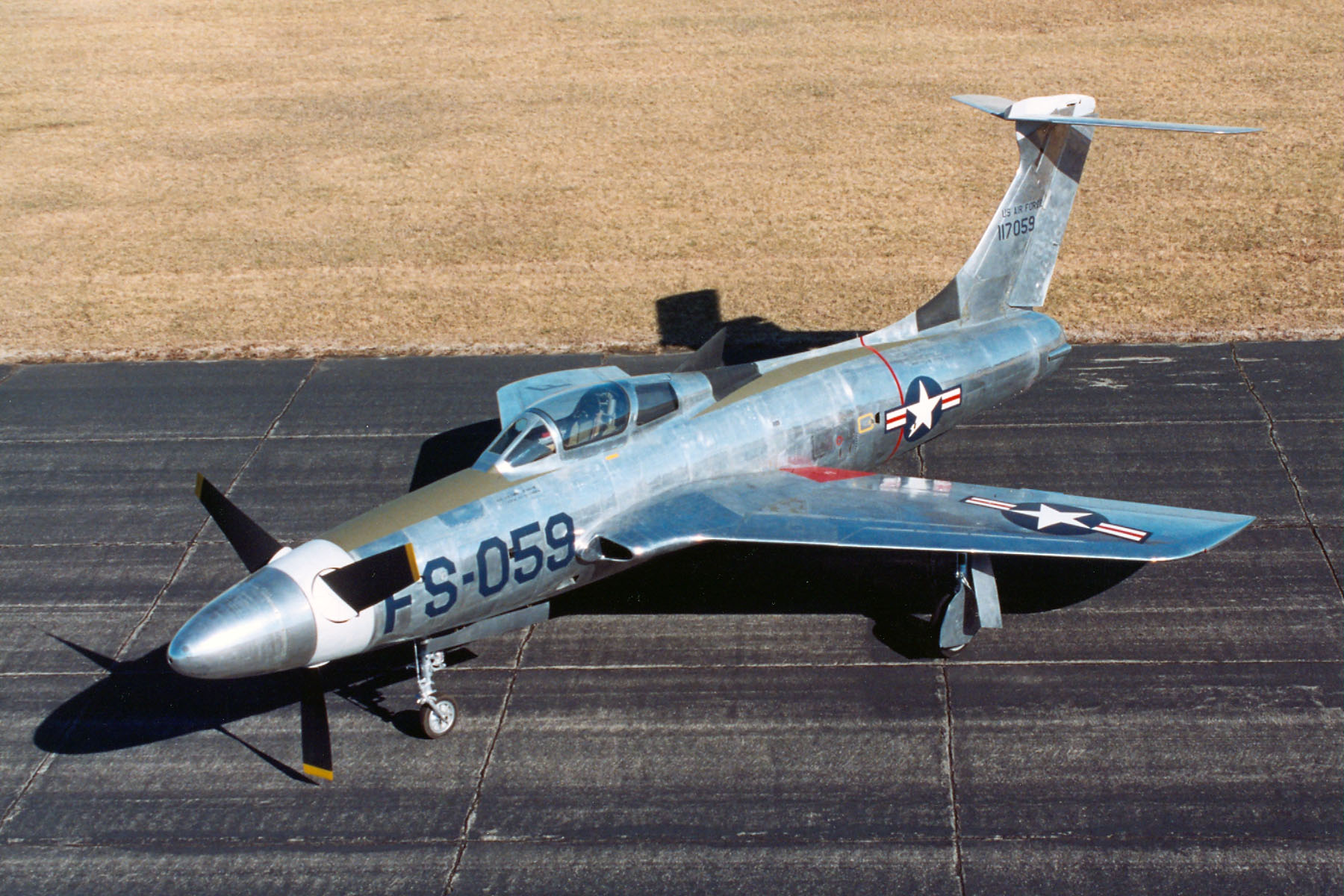
The Republic XF-84H combined terrible (and bizarre) characteristics with a conceptual dead-end, and a shabbily run programme; it is clearly the winner. Jet engines of the time had poor acceleration and endurance,  so the earlier F-84 was redesigned around an Allison T40 twin linked turboprop driving a highly unorthodox propeller designed to revolve at supersonic speeds (conventional propellers lose efficiency as the speed of their blades approaches Mach 1), and an afterburner on its jet exhaust. As such, it was designed to be the fastest propeller driven aircraft in the world, at about 670mph, and the Guinness Book of Records gave the XF-84H some credibility by claiming this record for the aircraft in 1997. Guinness was wrong. The vibration of the propeller shaft and uncontrollable snaking in flight meant that the aircraft probably failed to exceed 450mph, and even piston-engined propeller aircraft have gone much faster than this. To add insult to injury, the supersonic propeller was so loud that it could be heard 25 miles away. Close up, the horrific howl caused headaches and nausea, and an engineer and a crew chief both experienced violent fits triggered by the sound. Edwards AFB made the test crews tow the aircraft a long distance out into Rogers dry lake before testing the engine. Twelve flights were made from 1955, all by Republic test pilots – eleven by Hank Beaird (ten of which were cut short due to some technical problem or other) and one by Lin Hendrix, who threatened to fight anyone who made him fly the aircraft again. The only flights made were the manufacturer’s proving programme, and it’s tempting to conclude that this was only completed to avoid financial penalties. No USAF pilot flew the ‘Thunderscreech’. It would probably have killed someone – possibly from the noise alone – if its pilots hadn’t refused to fly it, or the USAF not seen sense and belatedly cancelled the programme.
Dedicated to the memory of Eric ‘Winkle’ Brown
What was the most combat effective piston-engined fighter ever made? An analysis can be found here.
You may also enjoy top WVR and BVR fighters of today, an alternate history of the TSR.2, an interview with a Super Hornet pilot and a Pacifist’s Guide to Warplanes. Want something more bizarre? The Top Ten fictional aircraft is a fascinating read, as is the The Strange Story and The Planet Satellite. The Fashion Versus Aircraft Camo is also a real cracker.
Follow my vapour trail on Twitter: @Hush_kit
Matthew Willis is a writer and journalist specialising in naval aviation. He is the biographer of A&AEE and Fairey test pilot Duncan Menzies. His book on the Fairey Barracuda will be out later this year.

