15-4.jpg
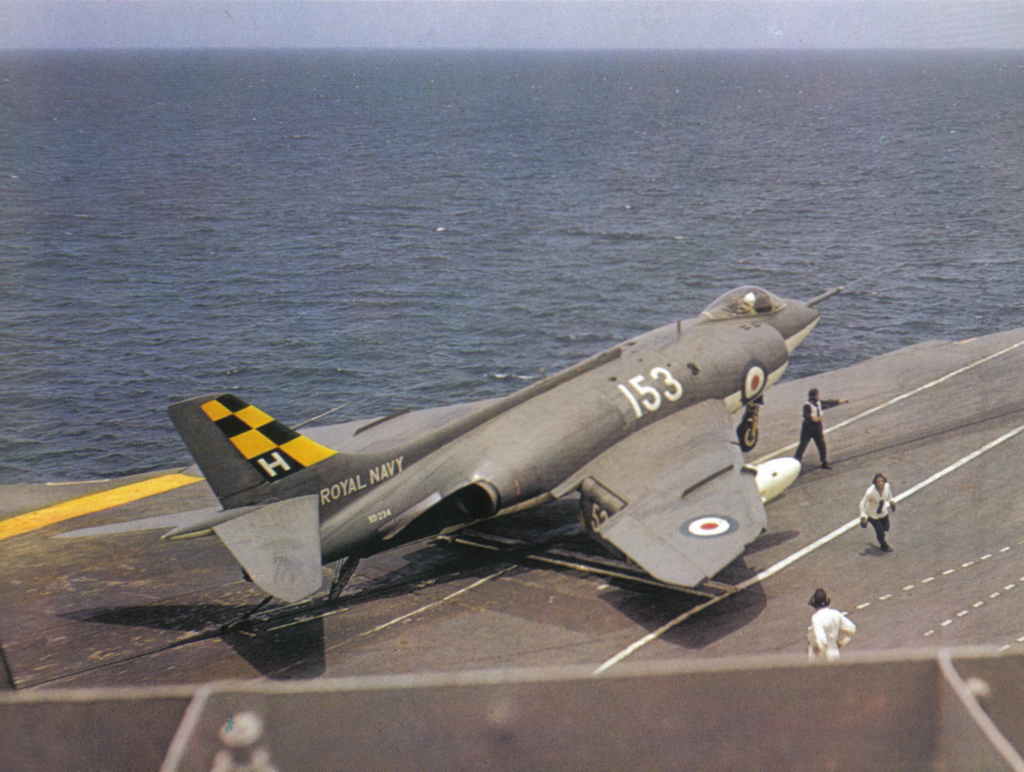
The Supermarine Swift was a deeply flawed fighter, but was saved from this list by its more successful career in reconnaissance.

If you want something done slowly, expensively and possibly very well, you go to the British. While Britain created the immortal Spitfire, Lancaster and Edgley Optica, it also created a wealth of dangerous, disgraceful and diabolical designs. These are just ten plucked from a shortlist of thirty.  In defining ‘worst’- we’ve looked for one, or a combination, of the following: design flaws, conceptual mistakes, being extremely dangerous, being unpleasant to fly, or obsolete at the point of service entry (and the type must have entered service). Grab a cup of tea, and prepare for ire as you read about ten machines they wanted your dad, grandad or great grandad to fly to war.

Help Hush-Kit to remain independent by donating here. Donations enable us to carry on creating unusual and engaging articles.

10. Blackburn Beverley
‘The Beverly Hellbilly’
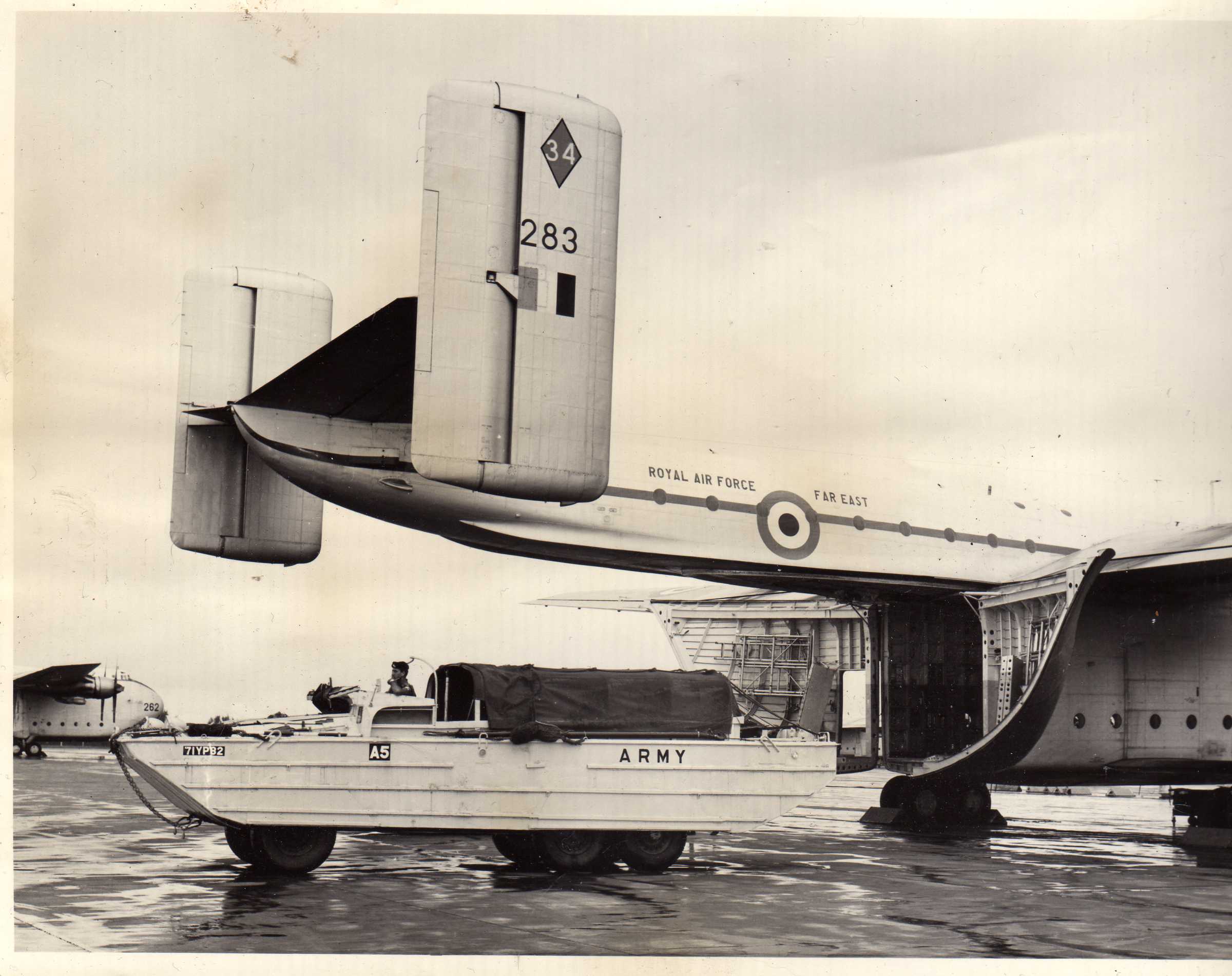
flying dukw
A Beverley gives birth to a cub. Initially born with six wheels, the wings only develop after sexual maturity.
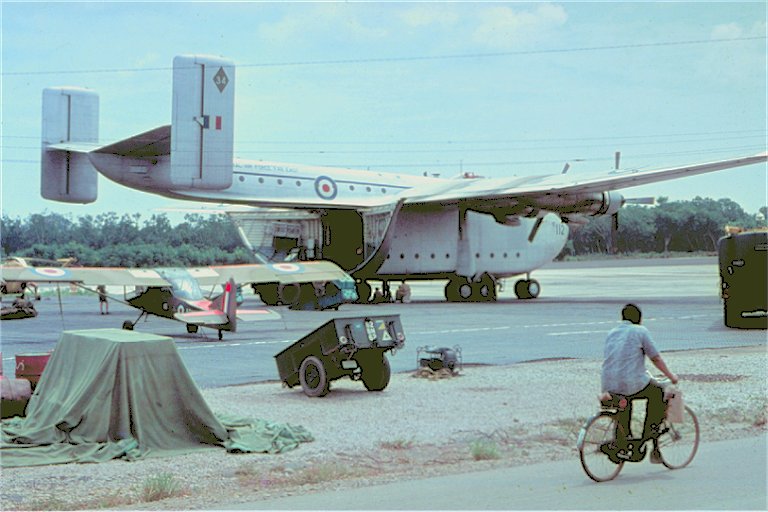
A mere year separates the service entry of the Beverley (1955) and the US’ C-130 Hercules (1956), yet sixty years later one of these is still the best tactical transport – serving with many air forces around the world- and the other only exists in the form of a single lonely museum piece standing in the cold in a village near Hull. There’s a reason for this.
 The Beverley had four Bristol Centaurus capable of generating a total of 11,400 horsepower pulling a fully loaded Beverley weighing 135,000 lb; the C-130A had a maximum weight of 124,200 lb and had 15,000 of turboprop horsepower to move it. The Centaurus also powered the abysmal Firebrand, pitiful Buckingham and the technically brilliant (but conceptually wrong-headed) Brabazon- and, for the sake of fairness, the Sea Fury. Lockheed threw vast resources at getting the Hercules right (so much so that Kelly Johnson thought the project would sink the whole company), whereas Blackburn used warmed-up World War II technology and a dawdling development time to produce an aircraft that was at best mediocre and which did its own small part in teaching the world that America was better at making aeroplanes.
 
 
Bev
In defence of the Beverley it performed well in austere conditions and could be procured without spending foreign currency reserves. (Thanks to Jon Lake)


9. Supermarine Scimitar

‘Red Beard’s scabbard’
scimitar-f-mk-1.jpg
 

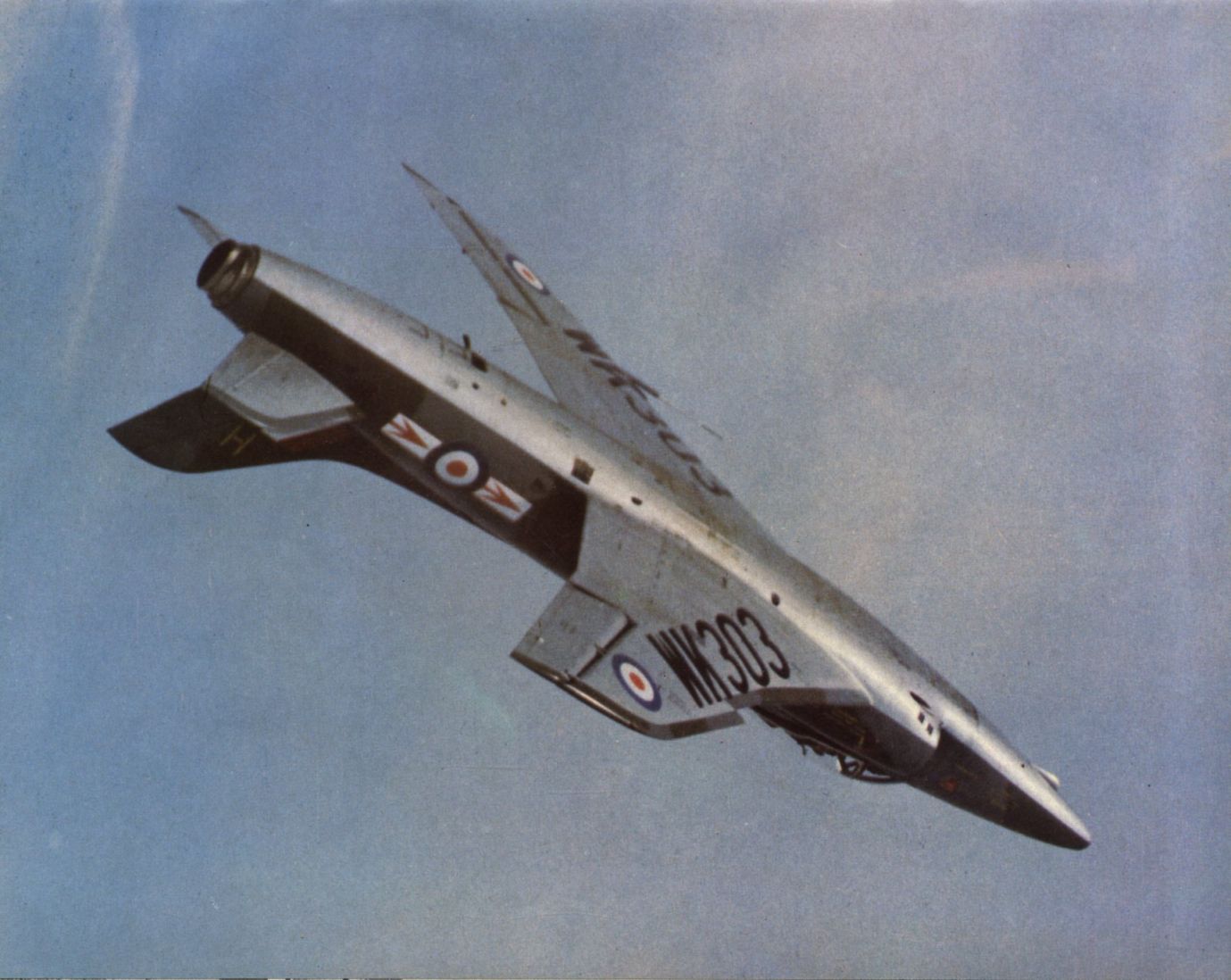
Take an aircraft so dangerous that is statistically more likely than not to crash over a twelve year period- and arm it with a nuclear bomb. Prior to this, ensure one example crashes and kills its first Commanding Officer, in front of the press. There you have the Scimitar. Extremely maintenance heavy, an inferior fighter to the Sea Vixen and a worse bomber than the Buccaneer; the Scimitar was certainly not Joe Smith’s finest moment. It was the last FAA aircraft designed with an obsolete requirement to be able to make an unaccelerated carrier take-off, and as a result had to have a thicker and larger wing than would otherwise be required. Only once did a Scimitar ever make an unassisted take-off, with a very light fuel load and no stores, and then just to prove that it could be done
Read The 11 Worst X-Planes here
 
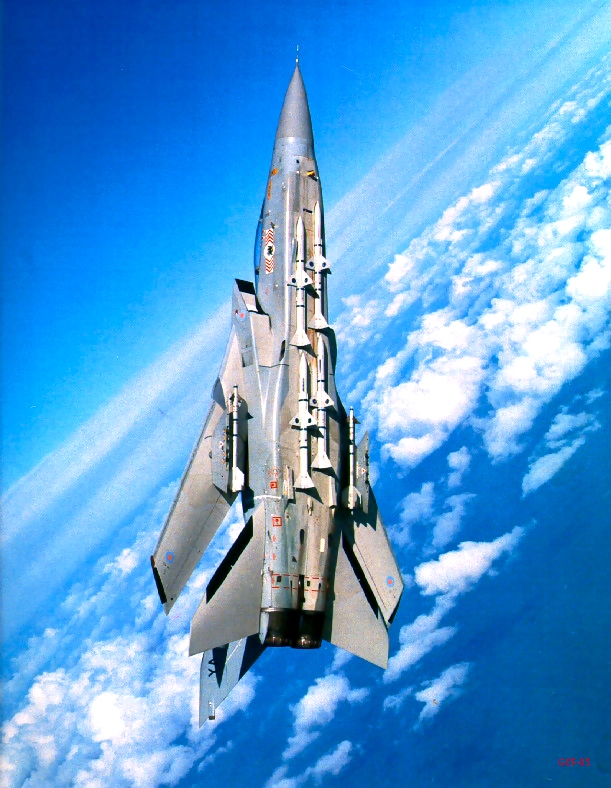
8. Panavia Tornado F.Mk 2
‘The Timcat’
010101-A-0000A-006
“Don’t worry sir, I hear the Flankers are not too agile with full tanks”
The Tornado interceptor was a very British development of an international aircraft. In the 1970s the British Aircraft Corporation pushed heavily for an interceptor variant of the Tornado (a ground attack aircraft). The government and partner nations were sceptical that this project would be the low-cost, low-risk, high-performance fighter promised, so BAC massaged the facts a little, deliberately understating what a huge undertaking it would be. Essentially they took a heavy airframe optimised for low-level flight, with engines optimised for low-level flight, with a radar optimised for attacking ground targets from low-level flight, and attempted to turn it into an interceptor intended to attack bombers at medium and high altitudes. To add to the fun, it was decided to develop an extremely ambitious new radar, despite Britain not having created an advanced fighter radar since the Lightning’s 50s technology AI23 (the Sea Harrier’s Blue Fox was a low-performance set derived from a helicopter system). Despite its ‘F’ designation, and the euphemistic ‘interim’ description, the F.Mk 2 did not have a functioning radar and lacked several other vital components for a modern fighter. The centre of gravity issues caused by the absent radar were solved with a large chunk of concrete ballast satirically dubbed the ‘Blue Circle radar’ after a cement brand (the nature of this ballast was probably apocryphal – see comments section). Despite the Tornado’s terrible high altitude performance and poor agility, huge amounts of money and time led to the F.Mk 3 – which eventually matured into a capable weapon system. Quite how many F-15Cs could have been bought for the cost of the Tornado Air Defence Variant programme is a question many RAF crews moaned to themselves as they struggled to refuel at altitudes higher than the Post Office Tower.


Help us give you more by donating to Hush-Kit here – even £2 is appreciated and it takes 10 seconds 
 
7. Gloster Javelin
‘It’s not time for T’
4655949878_67c1a0255d_o.jpg
It takes a special kind of genius to make an aircraft with a delta wing and one of the highest thrust-to-weight ratios of its generation subsonic, but that’s what Gloster did. The Javelin entered service in 1956, the same year as the dreadful Convair F-102, but even the disappointing American fighter would have smashed the Javelin in a drag race. After a mere twelve years in service, the RAF dropped the type. Unsurprisingly no export orders were received for the ‘Tripe triangle’.
 
6. Blackburn Firebrand
‘Fleet evil’

Blackburn-B-37-Firebrand-3.jpgThe story of the Firebrand torpedo fighter is a rotten one. The specification for the type was issued in 1939, but it was not until the closing weeks of the war that it began to enter service. Despite a luxuriously long development, it was an utter pig, with stability issues in all axes and a tendency to lethal stalls. There was a litany of restrictions to try and reduce the risks, including the banning of external tanks, but it still remained ineffective and dangerous to fly. Worse still, instead of trying to rectify the problems the FAA started a witch hunt of those pilots who dared to speak the truth about the abysmal Firebrand. Only two Firebrand squadrons formed, of which the flying complement was heavily, if not entirely made up of qualified flying instructors, suggesting only the most experienced pilots could be trusted with this unforgiving monster.


10 worst German aircraft here
 
 
5. de Havilland Sea Vixen

‘Vixen vapour rub’

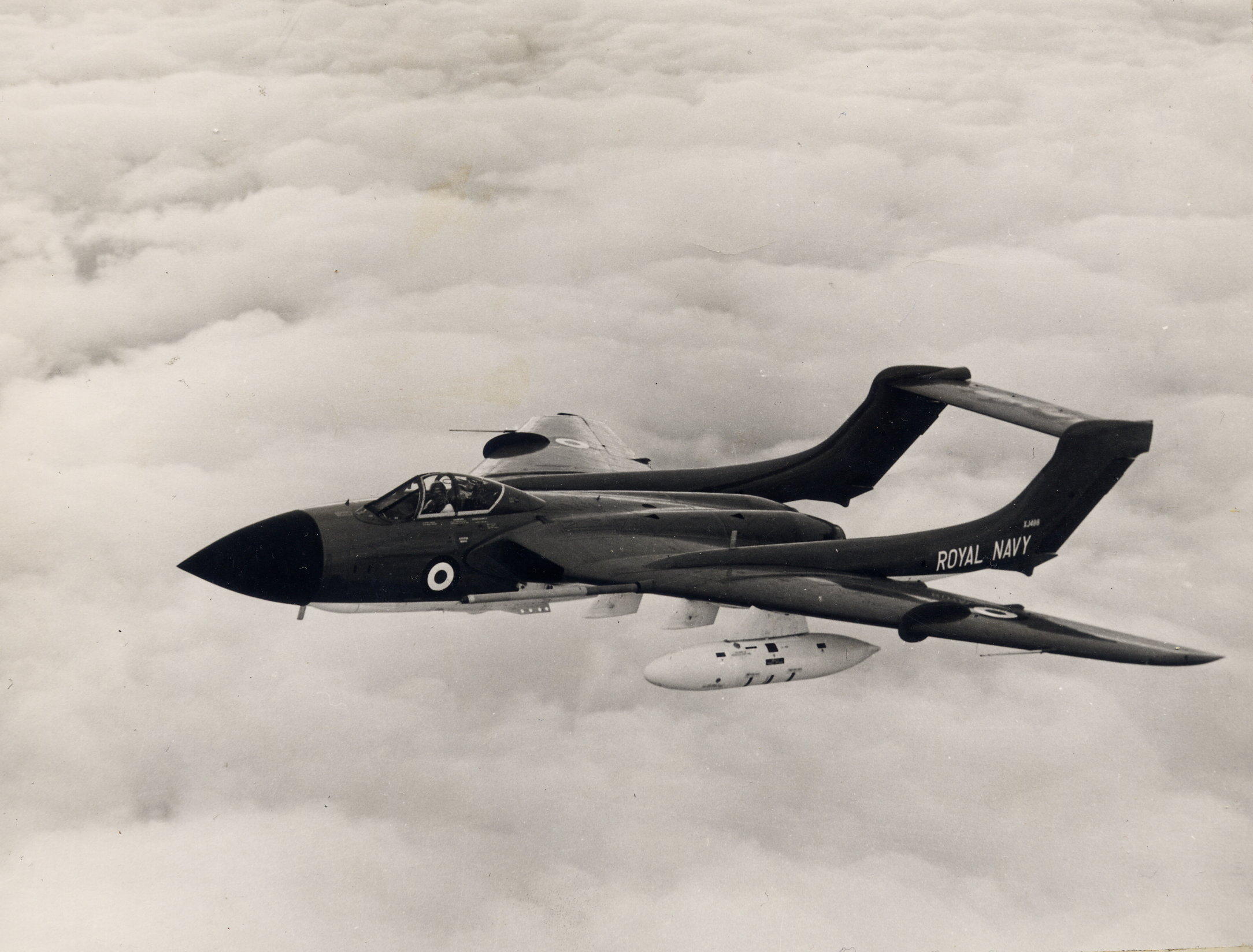
Vixen2
The observer sat below and to the right of the pilot in what London estate agents would refer to as a spacious luxury living area; he sat in a cramped space in virtual darkness in a ‘coal hole’ notoriously difficult to escape from.

The Royal Navy’s Sea Vixen fighters were death traps. 145 Sea Vixens were built, of these 37.93%.were lost over the type’s twelve-year operational life. More than half of the incidents were fatal. The Sea Vixen entered service in 1959 (despite a first flight eight years earlier), two years later than the US Navy’s Vought F-8 Crusader. The F-8 was more than twice as fast as the Sea Vixen, despite having 3,000Ibs less thrust. The development of the Sea Vixen had been glacial. The specification was issued in 1947, initially for an aircraft to serve both the FAA and the RAF. The DH.110 prototype first flew in 1951, and one crashed at the Farnborough the following year. This slowed down the project, which was then put on hold as the DH and the RN focused on the alternative DH.116 ‘Super Venom’. Once the project became prioritised again, it was substantially redesigned to fully navalise it. Then when the Royal Navy gave a firm commitment, it requested a radar with a bigger scanner and several other time-consuming modifications. All of which meant it arrived way too late- its peer, the F-8 remained in frontline service until 2000, its other contemporary, the F-4, remains in service today- the Sea Vixen retired in 1972. Fifty-one Royal Navy aircrew were killed flying the Sea Vixen.

Vixen_catapult

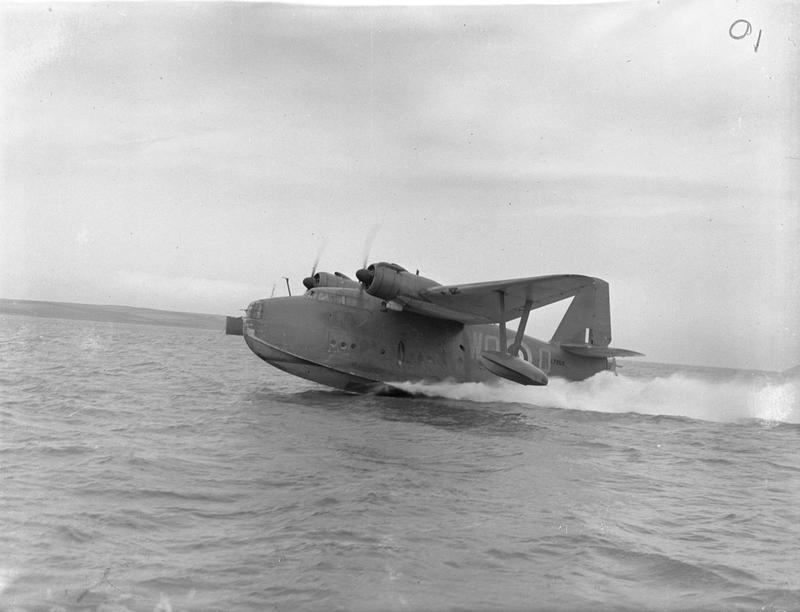
4. Saro Lerwick
‘Fat boy swim’
large
Despite possessing a decidedly cuddly aesthetic the Lerwick was a killer, difficult to handle in the air or on the water and a miserable combat aircraft. Recommended to be scrapped in 1939, the Lerwicks were pressed into service due to the lack of any alternative and of 21 built, 11 were lost, 10 in accidents and one simply disappeared. Its main problems were the old chestnuts of lack of power coupled with an inexplicable lack of stability. The Lerwick could not be flown hands-off, a serious flaw for a long range patrol aircraft nor could it maintain height on one engine. It was prone to porpoising on landing and take off and possessed a vicious stall. Added to this structural concerns (the floats regularly broke off) and a woefully unreliable hydraulic system and it is amazing that the diminishing number of Lerwicks managed to remain in use until the end of 1942.


3. Blackburn Botha
‘Botharation’
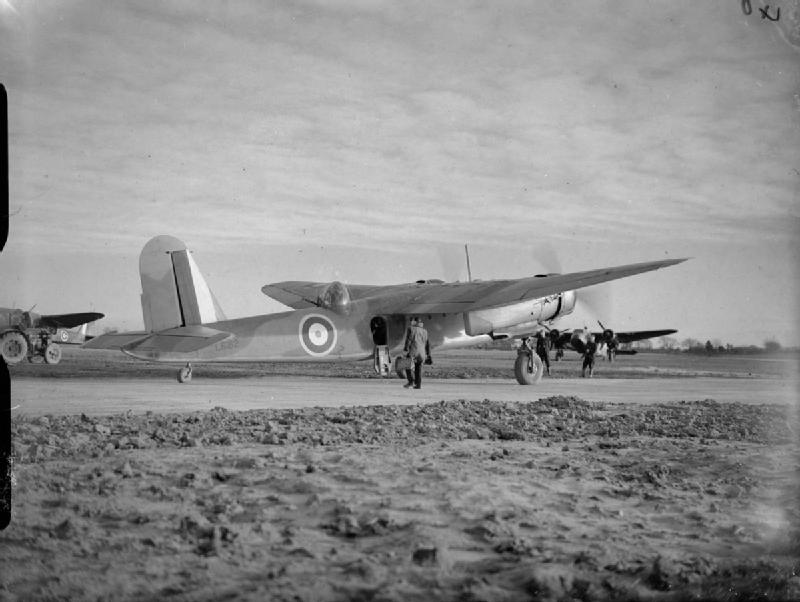
Blackburn_Botha_at_RAF_Silloth_WWII_IWM_CH_1907
 
Another great Blackburn design, the Botha was damned from a chronic lack of power. Its poor performance meant it was never to enter service in its primary role as a torpedo bomber. Had that been all it would have been nothing worse than an obscure mediocrity but Blackburn had cleverly made it extremely difficult to actually see out of the aircraft except dead ahead. This posed something of an issue for an aircraft now intended for reconnaissance and the Botha was supplanted by the Anson, which it had been supposed to replace. Passed to training units the Botha’s vicious handling traits conspired with its underpowered nature to produce a fantastic amount of accidents. Yet somehow it soldiered on until 1944 and a terrifying 580 were built.
 
 
2. Blackburn Roc
‘Death metal Roc’
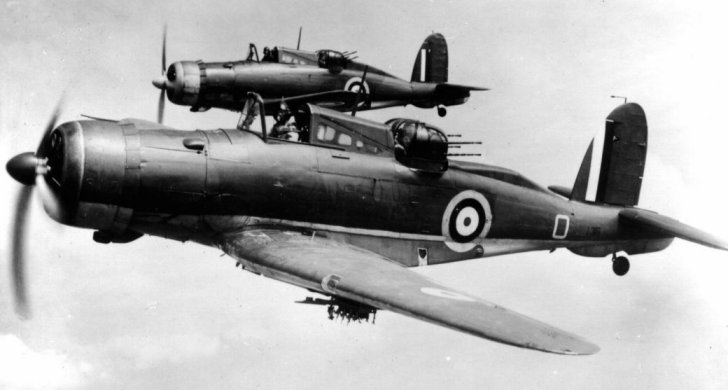
Roc2
The Roc was a fairly innocuous flying machine, however as an example of the wrong concept applied to the wrong airframe to produce a useless combat aircraft it is hard to beat. The ‘turret fighter’ that was so inexplicably popular in Britain just before the war was most memorably realised in the Boulton Paul Defiant, an extremely well-designed machine (considering) that did surprisingly well given that it had to lug around a draggy, heavy turret to no good purpose. The Roc by contrast was lumbered with a massively over-engineered airframe – a legacy of its being derived from a dive bomber – had a less powerful engine and was over 100 mph slower. How an aircraft that could not attain 200mph was expected to survive, let alone fight, in 1940 is one of the enduring mysteries of the early war period, as is the fact that its only confirmed ‘kill’ was a Ju 88, one of the world’s fastest bombers.


1. Blackburn ‘Twin Blackburn’ or ‘TB’
‘The conjoined flip-flop’
BlackburnTB2
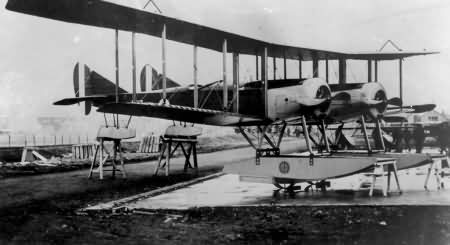
Apparently named after a disease, the TB was a bad aircraft that could not perform the one task it was designed for and thus set a precedent for many Blackburn designs to come. The Twin Blackburn nevertheless saw service for a year or so before it was finally put out of its misery and all nine examples were scrapped. Intended to destroy Zeppelins, the floatplane TB was supposed to climb above them and drop explosive Ranken darts on any insolent dirigibles foolish enough to approach its precious airspace. Unfortunately, the poor underpowered Twin Blackburn was unable to drag itself to airship operating altitude, even after its deadly cargo of explosive darts had been cut by two thirds. Furthermore the structure, which consisted of nothing more complicated than a couple of B.E.2 fuselages lashed together with a new set of wings and a vast amount of hope triumphing over experience, was not very rigid and the action of warping the wings flexed the poor TB so much it could end up turning in the opposite direction. The observer sat in one fuselage, the pilot in the other and communication was impossible except through waving, presumably to prevent either expressing to the other their true opinions of the designer of this radical machine. As if tumblr_inline_nj1wv8FNHO1t90ue7that were not enough, the wooden floats were mounted directly below the rotary engines. Rotaries drip out a lot of oil and as a result the TB’s floats would often catch fire. It would be nice to say that despite all this the TB inspired the fantastic Twin-Mustang but of course it didn’t.

Thank you for reading Hush-Kit. Our site is absolutely free and we have no advertisements. If you’ve enjoyed an article you can donate here. Without donations we can’t carry on.

At the moment our contributors do not receive any payment but we’re hoping to reward them for their fascinating stories in the future.


10 worst German aircraft here

“If you have any interest in aviation, you’ll be surprised, entertained and fascinated by Hush-Kit – the world’s best aviation blog”. Rowland White, author of the best-selling ‘Vulcan 607’

NOW AVAILABLE: The Hush-Kit Book of Warplanes, a gorgeous heavily illustrated – and often irreverent- coffee-table book covering the history of aviation 1914 – the present.


Â