
In the urea- and ale-scented company of British aviation enthusiasts you’re seldom far from an anti-American sentiment. Many an aircraft nerd has aggressively swung his fully extended Canon Telephoto lens around and almost ruptured his Goretex, as he aggrievedly described the Evil Empire’s various successful attempts to crush our aircraft industry; the same feelings can also be found in France, Canada and Germany (where it is literally true). Here are ten superb aircraft that may have been stymied by US interests. Address all angry emails to the writer, Harry Westhuizen.Â
If you can donate, please do. We  are currently well behind our funding targets. Many thanks.
10. MBB Lampyridae
Federal Nighthawk
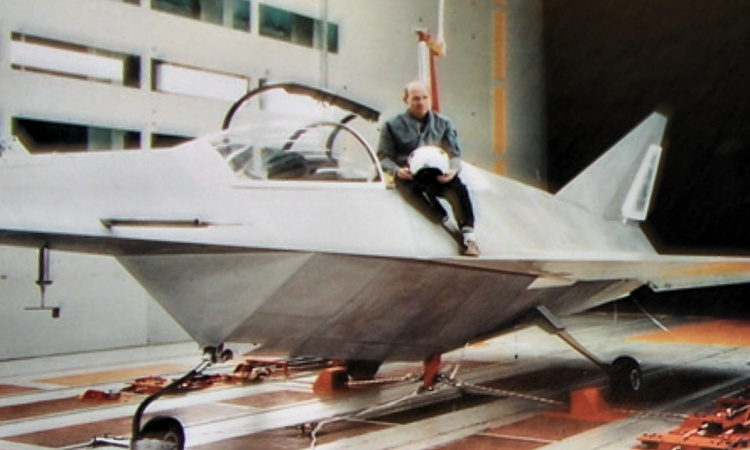
The MBB Lampyridae was a West German project of the early eighties to produce a low-observable missile fighter. US stealth efforts were deeply classified at the time but the German company MBB arrived at a similar solution to the F-117 independently. The design relied on a simple faceted shape to control radar returns. It is rumoured that following a trip to the MBB black projects section in 1987 by USAF officers, the US demanded that the project be cancelled.
9. Dassault Mirage 4000Â
Aigle morts

The Mirage 4000 was the big brother of the Mirage 2000, with two engines, instead of one, and three times the internal fuel capacity. The type would have been similar in role and capabilities to the F-15E, with an emphasis on long-range attack missions. The type was developed concurrently with the ‘2000 and shared many key technologies. Like the F-20, it was developed with private company money, rather than relying on a firm state order. Iran and Saudi Arabia were both interested in the type, but the former nation turned anti-West after the 1979 revolution and the latter chose the F-15E instead under intense pressure from the US.
8. IAI LaviÂ
Fertummelt F-16
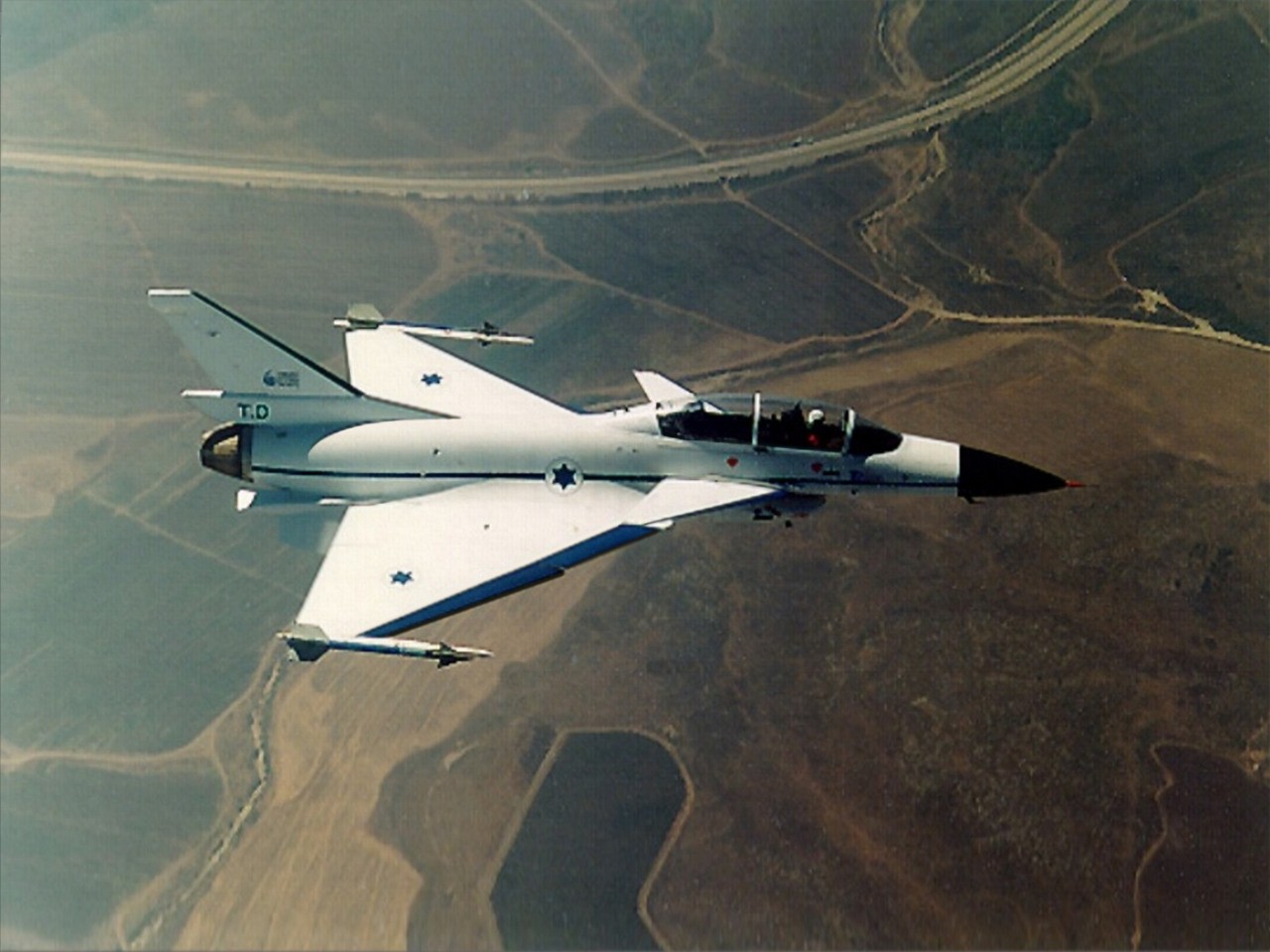
The Lavi was an indigenous Israeli fighter design based on the F-16 but with a canard delta configuration. It was developed with a great deal of assistance from the US, something which drove Northrop crazy as it would be a (more advanced) rival to the F-20 Tigershark. A photo exists of the J-10 designer standing by the aircraft as part of a Chinese trade delegation fuelling rumours that the Lavi may have influenced, directly or indirectly, the J-10’s design. While some in the US actively supported the project, others saw it as creating a sales rival to the F-16 and F/A-18 and were against it. Even in Israel, many in the military were critical of the programme as it was swallowing huge chunks of the military budget. Though in all likelihood it would have been a formidable aircraft and the spearhead of an Israeli manned aircraft industry, it was cancelled in 1987 under US pressure.
A-Z of aviation here
7. Northrop F-20 Tigershark
The $1.2 billion extinct Tiger

Ok, so this was a US design killed by the US, but the case still stands (and it’s always a good time to look at F-20 photos). The export embargo of the standard F-16 meant the US had no light fighter to flog to friendly dictators and allies on a budget. The desire for a ‘non-provocative’ (i.e. not too capable) had started in 1970, but without even a domestic order was left on a back-burner. Northrop stepped in with the F-20, which was essentially a hot-rod single-engined F-5E. The F-20 had superb performance; it was exceptionally fast (its climb rate was phenomenal), agile and easy to maintain. Unlike the contemporary F-16, the F-20 had a beyond visual range missile capability (in the form of the Sparrow). It was also expected, perhaps somewhat optimistically, to consume 53% less fuel, require 52% less maintenance manpower, have 63% lower operating and maintenance costs and have four times the reliability of average front-line designs of the era (now wondering if the baseline fighter considered for this comparison was the F-4). Despite endorsements from Chuck Yeager and a slick marketing campaign (that was slowed down considerably by the need to run the marketing via the State Department) the aircraft failed to achieve an actual order – its lack of even a domestic order made it unattractive to potential clients. Once the Lavi was in development and the F-16 was cleared for export, the F-20 was finished.
6. Saab 37 Viggen
Kissinger’s ThunderclapÂ

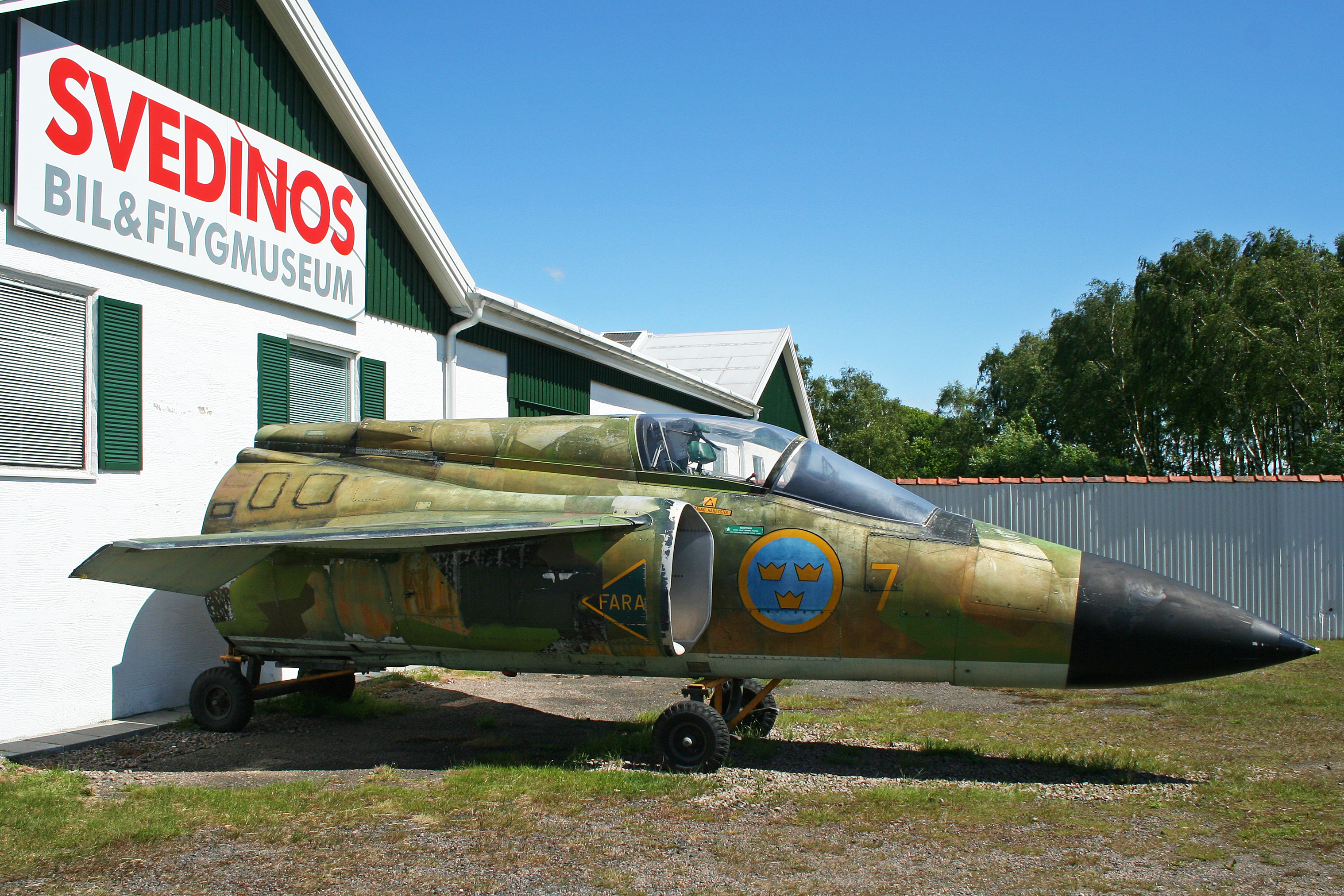
The Saab 37 Viggen was an extremely capable, and lavishly well-equipped, fighter-bomber. It was also a very expensive project to remain purely in the domestic market, export customers were wanted to spread the financial burden. Its failure to achieve export success was largely down to its Swedish origin, a country with an inconvenient regard for ethics when exporting military hardware. It was not just the good principles of the Swedish government that got in its way: it was also a mite too specialised towards Swedish needs. The Viggen did in fact achieve an export order, from India in 1978. But the US didn’t like it, and refused an export licence for the licence-built Volvo RM8 engines (which were modified afterburning versions of the Pratt & Whitney JT8D). The US were worried by the potential for the Swedes to include secret US technology in the export version, despite Saab’s claim to the contrary. In a telegram about the matter, Kissinger noted:
“RECENT SWEDISH TRANSFER OF US-ORIGIN LASER RANGEFINDER EQUIPMENT TO YUGOSLAVIA, WHICH LATER REPORTEDLY TURNED UP IN EGYPT, RAISES QUESTION AS TO SWEDISH ABILITY TO CONTROL THIRD-COUNTRY TRANSFER OF US TECHNOLOGY.†The US scuppered the deal, and the Indians chose the Jaguar instead. The superb Viggen lived a life of domestic bliss, never having to drop a bomb in anger.
5. British Aircraft Corporation TSR.2
To Hell with BAC

The TSR. 2 was seemingly designed to power British aviation forums, and generates a colossal 500kW an hour of bile and venom. The TSR.2 was actually an exceptionally capable bomber that never went beyond the prototype stage. Though its staggering costs were a key contributor to its demise, there are many that point the finger at a jealous US presence that killed the project.
The book ‘CONCORDE, THE INSIDE STORY’ was written by the British Aircraft Corporation vice-chairman Geoffrey Knight. In this book he quotes Julian Amery, the Conservative Aviation Minister of the time, as saying the cancellation of the TSR.2 (and HS P.1154) was enacted by the US President in frustration at his failure to kill the Concorde project.
4. Avro CF-105 Arrow
You Canuck be seriousÂ

Ok, so it wasn’t just US pressure that killed the insanely ambitious Arrow, it was also the sobering budgetary requirements of this Canadian super-fighter, but don’t dare suggest that in the dark masses of Canadian aviation enthusiasts that huddle around bonfires at night burning effigies of Eisenhower. The Arrow was very much the F-22 of its time, it had exceptionally advanced avionics, and promised unparalleled performance. Its cancellation is still bitterly remembered by many in Canada.
3. Miles M.52Â
Bell end supersonic dream of Winkle
 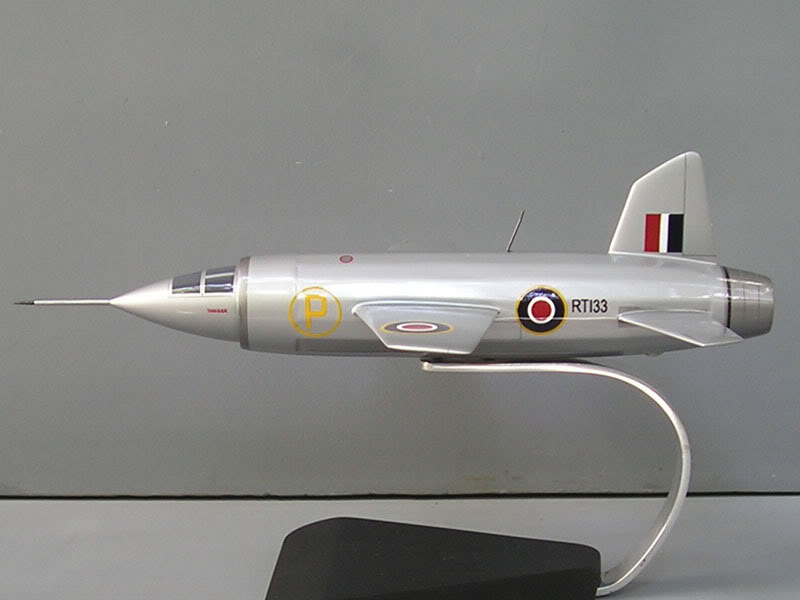
Eric ‘Winkle’ Brown is the most experienced test pilot in the world, with no other rivalling the amount of types on his log book. He almost became the first man to go supersonic in level-flight, in the Miles M.52. The type was well designed (in wind tunnels it comfortably punched through to Mach 1.38), and pioneered the ‘flying tail’ which has since become a must-have item for most tailed supersonic aircraft. The type could have become the first supersonic aircraft but official support was withdrawn for odd reasons that have never been adequately explained. The flying tail, so important for supersonic flight, was copied by Bell designers (following a visit to the UK) and the excellent M.52 became an historical footnote. See you later stabilator.
2. Saunders-Roe SR.177
Rocket to the Crypt

Good old Lockheed, always avoiding any dodgy activity… apart from the alleged corruption in the Italian deal C-130, oh and the Japanese F-104 and L-1011 affair, and various alleged shenanigans in Saudi Arabia. The F-104 Starfighter ‘Deal of the Century’ to various European nations was allegedly particularly squalid, with individuals involved in procurement, including Prince Bernhard of the Netherlands, receiving handsome ‘sales incentives’. Before the F-104 was selected by the West Germans, they had a great deal of interest in Britain’s SR.177 hybrid jet-rocket fighter. A fighter which would have had a climb rate unsurpassed until the Typhoon and Raptor. With West Germany’s deselection, Britain lost interest in the type and it was cancelled, though advances in jet engines and ground defences were also contributing factors.
1. Aérospatiale-BAC Concorde
Droop Snoot given Boot
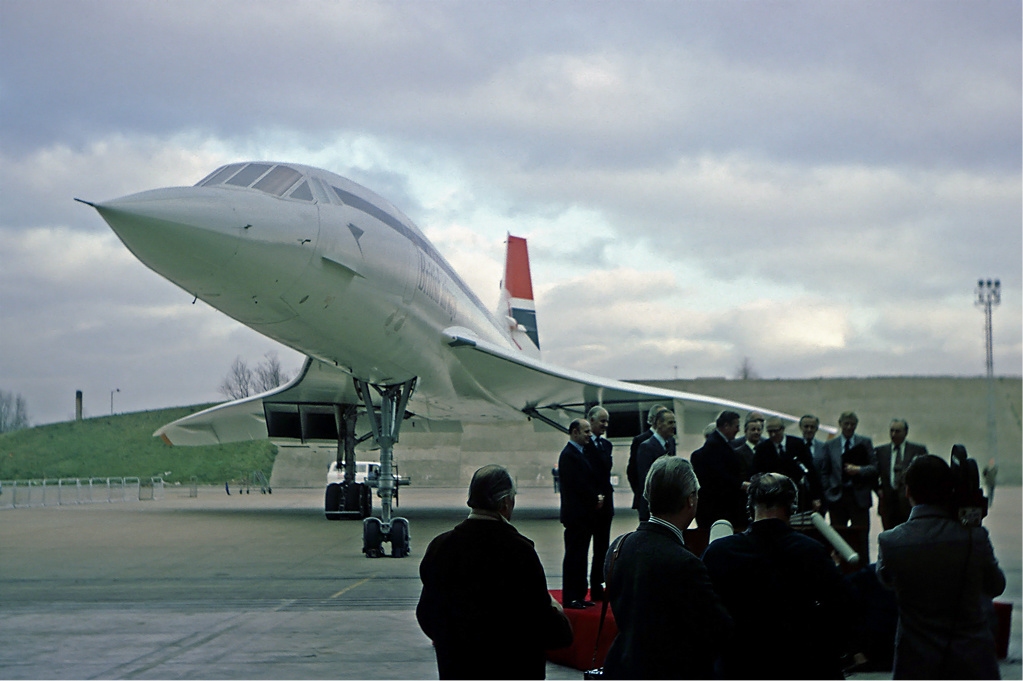
That the fabulous Concorde failed to sell to any export customers is at least partly due to US interference. You can listen here to President Kennedy getting very angry about Pan Am’s 1963 Concorde order. Many in US Government and industry were terrified that the European effort would steal the US dominance of the 1970s airline world. The consortium secured non-binding options for over 100 Concordes from the major airlines of the day, but in the end not a single aircraft was exported. Initially the threat of Concorde was used to bolster America’s own supersonic passenger programme, though when the Boeing 2707 was cancelled the tone changed in many quarters of the US aerospace industry which publicly poured scorn on the idea of supersonic air travel. The British anti-Concorde effort, led by Richard Wiggs, were noble in intentions, largely concerned as they were with environmental issues – but there is some evidence that many of the concerns in the US regarding noise concerns were stoked to ensure Concorde would not succeed. The US anti-Concorde effort combined with noise fears and regulations and rising oil prices to kill Concorde’s chances.
Thank you for reading Hush-Kit. Our site is absolutely free and we have no advertisements. If you’ve enjoyed an article you can donate here– it doesn’t have to be a large amount, every pound is gratefully received. If you can’t afford to donate anything then don’t worry.
Follow my vapour trail on Twitter:Â @Hush_kit
Guide to surviving aviation forums here
You should also enjoy some more of our articles: There’s a whole feast of features, including the top WVR and BVR fighters of today, an interview with a Super Hornet pilot and a Pacifist’s Guide to Warplanes. Was the Spitfire overrated? Want something more bizarre? The Top Ten fictional aircraft is a fascinating read, as is The Strange Story and The Planet Satellite. The Fashion Versus Aircraft Camo is also a real cracker.Â

