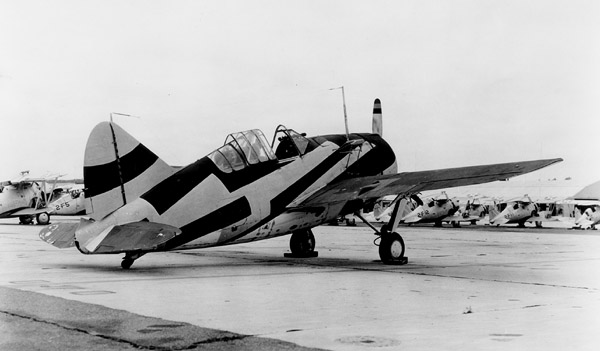
I planned to do my homework for this article, but I’ve decided not to. Maybe this is because a hot bath seems preferable to scouring obscure aviation books, or maybe it’s because I hope somebody will read this and give me the answer I want.
Military aircraft have long carried national markings. It’s a good idea as they can reduce the chance of ‘friendly fire’ incidents. You’re probably aware of the famous one used by both the RAF and 60s mods, the mean black and white cross of World War II German aircraft and the rather camp USAF roundel. A roundel by the way is a circular symbol, so the USAF’s is slightly impure as it has horizontal protrusions. Occasionally aircraft markings need to be changed as they look too much like those of the enemy. The large red circle in the centre of RAF roundels was too similar to the Japanese air force’s so RAF aircraft operating in Asia became two-tone blue affairs. This we all know and are comfortable with.

There was always an odd contradiction in national markings being used in conjunction with camouflage: markings are designed to be conspicuous and camouflage to conceal or at least confuse. In the early part of World War II the RAF found the white in their roundels too conspicuous so made the white band thinner and in some cases removed it altogether. When D-Day came the danger of friendly fire was deemed greater than the threat of the enemy and subsequently highly visible ‘invasion stripes’ were added (also, the large numbers of aircraft close together rendered the early IFF transponders useless).

Before I get side-tracked let’s jump straight to the subject in hand. What is the point of ‘lo-viz’ markings? From the late 1970s to the 1990s all military aircraft went grey. It was found to be the best all-round camouflage and soon fighters, bombers and even transport aircraft all went grey (with very few exceptions). Modellers from around the world killed themselves due to the tedium and enamel paint producers tipped gallons of brilliant hues out into canals and tripled production of the universe’s most boring colour.
(Trainers, on the other hand, went black — which despite the opinion of night fighter scheme designers is the most conspicuous colour in most light conditions.)

RAF roundels became washed-out ghosts of their former selves. Red became pink, mid-blue became the pale blue of invalid cars of the 1980s. In the 2000s it became even more extreme with some roundels losing their colour altogether and becoming grey, often making national identification by symbol alone close to impossible.

So are those symbols supposed to be seen or not? The idea of low-visibility traffic signs is preposterous, so why ‘lo-viz’ aircraft markings? Is it an attempt to pay lip-service to international conventions while optimising camouflage? If this is the case then the rules are so weak and silly then maybe they’re not worth following- where are these rules set anyway? Who invented them?
I leave this to you wise reader to solve as my bath is almost run and I’d like another glass of wine.
A fascinating article on aircraft camouflage can be found here.