
To excel in Beyond Visual Range air combat a fighter must be well-armed and equipped with capable avionics. It must be able to fly high and fast to impart the maximum range to its missiles, allowing them to hit the enemy before he is even aware of their presence. The aircraft must give its crews good enough situational awareness not to shoot their friends down, and be easy to operate so it can deploy its weapons quickly and accurately. The black magic of the aircraft’s electronic warfare suite can also come in to its own, reducing the opponent’s situation awareness.
Hardware is generally less important than training and tactics, but removing these human factors from the mix allows us to judge the most deadly long-range fighting machines currently in service. The exact ordering of this list is open to question, but all the types mentioned are extraordinarily potent killers. This list only includes currently active fighters (so no PAK FAs etc) and only includes weapons and sensors that are actually in service today (so no Meteor missiles etc).
10. Lockheed Martin F-16E/F
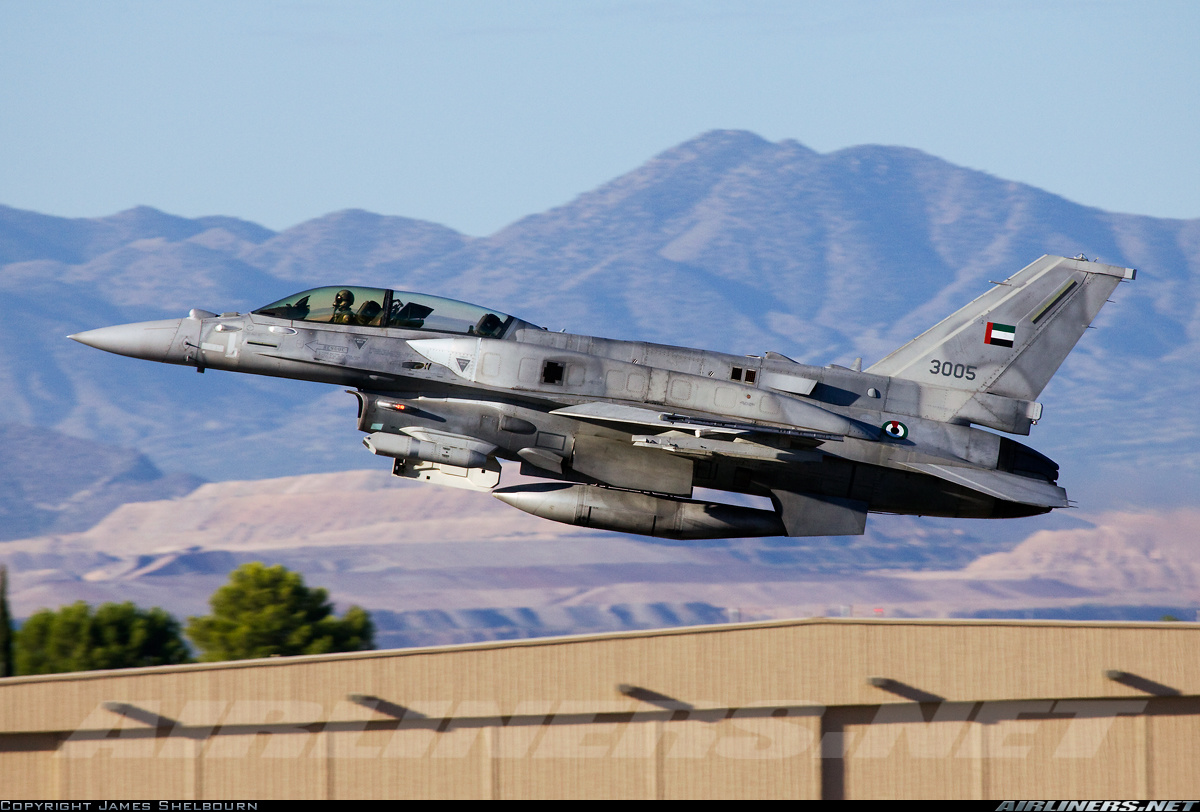
A great sensor suite, including a modern AESA and comprehensive defensive aids systems is combined with advanced weapons and a proven platform; a small radar cross section also helps. However, the type is let down by mediocre ‘high and fast’ performance, fewer missiles than its rivals and a smaller detection range than some of its larger rivals. With Conformal Fuel Tanks its agility is severely limited.
Armament for A2A mission:Â 4 x AIM-120C-7, 2 x AIM-9X (1 x 20-mm cannon.).
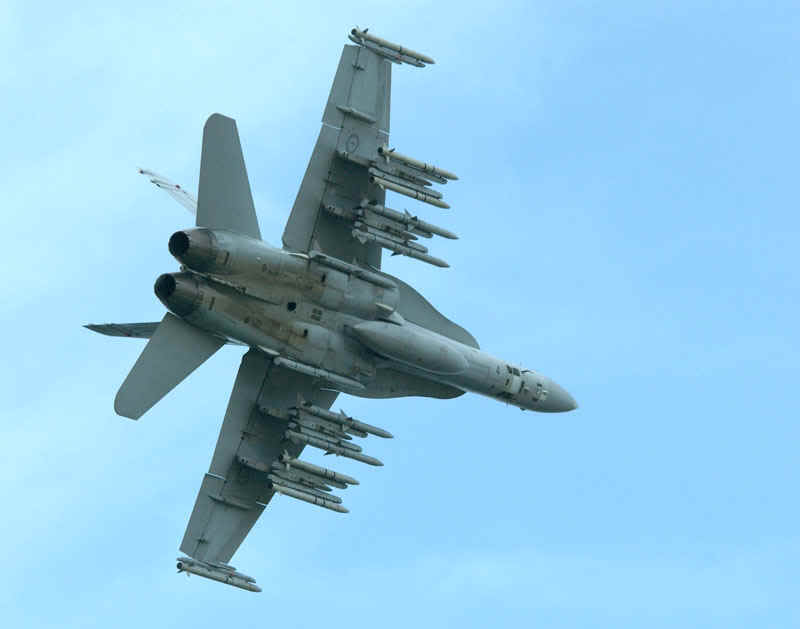
9. Boeing F/A-18E/F Super Hornet

Well equipped with a great defensive system and excellent weapons the Super Hornet  has much to offer. It is happiest at lower speeds and altitudes  making it a fearsome dogfighter, but is less capable at the BVR mission; a mediocre high-speed high-altitude performance let it down, as does a pedestrian climb rate and acceleration at higher speeds. The touch screen cockpit has disadvantages, as switches and buttons  can be felt ‘blind’ and do not require ‘heads-down’ use. The much-touted AN/APG-79 AESA radars introduced on Block II aircraft has proved unreliable and has enormous development problems. One scathing report said ‘ …operational testing does not demonstrate a statistically significant difference in mission accomplishment between F/A-18E/F aircraft equipped with AESA and those equipped with the legacy radar.’ Read an exclusive interview with a Super Hornet pilot here.
Armament for A2A mission:Â Super Hornet (high drag ‘Christmas tree’) 12 x AIM-120, realistic = 6 x AIM-120C-7 Â + 2/4 AIM-9X ) (1 x 20-mm cannon)
8. Grumman F-14 Tomcat (IIRAF)

The star of ‘Top Gun’ remains active with the Islamic Republic of Iran’s Air Force. Though an aged design it probably retains an impressive ultra-long range engagement capability. As one source said to Hush-Kit ‘Against a US Navy F/A-18, the Tomcat’s radar and AIM-54 are still going to cause a real headache.’
A2A armament:  4 x AIM-54 (remanufactured), 2 x Fatter (local AIM-9P version) (one 20-mm cannon)
Top Ten fictional aircraft here
7. Dassault Rafale

In many ways the Dassault Rafale deserves a higher ranking in this top ten. It has great agility, one of the lowest radar cross sections of a ‘conventional’ aircraft and its defensive systems are generally considered superior to those of its arch-rival, the Typhoon. It falls down in its main armament, the MICA, which is generally considered to have a lower maximum range than later model AMRAAMs. It has a little less poke than the Typhoon in terms of  thrust-to-weight ratio leading some potential customers in hot countries to demand an engine upgrade. It has yet to be integrated with a helmet cueing system in operational service and the recent fitment of an AESA, though a publicity coup, is very far from being fleetwide, leaving the vast majority of aircraft with a PESA squeezed into an unfortunately petite nose, a technological cul-de-sac lacking the flexibility of the pure AESA of its US rivals (though it is still a highly regarded sensor).
A2A armament: 6 x MICA (possibly 8 if required, though this has not been seen operationally) Â (one 30-mm cannon)
6. McDonnell Douglas F-15C (V) 3 Eagle/Boeing F-15SG
Though the famously one-sided score sheet of the F-15 should be taken with a pinch of salt (Israeli air-to-air claims are often questionable to say the least), the F-15 has proved itself a tough, kickass fighter that can be depended on. It lacks the agility (certainly at lower speeds) of its Russian counterparts, but in its most advanced variants has an enormously capable radar in the APG-63(V)3. The F-15 remains the fastest Western fighter to have ever entered service, and is currently the fastest non-Russian frontline aircraft of any kind in the world. The type is let down by a giant radar cross section, a massive infra-red signature and an inferior high altitude performance to a newer generation of fighters.
A2A armament:Â 6 x AIM-120C-7, 2 x AIM-9X (1 x 20-mm cannon)

5. Sukhoi Su-30MK
The most capable official members of Sukhoi’s ‘Flanker’ family are the export Su-30MKs. Agile and well-armed they are formidable opponents. Armed with ten missiles the Su-30 has an impressive combat persistence and is able to fly impressively long distance missions. The radar is a large, long-ranged PESA (featuring some elements of an AESA) and Indian aircraft carry particularly good Israeli jamming pods. The type has proved itself superior to both the RAF’s Tornado F.Mk 3 and USAF’s F-15C in exercises, though the degree of dominance over the F-15C is marginal to the point that superior training, tactics and C3 saw the US lord over the type in later exercises. The pilot workload is higher than in later Western designs, the engines demanding  to maintain and the vast airframe has a large radar cross section.
A2A armament: 6 x R-77, 4 x R-73 (1 x 30-mm cannon)

4. Shenyang J-11B
The Chinese pirate version of the ‘Flanker’ features a reduced radar cross section and improved weapons and avionics. With the latest Type 1474 radar (with a 100 miles + range) and the highly-regarded PL-12 active radar AAM, it is an impressive fighter.
6 x PL-12, 4 x PL-10 (or R-73E) + ( 1 x 30-mm cannon)

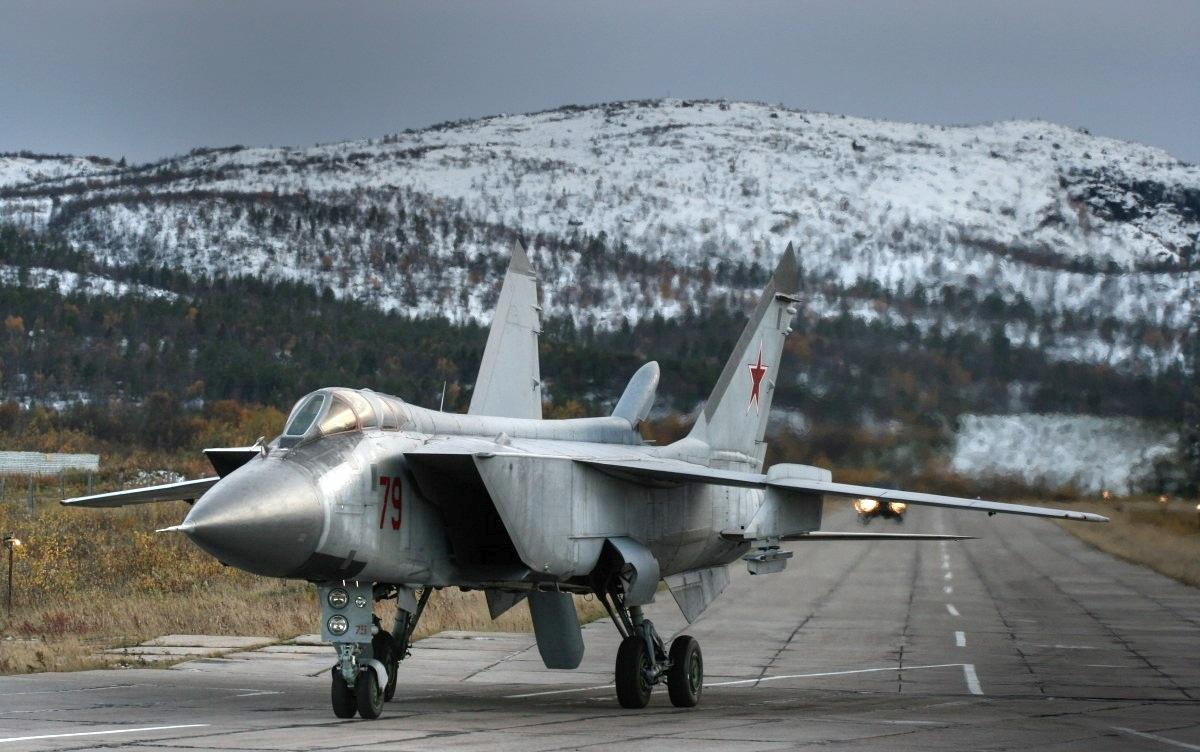
3. Mikoyan MiG-31BM
The recent
The fastest modern fighter in the world, with a top speed of Mach 2.83, the MiG-31 offers some unique capabilities. No aircraft has a longer air-to-air weapon than the type’s huge R-33, which can engage targets well over 100 miles away. Designed to hunt in packs of four or more aircraft the type can sweep vast swathes of airspace, sharing vital targeting information by data-link with other aircraft. The enormous PESA radar was the first ever fitted to a fighter. The type is marred by a mountainous radar cross section and poor agility at lower speeds. More on the MiG-31 here and here.
 4 x R-33, 2 x R-40TD (1 x 23-mm cannon)
2. Eurofighter Typhoon
A high power-to-weight ratio, a large wing and a well designed cockpit put the Typhoon pilot in an advantageous position in a BVR engagement. Acceleration rates, climb rates (according to a German squadron leader it can out-climb a F-22) and agility at high speeds are exceptionally good. Pilot workload is very low compared to most rivals and the aircraft has proved reliable. The type will be the ‘last swinging disc in town’ as it will be among the last modern fighters to feature a mechanically scanned radar; the Captor radar may use an old fashioned technology but it still a highly-rated piece of kit. It has a smaller radar cross section than both the F-15 and Su-30 and superior high altitude performance to Rafale. Combat persistence is good and the AIM-132 ASRAAM of RAF aircraft are reported to have a notable BVR capability.
A2A armament (RAF):Â 6 x AIM-120C-5, 2 x AIM-132 (1 x 27-mm cannon)

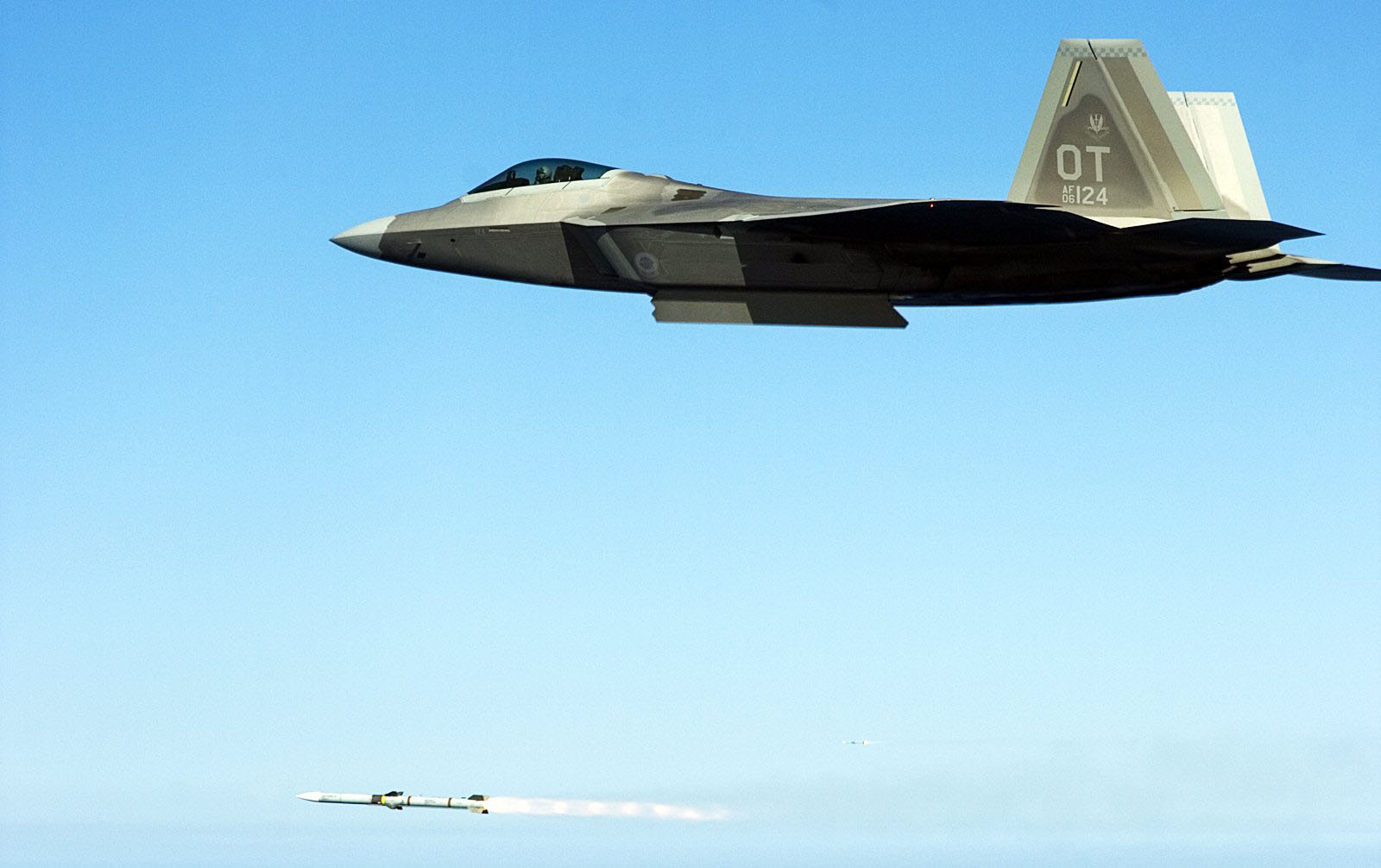
1. Lockheed Martin F-22 Raptor
Undisputed king of beyond-visual range air combat is the F-22 Raptor. Its superbly stealthy design means it is likely to remain undetected to enemy fighters, calmly despatching its hapless opponents. The type’s excellent AESA radar is world class, and its ‘low-probability of interception’ operation enables to see without being seen. When high-altitude limitations are not in place (due to safety concerns) the type fights from a higher perch than F-15s and F-16s, and is more frequently supersonic. High and fast missile shots give its AMRAAMs far greater reach and allow the type to stay out harm’s way. The F-22 is expensive, suffers from a poor radius of action for its size and has suffered a high attrition rate for a modern fighter.
6 x AIM-120C-5Â + 2 x AIM-9M (1 x 20-mm cannon)
Help us give you more by donating to Hush-Kit here – even £1 is appreciated and it takes 10 secondsÂ
Let’s get in to the merge, Top Ten Dogfighters here
By Joe Coles &Â Thomas Newdick
Thank you for reading Hush-Kit. Our site is absolutely free and we have no advertisements. If you’ve enjoyed an article you can donate here– it doesn’t have to be a large amount, every pound is gratefully received. If you can’t afford to donate anything then don’t worry.
At the moment our contributors do not receive any payment but we’re hoping to reward them for their fascinating stories in the future.
As a thank you….
Those who donate more than £50 may ask for a short article on a particular subject.
Those who donate more than £100 may ask for a long article on a particular subject.
Find out about the latest Hush-Kit articles on Twitter:Â @Hush_kit
Who was Sweden’s flying farm girl?
Want to submit an article for Hush-Kit? Contact: hushkiteditorial@gmail.com
“If you have any interest in aviation, you’ll be surprised, entertained and fascinated by Hush-Kit – the world’s best aviation blogâ€. Rowland White, author of the best-selling ‘Vulcan 607’
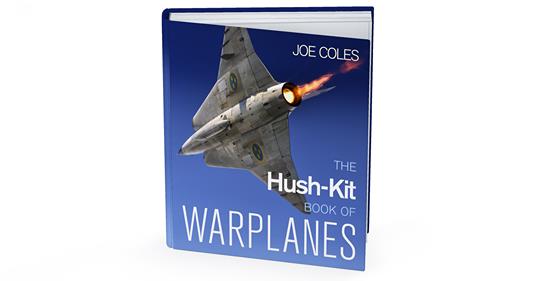
I’ve selected the richest juiciest cuts of Hush-Kit, added a huge slab of new unpublished material, and with Unbound, I want to create a beautiful coffee-table book. Pre-order your copy now right here Â
TO AVOID DISAPPOINTMENT PRE-ORDER YOUR COPY NOW

From the cocaine, blood and flying scarves of World War One dogfighting to the dark arts of modern air combat, here is an enthralling ode to these brutally exciting killing machines.
The Hush-Kit Book of Warplanes is a beautifully designed, highly visual, collection of the best articles from the fascinating world of military aviation –hand-picked from the highly acclaimed Hush-kit online magazine (and mixed with a heavy punch of new exclusive material). It is packed with a feast of material, ranging from interviews with fighter pilots (including the English Electric Lightning, stealthy F-35B and Mach 3 MiG-25 ‘Foxbat’), to wicked satire, expert historical analysis, top 10s and all manner of things aeronautical, from the site described as:
“the thinking-man’s Top Gear… but for planes”.
The solid well-researched information about aeroplanes is brilliantly combined with an irreverent attitude and real insight into the dangerous romantic world of combat aircraft.
FEATURING
-
-
-
- Interviews with pilots of the F-14 Tomcat, Mirage, Typhoon, MiG-25, MiG-27, English Electric Lighting, Harrier, F-15, B-52 and many more.
- Engaging Top (and bottom) 10s including: Greatest fighter aircraft of World War II, Worst British aircraft, Worst Soviet aircraft and many more insanely specific ones.
- Expert analysis of weapons, tactics and technology.
- A look into art and culture’s love affair with the aeroplane.
- Bizarre moments in aviation history.
- Fascinating insights into exceptionally obscure warplanes.
-
-

The book will be a stunning object: an essential addition to the library of anyone with even a passing interest in the high-flying world of warplanes, and featuring first-rate photography and a wealth of new world-class illustrations.

Rewards levels include these packs of specially produced trump cards.


Pre-order your copy now right here Â
I can only do it with your support.

