

Piston-engined fighters ruled the roost for thirty years. A brutal survival of the fittest ensured a rapid evolution of these characterful machines; the final fighters were over six times faster and around ten times heavier than the first generation. Whereas the first fighters had only a single rifle-calibre weapon, the Tigercat of 1943 had an awe-inspiring arsenal of four ‘.50 Cals’ and four 20-mm cannon. The Tigercat also had forty times more horsepower than a World War I fighter. The era of classic fighter planes ended on a high-point with huge, powerful masterpieces. We look at the zenith of ‘prop’ fighter design and choose the ten most formidable machines. To keep this blog going- allowing us to create new articles- we need donations. We’re trying to do something different with Hush-Kit: give aviation fans something that is both entertaining, surprising and well-informed. Please do help us and click on the donate button above – you can really make a difference (suggested donation £10). You will keep us impartial and without advertisers – and allow us to carry on being naughty.  A big thank you to all of our readers.
Â
10. Focke-Wulf Ta 152H
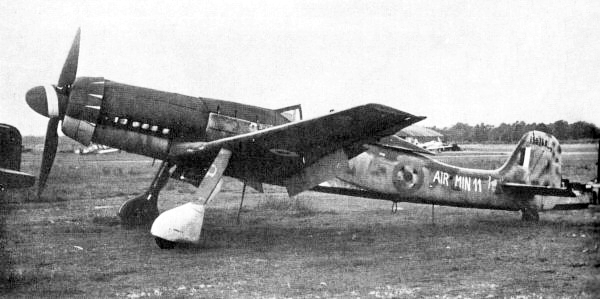
Faster and possessed of greater range than the Spitfire XIX, the Ta 152H was possibly the finest piston-engined fighter in the world at high altitude. Had the war lasted and the high-flying B-29 been committed to Europe then this aircraft would have been its nemesis.
9. Lavochkin La-11
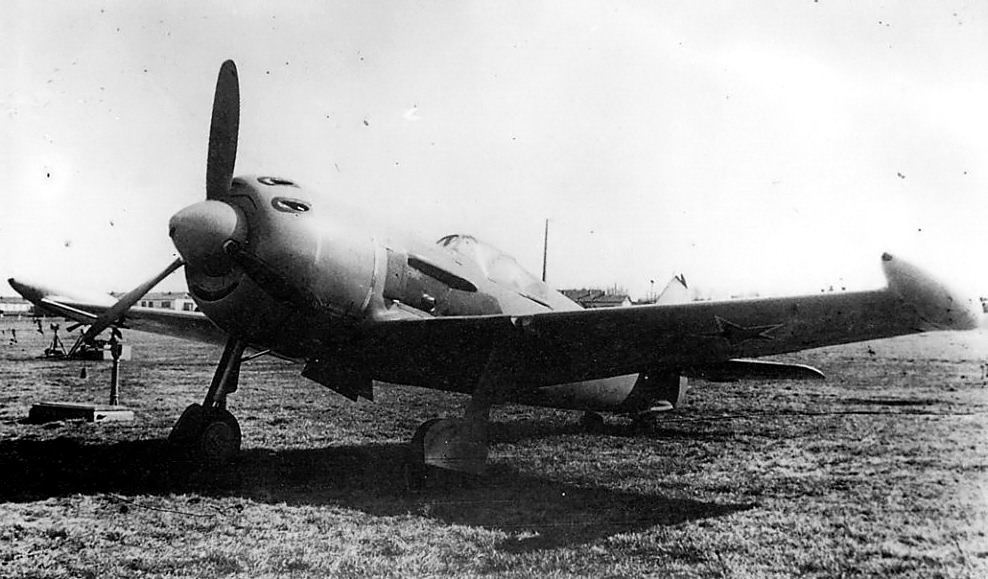
The ultimate Soviet piston-engined fighter and the go-to aircraft for low and medium altitude operations, the La-11 represented the zenith of the superlative Lavochkin series of combat aircraft and is one of the few aircraft on this list to have seen a serious amount of use on operations. Combat Aircraft’s Thomas Newdick noted that it was “Last of an illustrious line, and scored a hat-full of Cold War air-to-air kills (well, a lot more than the Sea Fury, anyway)… the La-9 was a better flier, but the La-11 marked the apogee of the Soviet piston-engined fighter. It also showed that you could still eke performance out of the rugged basic design (which went back to 1940), while the agile Yak series of fighters came to an end with the wartime Yak-3 (after which its wing was put to use for early jet fighters).”
8. Dornier Do 335

The Do 335 was very unorthodox. It featured two tandem engines in the fuselage and a unique ‘push-me/pull-you’ propeller arrangement. With the power of a two-engined aircraft and the frontal cross-section of a single: the result was a remarkable top speed of 474 mph. Pierre Clostermann was one of the first allied pilots to encounter the aircraft, however even in the extremely fast Tempest, the flight he was leading was unable to catch the ‘Pfeil’. Fortunately we will never know what this amazing machine was truly capable of. The performance of the pre-production aircraft was spectacular. A handful served on operations but little is known of what they achieved. Had the jet engine not burst onto the scene, it is likely that a spate of designs would have aped its revolutionary layout.
Was the Spitfire overrated? Full story here. A Lightning pilot’s guide to flying and fighting here. Find out the most effective modern fighter aircraft in within-visual and beyond-visual range combat. The greatest fictional aircraft here. An interview with stealth guru Bill Sweetman here. The fashion of aircraft camo here. Interview with a Super Hornet pilot here. Most importantly, a pacifist’s guide to warplanes here. F-35 expose here.Â
Thank you for reading Hush-Kit. Our site is absolutely free and we have no advertisements. If you’ve enjoyed an article you can donate here– it doesn’t have to be a large amount, every pound is gratefully received. If you can’t afford to donate anything then don’t worry.
At the moment our contributors do not receive any payment but we’re hoping to reward them for their fascinating stories in the future.
7. Spitfire Mk 24
The last model of Spitfire designed for land operations by the RAF was a potent combat aircraft, and easily one of the world’s finest at the end of the 1940s. This serves to underline the remarkable unbroken development of a basic design that first flew in 1936, the Mk 24Â was twice as heavy, more than twice as powerful and showed an increase in climb rate of 80% over that of the prototype Spitfire.
Â
6. Grumman F7F Tigercat
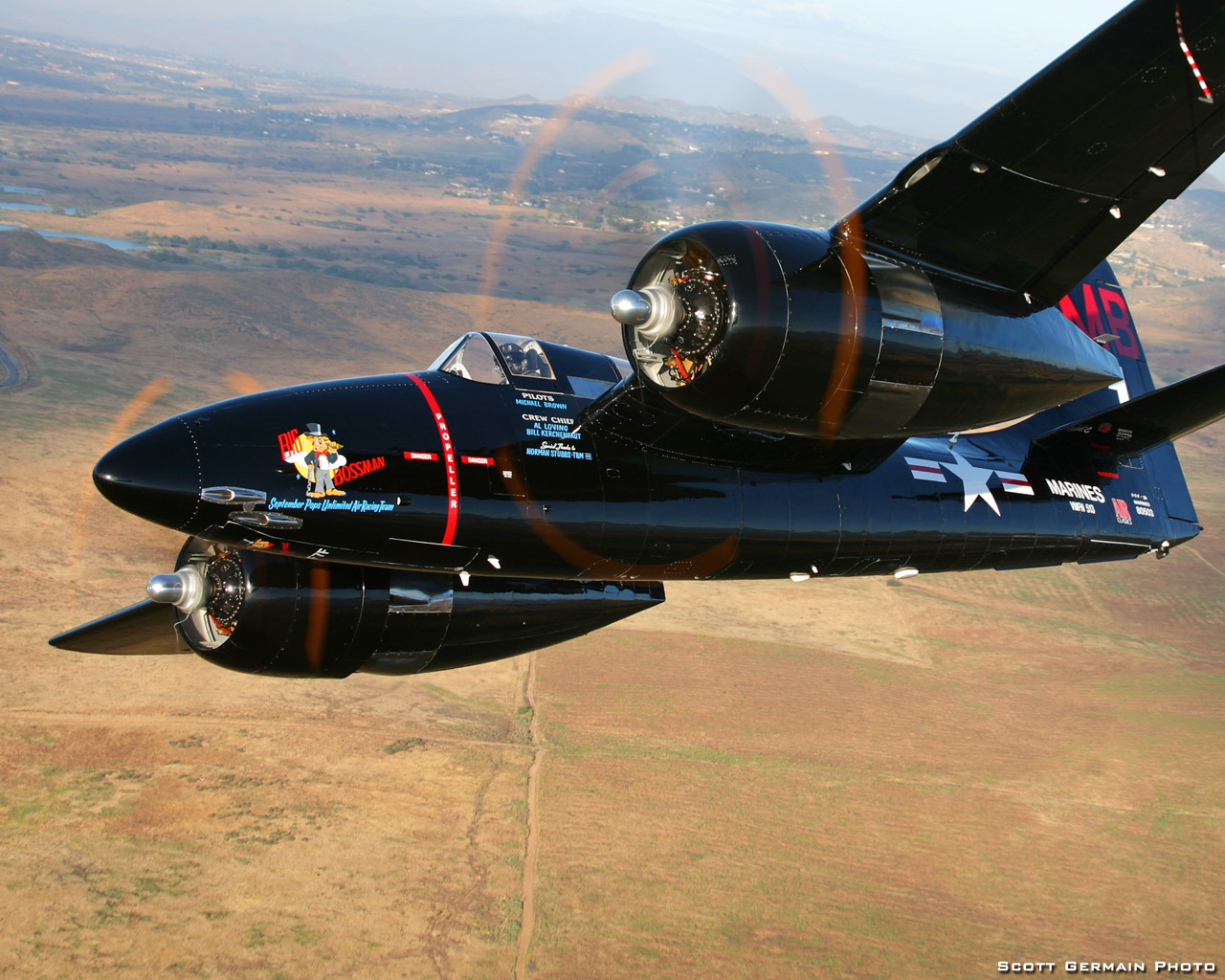
Over 4000 horsepower. a Great range, a superb climb and tremendous speed of 460mph. For a twin-engined aircraft it was also highly manoeuvrable. It is therefore surprising to learn that it scored only two kills (and they were slow vulnerable biplanes). However it could be argued that it has done more good than any other aircraft on this list as Tigercats operated for many years as fire-fighting tanker aircraft in California. Interestingly the F7F was intended to be named ‘Tomcat’ but this was deemed to be too sexually suggestive – a serious problem for an aircraft designed to kill people.
5. Martin-Baker M.B.5
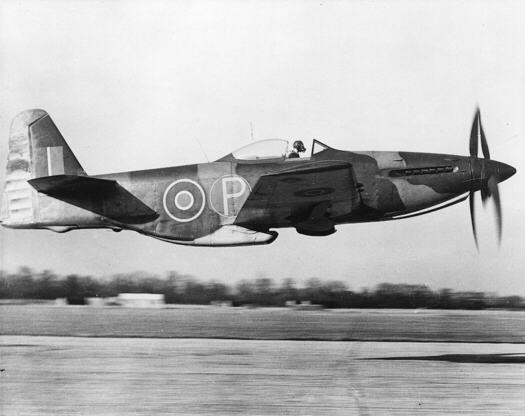
The greatest Allied might-have-been of the war? The M.B.5 drew unanimous praise from those who flew it, for its speed, range and climb-rate were outstanding, and it got more out of the Rolls-Royce Griffon than any other aircraft. Whether it would have lived up to its obvious potential will remain unknown, having the misfortune to emerge into a world teeming with inferior but numerous Spitfires and Tempests. Click here for the ten greatest cancelled fighters.
4. North American P-82 (later F-82) Twin-Mustang
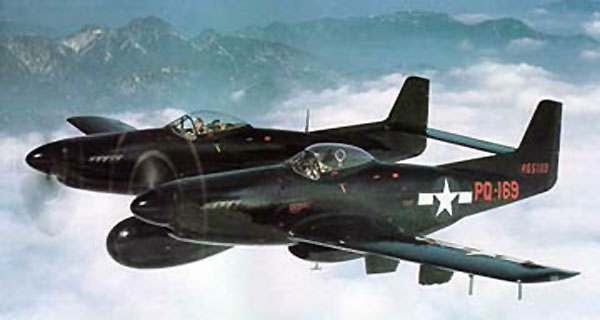
A bizarre machine consisting (more or less) of two lengthened P-51H fuselages joined with a new centre section, the P-82B holds the record for the longest un-refuelled non-stop flight by a propeller-driven fighter (8129 km). It was also exceptionally fast. Sadly for the USAF later models of the Twin-Mustang were powered by Allison engines rather than the superlative Merlin fitted to earlier examples (due to increased royalties demanded by Rolls-Royce) and performance was reduced as a result.
Click here for the Twin-Spitfire
3. de Havilland Hornet
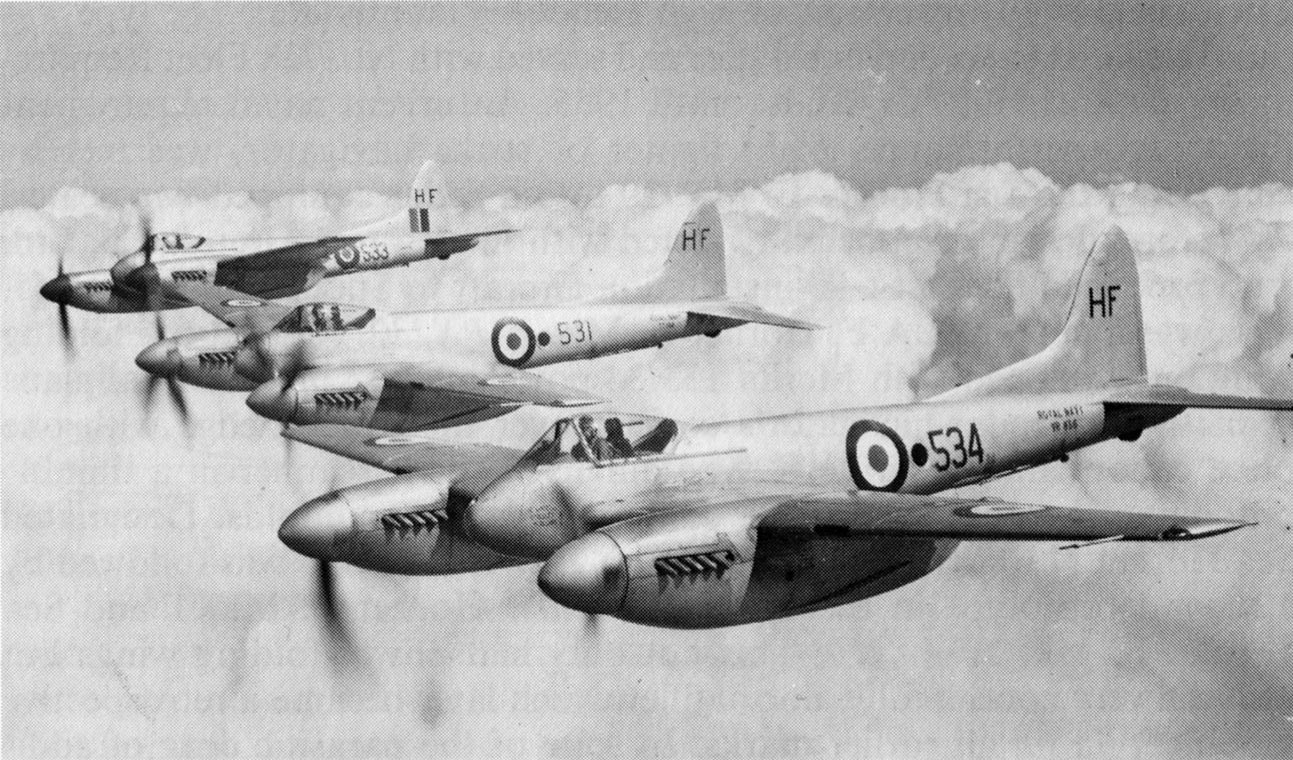
Faster and far longer ranged than the first-generation jets, the Hornet also happens to be achingly beautiful. Eric Brown, the world’s most experienced test pilot, maintained it was his favourite piston-engined aircraft, as he put it “My favourite piston engine (aircraft) is the de Havilland Hornet. For the simple reason it was over-powered. This is an unusual feature in an aircraft, you could do anything on one engine, almost, that you could do on two. It was a ‘hot rod Mosquito’ really, I always described it as like flying a Ferrari in the sky.” (Sea Hornet illustrated).
Equal 1st: Hawker Sea Fury and Grumman F8F Bearcat:

One holds the absolute climb rate record for piston-engined aircraft, the other the maximum speed record. Both appeared as a result of the same problem – it was too difficult to operate a jet fighter from a carrier and thus piston-engined fighter development was allowed to develop to its apogee. They are so closely matched that it is impossible to choose between them. Captain Eric Brown, who flew both, sums it up rather neatly:
“In the case of the Bearcat I found myself inevitably comparing it with the Hawker Sea Fury, and there really was very little to choose between the two. The Bearcat probably had the edge on climb and manoeuvrability, but was not such a good weapons platform nor as good in instrument-flight conditions as the Sea Fury. It was rather like the Fw 190 versus Spitfire IX situation – they were so evenly matched that if they met in combat the skill of the pilot alone would have been the deciding factor. Both were certainly great aircraft.”
The Sea Fury was the pinnacle of Hawker’s illustrious prop fighter line. The Sea Fury had everything a great fighter needs: it was tough, well-armed, fast and agile . Despite its enormous size and power (2,480 HP) Â it had delightful handling qualities; pilots were impressed with how spin-resistant it was, and Sea Fury pilot Dave Eagles gave it it ‘top marks for agility’. The Sea Fury was sent to war in Korea, where it proved itself an excellent warplane, notably downing a MiG-15 jet fighter in 1952.
Find out what it’s like flying the Sea Fury here.
Â
Thank you for reading Hush-Kit. Our site is absolutely free and we have no advertisements. If you’ve enjoyed an article you can donate here. At the moment our contributors do not receive any payment but we’re hoping to reward them for their fascinating stories in the future.
Thank you for reading Hush-Kit. Our site is absolutely free and we have no advertisements. If you’ve enjoyed an article you can donate here. At the moment our contributors do not receive any payment but we’re hoping to reward them for their fascinating stories in the future.
Have a look at 10 worst British military aircraft, Su-35 versus Typhoon, 10 Best fighters of World War II , top WVR and BVR fighters of today, an interview with a Super Hornet pilot and a Pacifist’s Guide to Warplanes. Was the Spitfire overrated? Want something more bizarre? The Top Ten fictional aircraft is a fascinating read, as is The Strange Story and The Planet Satellite. The Fashion Versus Aircraft Camo is also a real cracker. Those interested in the Cold Way should read A pilot’s guide to flying and fighting in the Lightning. Those feeling less belligerent may enjoy A pilot’s farewell to the Airbus A340. Looking for something more humorous? Have a look at this F-35 satire and ‘Werner Herzog’s Guide to pusher bi-planes or the Ten most boring aircraft. In the mood for something more offensive? Try the NSFW 10 best looking American airplanes, or the same but for Canadians.Â
Check out the Top ten fighters of World War II here
Â
“If you have any interest in aviation, you’ll be surprised, entertained and fascinated by Hush-Kit – the world’s best aviation blogâ€. Rowland White, author of the best-selling ‘Vulcan 607’
I’ve selected the richest juiciest cuts of Hush-Kit, added a huge slab of new unpublished material, the beautiful coffee-table book is available now from Amazon here
From the cocaine, blood and flying scarves of World War One dogfighting to the dark arts of modern air combat, here is an enthralling ode to these brutally exciting killing machines.
The Hush-Kit Book of Warplanes is a beautifully designed, highly visual, collection of the best articles from the fascinating world of military aviation –hand-picked from the highly acclaimed Hush-kit online magazine (and mixed with a heavy punch of new exclusive material). It is packed with a feast of material, ranging from interviews with fighter pilots (including the English Electric Lightning and Mach 3 MiG-25 ‘Foxbat’), to wicked satire, expert historical analysis, top 10s and all manner of things aeronautical, from the site described as
“the thinking-man’s Top Gear… but for planes”.
The solid well-researched information about aeroplanes is brilliantly combined with an irreverent attitude and real insight into the dangerous romantic world of combat aircraft. The book is a stunning object: an essential addition to the library of anyone with even a passing interest in the high-flying world of warplanes, and features first-rate photography and a wealth of new world-class illustrations.I’ve selected the richest juiciest cuts of Hush-Kit, added a huge slab of new unpublished material, and with Unbound, I want to create a beautiful coffee-table book. Here’s the book link . Â
Â
I can do it with your help.


