
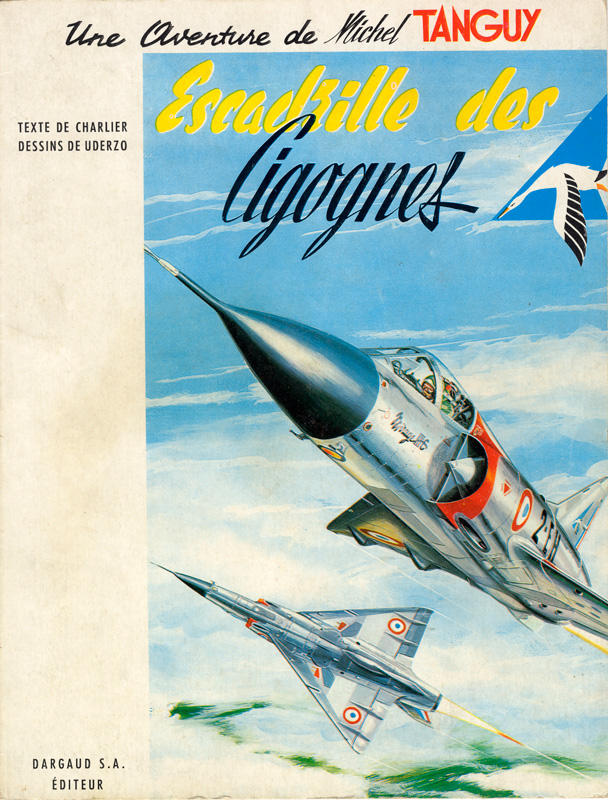
Marcel Bloch was imprisoned in Buchenwald concentration camp for eight months. The aircraft industrialist had refused to collaborate with the nazis, even when threatened with hanging. He survived and was reborn as Marcel Dassault, a surname derived from the French for ‘battle-tank’. Following her liberation, France would never again undervalue the fighter plane. Accordingly the air force released a fighter specification in 1953, demanding unprecedented levels of performance. Dassault responded with the futuristic Mirage I. A modestly updated ‘II’ was considered, before Dassault leapt to the bigger, faster and better-armed Mirage III.

The delta-wing is a symbol of this era of speed- an arrow pointing to the future. By 1958 the Mirage III had comfortably exceeded Mach 2, the first European aeroplane to do so.
Dassault stated that for an airplane to fly well, first it must look good. The Mirage is certainly gorgeous, but it is far more and proved itself innumerable times in combat.
Its polished aluminium body and red-painted air intakes are the epitome of an era of excess, daring technology and (popular) achievements in aerospace. Elegance is key. It is a glorious symbol of France’s renewed independence.
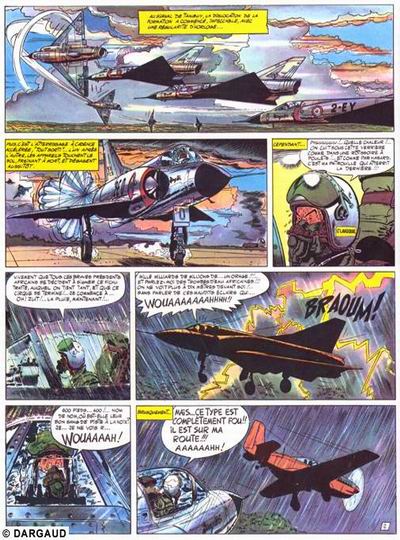
For me it conjures up memories of watching my uncle’s childhood TV series, The Aeronauts, and reading the Adventures of Tanguy & Laverdure. A la chasse…
by HP Morvan, reader in applied fluid mechanics, research engineer & aero-fan.
Hush-kit is reminding the world of the beauty of flight.
follow my vapour trail on Twitter:Â @Hush_kit
Do you have an idea for a Hush-Kit article you would like to write? Contact: hushkiteditorial@gmail.com


